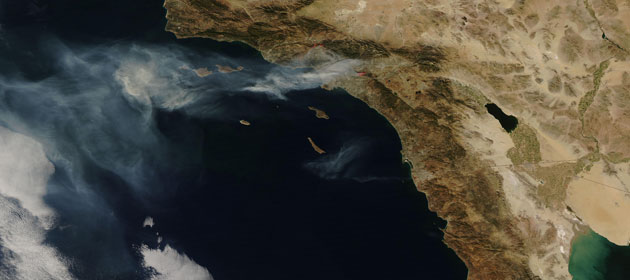
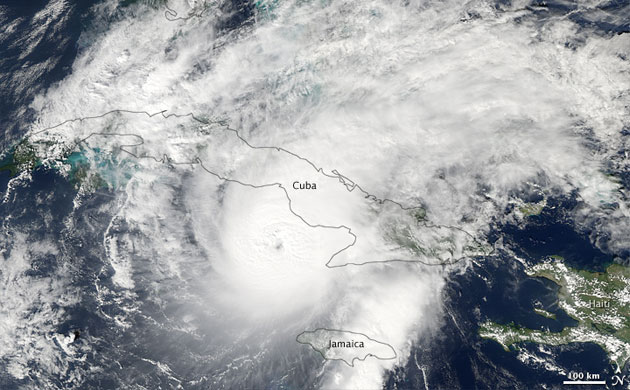
November 16: Strong winds drove wildfires into southern California cities in mid-November 2008. This satellite image shows the smoke drifting to the south-west from the Los Angeles basin over the Pacific OceanPhotograph: MODIS/NASANovember 8: Hurricane Paloma ballooned into a category 4 storm with winds of 145 miles an hour. In this image, the storm is compact and dense, with a small eye. The outer bands are over Cuba. The storm destroyed homes and other buildings and caused floods, but the government reported no deathsPhotograph: MODIS/NASANovember 8: Hurricane Paloma weakened into a category 3 storm, but it slammed Cuba with winds near 125mph. The storm destroyed homes and other buildings and caused floods, but the government reported no deathsPhotograph: MODIS/NASA
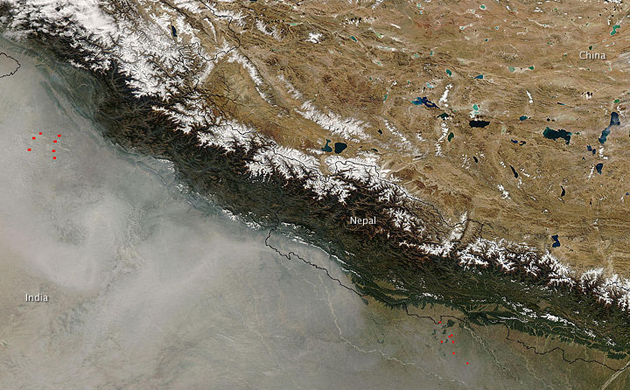
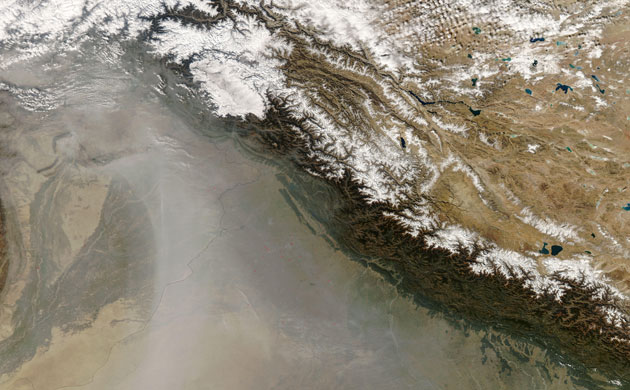
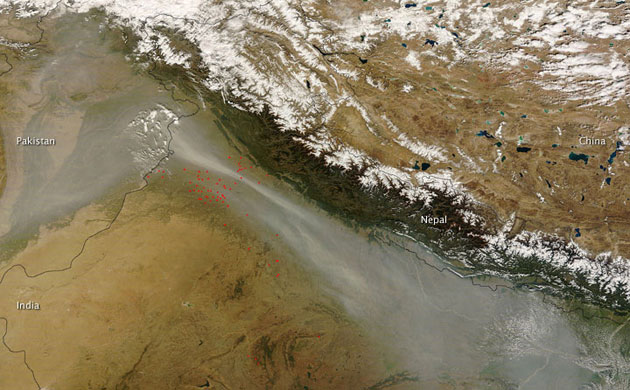
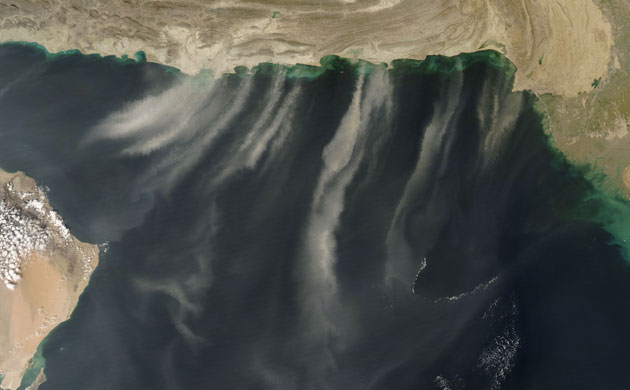
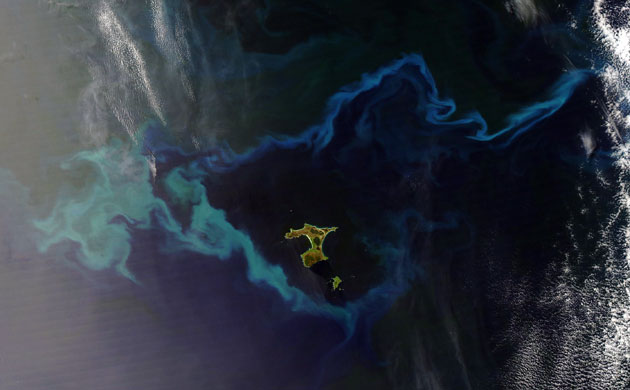
November 11: Haze lingered along the southern face of the Himalaya early in the month, continuing a pattern from the previous month. In this image, a combination of smoke and dust swirls through northern India, west of Nepal. The red dots near the upper left corner of the image indicate fires. Urban pollution and dust from neighboring Pakistan might play a role.Photograph: NASANovember 16: Haze over northern India and Pakistan. The red dots detect anomalously warm surface temperatures indicative of wildfires or agricultural fires. Although these fires contribute to the haze, they are not solely responsible. The haze probably results from a combination of smoke, pollution, and dustPhotograph: MODIS/NASAHaze in the HimalayaPhotograph: NASANovember 13: Translucent, tan dust blew across the Arabian Sea. Dust plumes come off the coastline of Pakistan, as well as a cloud over the water, are visible in this image. There is some light dust also being blown off the coat of Iran (to the west). Along the Indian coastline, to the east, sediment colours the ocean water green-brown.Photograph: MODIS/NASANovember 15: This image captures of a bloom of plant-like organisms known as phytoplankton encircling the Chatham Islands in the Pacific. Like plants, these organisms contain chlorophyll and other light-harvesting pigments for photosynthesis. The pigments change the way the surface of the ocean reflects and absorbs sunlight, creating colourful swirls that trace the location of the bloom.Photograph: MODIS/NASANasa satellite image of the worldPhotograph: NASA
Sign up to read this article
Read news from 100’s of titles, curated specifically for you.