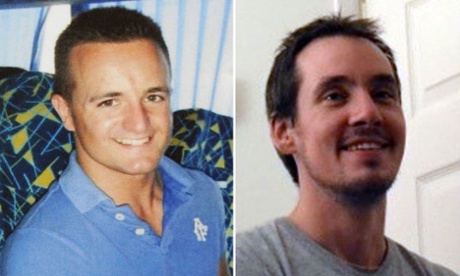
Criminal prosecutions could follow an inquest on three reservist soldiers who died of heat injuries during an SAS selection march in Wales, it has emerged.
Lawyers for the police and the Health and Safety Executive (HSE) told the inquest into the deaths of Lance Corporals Craig Roberts and Edward Maher and Corporal James Dunsby that investigations were ongoing.

The inquest has heard the men died after suffering hyperthermia in temperatures of up to 27C (81F) during the exercise in the Brecon Beacons in July 2013. At least seven more reservists experienced heat injuries.
The men’s inquest in Solihull, West Midlands, has heard claims the march was not called off despite the heat because a cancellation would have generated too much paperwork. Candidates have given vivid accounts of running out of water, collapsing in the heat and having to be helped by civilians.
On Wednesday the Guardian and other media outlets argued that witness statements provided to the coroner by the police should be disclosed to allow the inquest to be reported fully and accurately.
Alison Hewitt, a barrister for Dyfed-Powys police, argued that the coroner was not obliged to provide witness statements, and should not do so.
Before the inquest, the Crown Prosecution Service said there would be no prosecution for manslaughter.
But Hewitt said on Wednesday the police could yet re-investigate and the HSE had yet to make any final decision on what action it might take. Releasing statements could “undermine future criminal proceedings”, she told the coroner, Louise Hunt.
Alan Fox, an HSE solicitor, argued there was a “compelling risk” that future criminal proceedings could be prejudiced and called for a “blanket ban” on the release of statements.
For the media organisations, Caoilfhionn Gallagher argued that the default position set out in a court of appeal ruling was that access to statements relied on in court should be permitted in the interest of open justice.
She said the idea that future proceedings could be prejudiced was “wholly overblown” and no criminal proceedings were active.
Hunt said she would aim to rule on the matter by Friday.
The inquest is continuing, with a heat expert giving evidence.