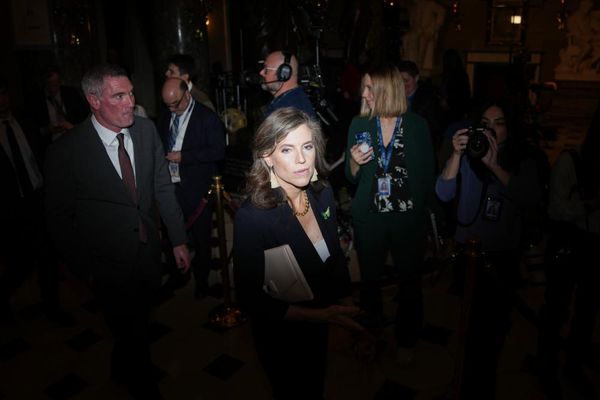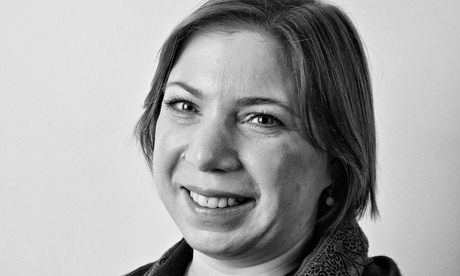
Teather became the youngest serving MP when she won the by-election for Brent East in 2003, aged 29. She was the coalition’s minister of state for children and families until 2012, when she returned to the back benches
Why are you standing down now?
I had a number of disagreements with the party, particularly inside government, and there were two issues in particular. There was one aspect of welfare reform [the £500-a-week benefit cap] that I found particularly difficult, and the direction of travel on immigration. As a constituency MP, representing the kind of area I represented [Brent East is one of the most ethnically diverse constituencies in the country], I just couldn’t stomach it. I got to a point where I thought: I need to do something else, really.
In 2013, when you announced your decision to stand down this year, you sounded quite disillusioned...
There was a period of really profound disillusionment, there’s no point me trying to dress that up. I feel as if politics has got progressively more tactical in the time I’ve been involved, and less about ideas. I’ve never particularly enjoyed the game of tactics – which isn’t to say that I haven’t done it, because I have; but I stopped finding it even remotely enjoyable.
How do you respond to people – specifically Alastair Campbell – who said you were standing down because you didn’t think you would win the seat?
The problem was I thought I was going to win. I wasn’t afraid of losing, and financially I would have got a huge payoff. If you stand and lose, having been an MP for as long as I have, I would have got something like £32,000. By choosing to leave, I don’t get a penny.
What’s your proudest moment as an MP?
The most emotional was when my constituent came back from Guantánamo Bay. Jamil el-Banna was a British resident and myself and my researcher ran that campaign for years. It took over my life: it was the first thing I was waking up thinking about, and the last before I went to bed. He had left the country while his wife was pregnant and he had never met his youngest daughter. The moment he went home and picked her up for the first time still chokes me up.
Do you have regrets?
Um, yeah, loads. One of the key ones was our involvement in Libya. It began a process of destabilisation. Far from improving the human-rights record of Libya, it’s created a hell for many.
Do you stand by your decision to vote against same-sex marriage in 2013?
Yes. It was not an easy decision, but you can only make the decision you make at the time with the information you have.
Was the criticism you received for that decision uncomfortable?
It wasn’t comfortable, but it was nowhere near the most miserable moment of my time in parliament.
Should we be concerned at the number of high-profile female MPs standing down?
We should, but it’s a bit more complicated than that. Each will have their own reasons and they will be as varied as they are for the men who are deciding to step down. But I do get the impression that an awful lot of colleagues are quite miserable at the moment, and I don’t know whether they’d all admit to it – in fact, probably none of them would at this stage of the election. But there are an awful lot of colleagues – I’m not talking about Lib Dems, it’s people of all parties – who seem frustrated by the direction of travel, who are a bit suffocated by the process of party politics.
What’s the problem?
If you speak out on anything, anything at all, any difference of opinion, it becomes a huge scandal. So nobody says anything interesting, and we are locked in this cycle of democratic self-harm, where we’re going to destroy each other eventually. I don’t think politics is in the greatest of spaces at the moment. And elections never bring out the best in politics. There’s an awful lot of heat and not a lot of light.
Does being an MP make you desirable for other lines of work?
I’m not convinced, if I’m honest. You’re desirable for a recruitment consultant to put you on their long list, and not desirable to be employed.
What’s next for you?
I’m going to work for the Jesuit Refugee Service, so I’ll spend from June till September in South Sudan and Lebanon. I’ve got a seven-month contract with them; I don’t know how I’m going to pay the mortgage in January, but that’s another question.