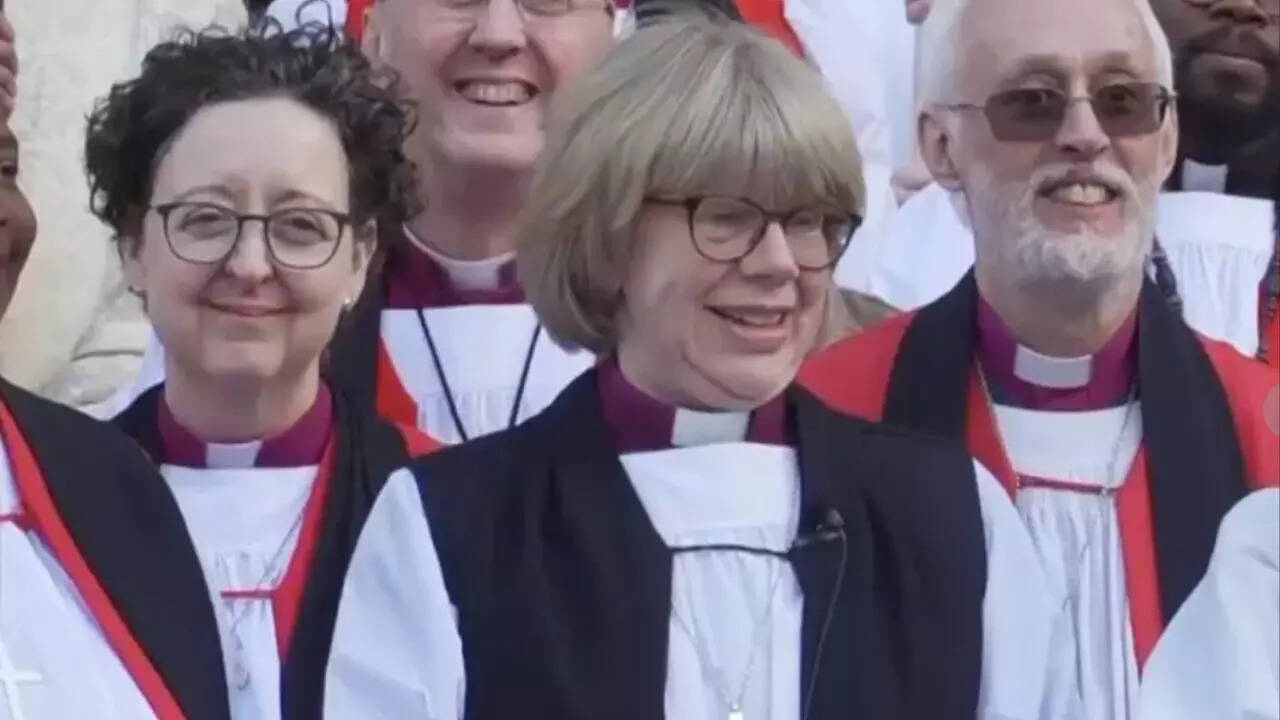
Sarah Mullally’s confirmation as the first woman Archbishop of Canterbury is not just a historic moment for the Church of England, it also highlights how uncommon it is for women to lead major Christian bodies around the world.
While many Christian denominations now allow women to serve as priests, pastors or bishops, very few have seen women rise to lead entire churches or global communions.
In the Anglican Communion itself, a family of churches with around 85 million members across 165 countries, Mullally becomes an outlier as the first woman to head one of its most senior offices in over 1,400 years.
Here’s a look at churches led by women
Other Protestant bodies have, over time, seen women rise to the highest offices. The Episcopal Church in the United States elected Katharine Jefferts Schori as Presiding Bishop in 2006, marking the first time a woman led a province of the Anglican Communion.
The Evangelical Lutheran Church in America was also headed by a woman for 12 years, while the United Methodist Church and the United Church of Christ have likewise had women serving in top leadership roles.
Women at the helm: Key examples
Prophet-President Stassi Cramm: In June 2025, Stassi D Cramm became the first woman to serve as Prophet-President of the Community of Christ, part of the Latter Day Saint movement, making her the denomination’s first female head.
Presiding Bishop Elizabeth Eaton: She served as the first woman to lead the Evangelical Lutheran Church in America (ELCA), one of the largest Lutheran bodies in the United States.
Bishop Katharine Jefferts Schori: Elected in 2006, she became the first female Presiding Bishop of the Episcopal Church and the first woman to serve as a primate within the Anglican Communion.
Vashti Murphy McKenzie: She made history as the first woman elected bishop in the African Methodist Episcopal Church and later led the National Council of Churches of Christ in the US.
Sharon E Watkins: She was the first woman to head a major Protestant denomination in North America as General Minister and President of the Christian Church (Disciples of Christ).
Across Europe and North America, several Protestant churches, including the Church of Sweden, the Protestant Church in the Netherlands and churches in Germany, have appointed women as bishops or heads of synods.
Why Mullally’s appointment stands out
Despite these examples, women remain rare in the highest offices of many major Christian traditions. The Roman Catholic Church and the Eastern Orthodox Churches do not permit women to become priests or bishops, effectively restricting them from top leadership roles.
Meanwhile, large evangelical groups such as the Southern Baptist Convention continue to maintain male-only leadership structures.
Several experts note that while women’s representation in ministry has increased over recent decades, particularly in Western Protestant denominations, female leaders at the very top remain the exception rather than the rule, making Mullally’s elevation all the more significant on the global religious stage.