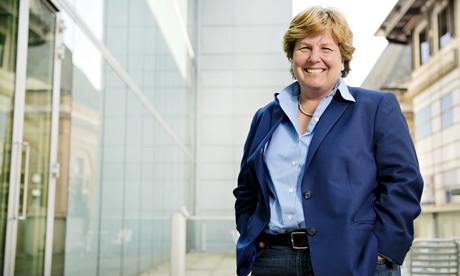
Sandi Toksvig, probably the funniest person in the English-speaking world, says this series of the BBC radio show the News Quiz will be her last. This is very sad news for her admirers, who are legion, but then I remember that nine years ago I thought life would never be the same again, or at least not as funny, after my colleague the great Simon Hoggart retired from the show and Toksvig took over; but it was. And Toksvig’s replacement may be Sue Perkins (no relation), who is also very funny. This is one of the myriad joys of being old. It brings perspective to life’s little disappointments.
Toksvig’s decision coincides with new research that shows that older women are happier than older men, and both are happier than young people. In particular, Danish women are the happiest of all people in the land of Denmark which is known to be the happiest of all lands in the world. Although, in one poll, it did slip to third place, behind – improbably – Panama and Costa Rica. And here’s the thing. Toksvig is Danish!
According to the BBC, Toksvig is leaving “to embark on a new and exciting stage of her career”, a formula so idiotic one assumes she must in fact have been sacked for some unspecified but heinous breach of corporation etiquette.
Toksvig herself says she wants to leave while the audience still wants more, which sounds much more human although also possibly not the whole truth. When Hoggart left, he told me with his usual morose charm that he was always scared of being found out, thus confirming that life as a comic is not necessarily as funny as it looks.
So factor in the standing of older Danish women in the global league table of happiness and it becomes clear that Toksvig can only be leaving in order to relish to the full simply being alive and old and Danish and a woman. Although, since she is a mere 56, it may be just so that she can look forward to being alive etc etc.
While not myself a Dane, I am here to bring her glad tidings from the sunlit uplands that are the seventh decade. I am an ambassador from her future! Disclaimer: since claiming happiness for oneself is invariably accompanied by unacceptable levels of smugness, none of what follows relates in any way to me. Not that there is any reason to be smug about being old and happy. Granted reasonable health and an adequate income, it is something that just happens simply by virtue of casting off the burdens of youth, the relentless pressure to be clever, hot, successful or just to get older and wiser.
There are many, many studies of happiness. On the whole, they look at the material world. Danes describe themselves as happy, and they live in a world where their high taxes bring them a wonderful welfare state; older Danes are particularly happy because there is excellent universal childcare which means that grandparents do not have to take on a second career as childminders.
That’s quite persuasive. Less often mentioned, though also true, is that Denmark is a relatively equal society, and that, too, has been shown to make for a happier people. Either way, it’s external factors, where you live, and how, that make you happy. Although many pictures of happy old Danish women show them with a glass of wine in hand. Cause or symptom? No one is saying. But then other, different, studies, have examined genetic factors. Researchers at Warwick University spotted that the gene that influences the re-uptake of the mood-influencing neurotransmitter serotonin has a distinctive pattern in Danes.
But it is not only Danes who are happy. The researchers looked at happy people around the world and found they, too, had the same genetic pattern. They were happy independently of the excellence or otherwise of the state in which they lived. It would seem time to re-evaluate the Viking legacy: it’s more than just longboats.
That raises another possibility. Could it be that people with a predisposition to happiness also have a predisposition to build happy states? And then happy states help people to live happy lives, which on average also tend to be long ones, thus creating ever more old happy people of whom a disproportionate number will be women.
There could be help here for the many people who cannot decide how to vote on 7 May. Forget policies and parties. For a happy future, look deep into the eyes of each of your candidates and gauge which of them is happiest.