MANCHESTER, N.H. _ Bernie Sanders held a small lead over Pete Buttigieg in New Hampshire on Tuesday night with a surging Amy Klobuchar in third place, as the first presidential primary shook up the Democratic contest by dimming the hopes of two candidates and ending the race for two more.
Massachusetts Sen. Elizabeth Warren and former Vice President Joe Biden were in single digits in fourth and fifth place, respectively, a weak showing that imperiled both their campaigns. Each vowed to fight on.
Well before even half the votes were counted, businessman Andrew Yang and Colorado Sen. Michael Bennet announced they were dropping out. Both had negligible support.
New Hampshire has a history of political volatility, with voters tending to decide late, and the results Tuesday held true to form, with nearly half the voters saying they made up their minds in just the last few days.
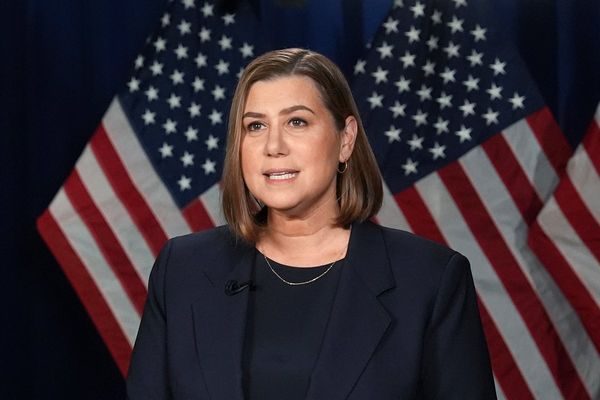
Klobuchar, an afterthought for much of the contest despite a number of well-received debate performances _ including one, importantly, Friday night _ appeared to be the biggest beneficiary.
Vermont Sen. Sanders, who won an overwhelming victory here four years ago, was the favorite to prevail once more. But he did not run away with the contest, leading Buttiegieg by less than 3 percentage points with more than three-quarters of the vote counted.
It was the second vote in a row, after last week's Iowa caucuses, in which Sanders failed to meet the high expectations generated by big crowds and his enormous nationwide fundraising success.
In fact, the votes received by former South Bend. Ind., Mayor Buttigieg and Minnesota Sen. Klobuchar, two relative moderates, far exceeded the number received by Sanders, the favorite of the party's progressive wing.
Still, unless one candidate consolidates that vote, it will be difficult for either to pull ahead _ and former New York Mayor Michael R. Bloomberg could further fracture the centrist wing as the contest moves into states where he is spending heavily after skipping the first several contests.
Buttigieg, who had appeared to plateau just a few weeks ago, benefited in New Hampshire from a burst of momentum after finishing in a virtual tie with Sanders in Iowa. He spent much of the last week attacking Sanders, a democratic socialist who speaks in bold strokes of leading a political revolution, as too dogmatic and divisive to lead Democrats into the fall campaign.
The biggest surprise, however, was the performance of Klobuchar, who used Friday night's debate to assail Buttigieg as too green to be president and Sanders too far left. She repeatedly touted her victories in Minnesota, saying she could lure back voters in the industrial Midwest who abandoned Democrats to vote for Trump in 2016.
Nearly a third of voters said the debate was an important factor in their decision, and nearly 20% called it the most important factor, according to exit polling. Moreover, fully two-thirds of her supporters said they had made up their minds in just the last few days.
"My heart is full tonight," Klobuchar told exuberant supporters in Concord. "While there are still ballots to count, we have beaten the odds every step of the way."
Waving American flags and hoisting "Amy for America" signs, the crowd of several hundred punctuated Klobuchar's speech with chants of "Vote Amy, beat Trump" and "Amy, Amy, Amy."
One of Tuesday's many late-deciding voters was Marilyn Swick, 72, who did not make up her mind until the moment she walked into her polling place in a bustling community center in the Boston suburb of Hudson.
"It was between Amy and Pete," said the retiree, a political independent. "She was a woman. I just decided that out of the two, she might be better nationwide."
After Iowa's caucus meltdown, New Hampshire's vote was elevated in import as the presidential race now hurtles into Nevada and South Carolina, followed by a blitz of coast-to-coast balloting on March 3 _ Super Tuesday _ which includes California.
Victory, or least a strong showing, promised to yield a further spurt of momentum and, more concretely, an infusion of cash and a first or second look from the many voters just starting to pay close attention to the race.
The candidates with arguably the most at stake were Warren and Biden, who finished a disappointing third and fourth, respectively, in Iowa.
The former vice president has largely rested his campaign on the notion he is the candidate best able to beat President Donald Trump in November, based on his experience and relative centrism, but the argument was undercut by his weak Iowa showing.
Anticipating a similar setback in New Hampshire, he preemptively declared himself out of the running _ "I'm probably going to take a hit here," he said at Friday's debate _ and didn't bother waiting for results. He flew to South Carolina, a state with a large black population that Biden hopes will resuscitate his campaign with its primary on Feb. 29.
"It ain't over, man," he told supporters in Columbia, the state capital. "We're just getting started."
Warren, who had hoped to elbow past Sanders in Iowa and establish herself as the candidate of the party's progressive wing, instead scrambled to avoid an embarrassing setback in her political backyard.
She told supporters Tuesday night in Manchester she had no plans to exit the race, saying she expected the fight for the nomination to be a prolonged one. "The question for us, Democrats, is whether it will be a long, bitter rehash of the same old divides in our party, or whether we can find another way," Warren said, pitching herself as a unity candidate.
Her next stop is Virginia, one of the Super Tuesday states.
Sanders was looking ahead as well, with stops planned later this week in the Super Tuesday states of North Carolina and Texas.
Unlike the Iowa caucuses, which are held at a set time, the New Hampshire primary was an all-day affair. Polls opened as early as 6 a.m., depending on location, and closed at either 7 or 8 p.m. depending on location. (Keeping alive their tradition, a few remote hamlets stole a march on the rest of the state by voting at midnight.)
Nonpartisan voters, the largest voting bloc in New Hampshire at more than 40% of the electorate, were allowed to take part in the Democratic primary, giving the balloting a more moderate cast than Iowa, which limited participation to the party faithful.
Nearly 4 in 10 New Hampshire voters described themselves as moderate, a notable increase from four years ago, and the electorate also had a distinctly pragmatic streak: More than 6 in 10 said electability _ the perception a candidate could beat Trump _ was more important in deciding their vote than agreeing with a candidate on issues.
Buttigieg won more than a quarter of those voters and Klobuchar more than 2 in 10. By contrast, Sanders won handily among those who said they preferred a candidate who held the same positions on the issues.
Republicans were also voting in their primary Tuesday, with Trump expected to win handily en route to his virtually uncontested nomination for a second term.
Brian Burke, a Republican from Bedford, briefly considered crossing party lines _ which is allowed under same-day registration _ before casting his ballot for Trump.
"I was going to vote for a Democrat because it seems like a more important race at this point," said Burke, 51, who works in finance. "But I am a Republican and I do like everything Donald Trump has actually done for us."
Looming large as the Democratic campaign leaves the confines of Iowa and New Hampshire is Bloomberg, who has already spent more than $200 million on television advertising.
Bloomberg has essentially ignored Iowa, New Hampshire and the other two early voting states, focusing instead on Super Tuesday and the contests beyond. It is a strategy many other presidential contestants have attempted, only to fall well short of the nomination.
None, however, had the financial resources of the media magnate, who has an estimated net worth of more than $60 billion and has shown no hesitation about spending a good deal of it in his pursuit of the White House.