This week’s top city stories from around the web include the Muscovite skateboarders reclaiming Soviet-era buildings, a group of urban residents suing the suburbs, and an innovative organisation redistributing wasted food.
We’d love to hear your responses to these stories, and any others you’ve read recently, both on Guardian Cities and elsewhere. Just share your thoughts in the comments below.
Suing the suburbs
The story of developers breaking their promises to provide affordable housing is nothing new, and the list of examples is endless. But in San Francisco, after a developer ditched proposals to build 315 apartments in favour of 44 single-family homes costing at least $1.2 million each, a housing activist group is hoping to drum up funding to go to the courts and sue the suburb of Lafayette for failing to supply more housing.
As Curbed SF explains, the SFBARF (San Francisco Bay Area Renters’ Federation) group is concerned that by not providing enough housing in the suburb, developers are contributing to the city-wide shortage and higher rental prices throughout the region. The group are looking for potential litigants who had been planning to live in the proposed apartments, as well as funding and other legal support. Regardless of the outcome, it’s certainly an imaginative way to tackle the global housing crisis.
Moscow’s secret skatepark
The Calvert Journal shares a beautiful gallery of skateboarders in Moscow who have reclaimed some of the city’s Soviet-era buildings – such as the iconic VDNKh Moscow Pavilion – for their own pleasure.
Moscow’s landscape is littered with abandoned buildings that were built for the benefit of the people, but are now shut off and patrolled by security guards. As Andrey Urodov writes, “Post-privatisation, it feels like the only way to access the centre of Moscow is with money.”
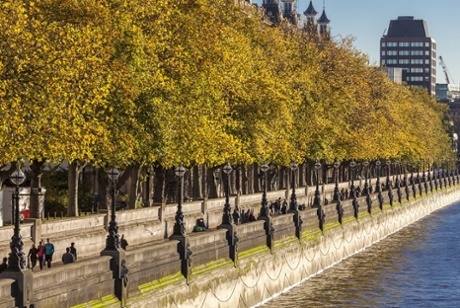
Urban trees: good for all ages
Last month, the Guardian’s Patrick Barkham reported on the economic, environmental and health benefits that trees bring to urban environments. While many studies on city greenery have focused on the benefits to adults and (hyperactive) children, new research in America shows that urban trees have restorative benefits for very young kids.
As CityLab explains, the university study entailed taking one group of young children out (after draining their energy with a jigsaw puzzle) on a walk in a typical concrete environment, and another out for a wander through tree-lined streets. And surprise surprise, guess which group comes back feeling more refreshed, invigorated and raring to go? Yup, you got it. Urban trees are good for all.
Cracking down on food waste
In October last year, the US state of Massachusetts implemented a ban to prevent commercial businesses from throwing away more than one ton of organic food waste. But, as John Light explains in Grist, while the ban saves edible food from ending up in landfill sites, much of the unwanted produce still ends up being composted or sent off for anaerobic digestion.
Rather than see this surplus food put back in the ground, Boston-based Food for Free has stepped up to the plate to connect hungry citizens with the stuff that businesses don’t want. Collecting from businesses including Chipotle, Whole Foods and Harvard University, Food for Free redistributes enough food to feed 25,000 people across the city each year.
Cycle to your desk?
From a floating cyclepath to the Circle Line Travelator, architectural design firms are coming up with ever-more inventive ways to connect commuters to their places of work in London. And if your workplace happens to be in the Alphabeta Building in Finsbury Square, you can now ride across the Thames Deckway or London Underline and right slap-bang into the office. As the BBC’s Dougal Shaw shows here, the building’s refurbishment by Studio RHE includes a steep ramp with a severe hairpin turn, enabling cyclists to ride directly into the front atrium and down to the parking bay.
Follow Guardian Cities on Twitter and Facebook and join the discussion