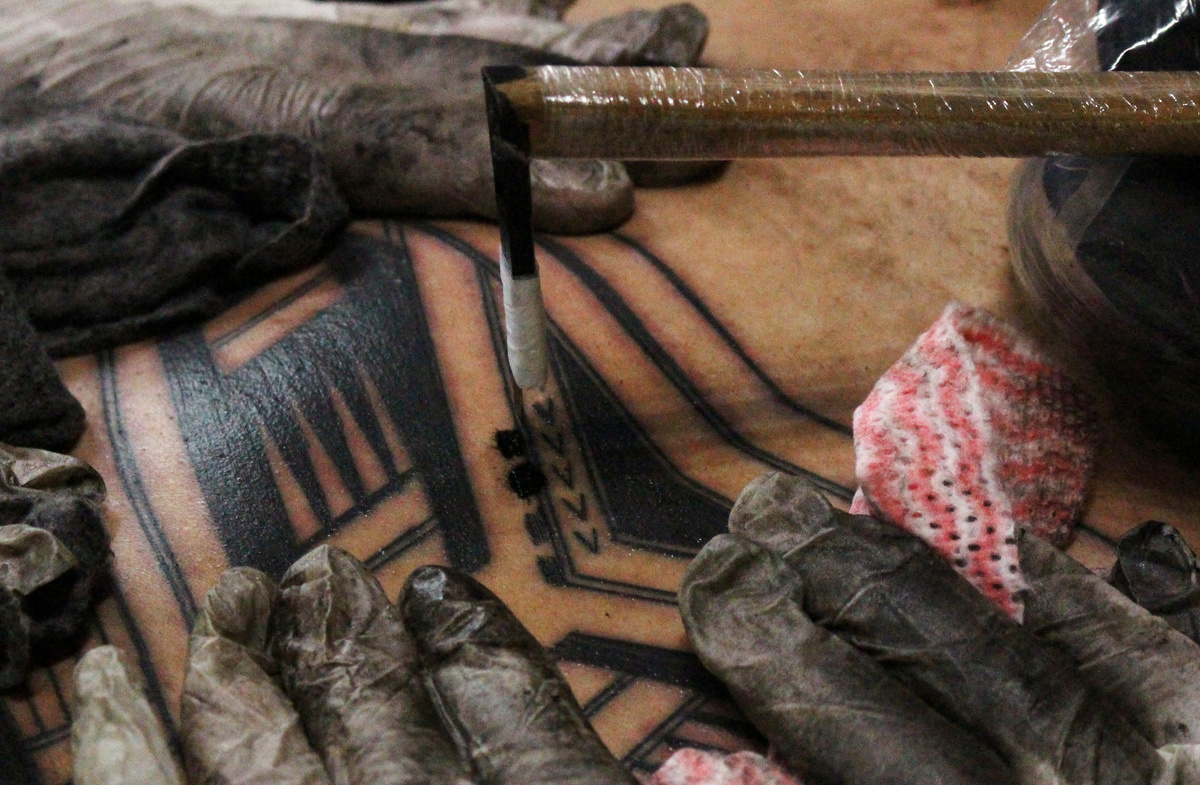
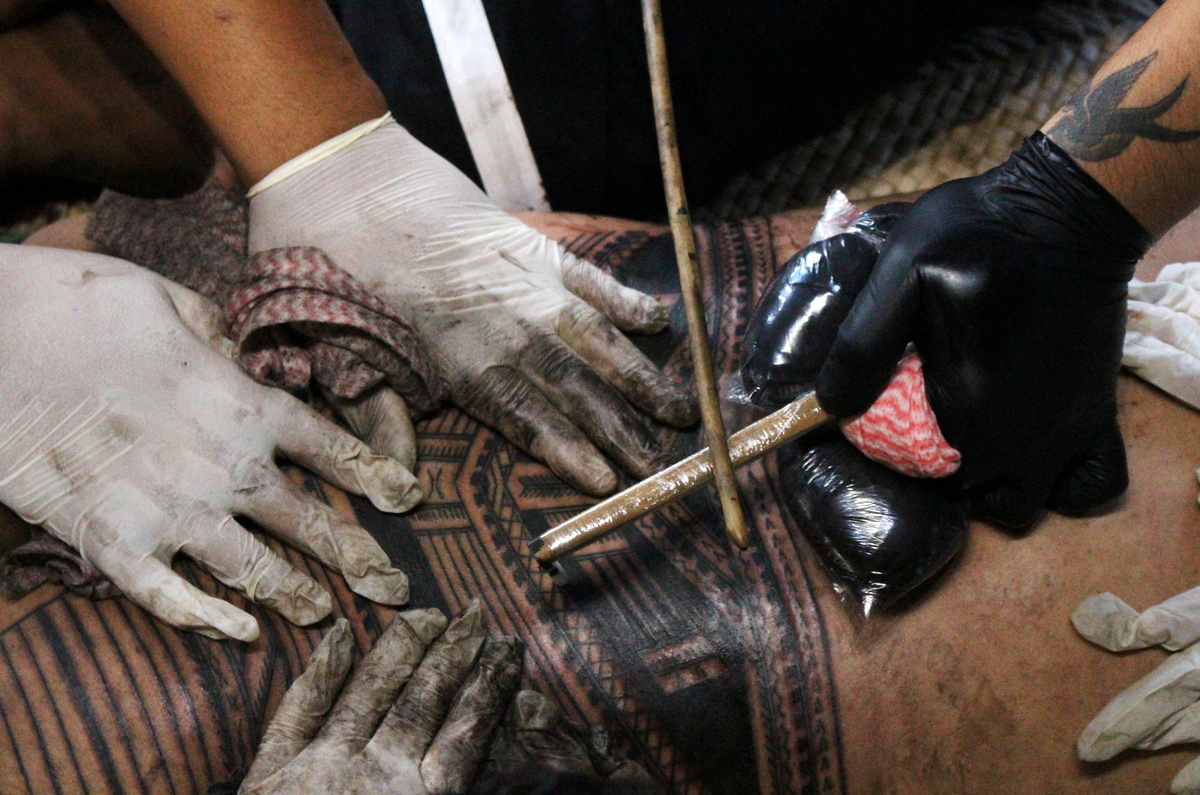
APIA, Samoa (Reuters) - Oliver Fagalilo takes a laboured breath and tenses his body before a sharp steel comb, dipped in ink, drives into his skin.
Six hands keep his body still and his skin taut as a Samoan artist works on the traditional tattoo that will cover more than half of Fagalilo's body. It takes 35 hours over seven days to complete.
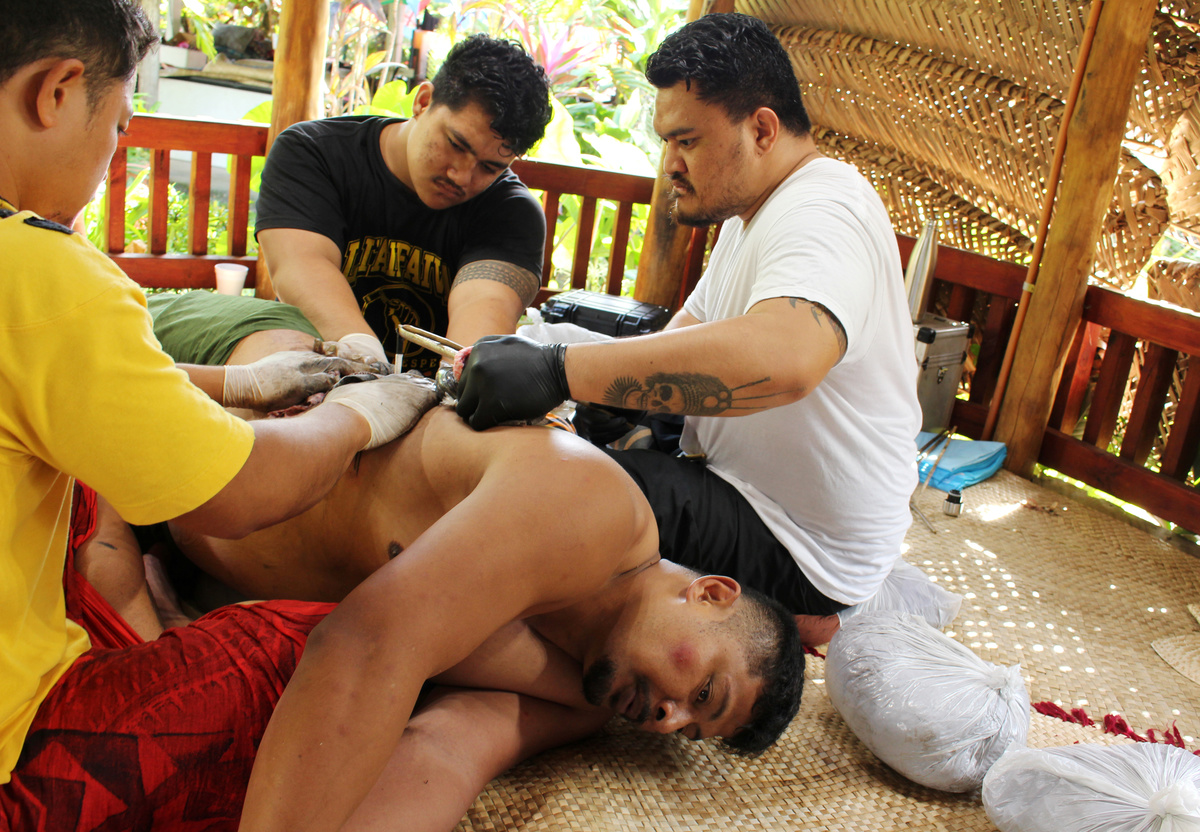
"Yeah, I'm going good, just trying to breathe, but it's quite hard to breathe," said Fagalilo, his uncle cradling his head.
"Just trying to push through. Trying to focus. Keep focus," he added.
Dating back centuries, the Samoan "tatau", from which the word tattoo is said to originate, is regarded as a right of passage for many Samoans.
Now a resident of New Zealand, Fagalilo, 39, and his sister Sharlene, 34 and living in Australia, returned to the Samoan capital of Apia to get their tattoos together, supported by their extended family.
The male tattoo, or pe'a, starts at the torso, covers the front and back, and finishes at the knees. The design is a series of straight lines, geometric shapes and large blocks of black ink that partly represent the journeys of ancestors from South East Asia to Polynesia.
Samoan tattooing can be very painful and those who cannot finish are labelled a coward, said tattoo artist Li'aifva Imo Leni, among the few Samoans who still practice the traditional art.
"It's considered a huge shame upon your family and that burden is carried through to your children, your children's children, up until somebody in your family finishes the tattoo in your honour," he said.
Before the stainless steel tools now used by artists, the bones of pigs or even human bones were used to carve the tattoo into skin.
During a recent tattooing in his thatched hut, Leni sat cross-legged and used a mallet to tap a stainless steel comb into his subject's body. He usually tattoos six days a week, from early morning to well after the sunset.
Anyone watching Leni work must share in the subject's discomfort, he said, and cannot stretch or lay down on the floor to make themselves comfortable.
Finer and more subtle in design, the female tattoo known as a "malu" in Samoan, extends from just below the knee to the upper thigh and buttocks.
"The patterns they will be ... tattooing on goes all the way back to your ancestors," said Sharlene Fagalilo, who lives in Melbourne.
"It's a good feeling. You get to carry that with you everywhere you go," she added.
(Reporting by Jill Gralow in Samoa; writing by Jonathan Barrett; editing by Darren Schuettler)