The Chiefs are different, which means normal rules don't apply, and that's only part of the fun.
We have seen that time and time and time again the last few years, most of it positive, and most notably after trailing in all three of their postseason games by at least two possessions last season.
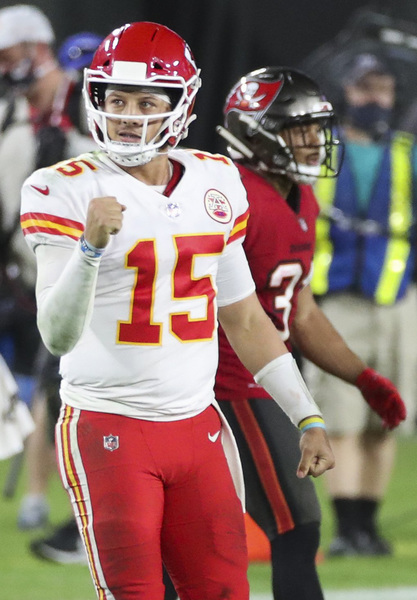
We saw some of that different in the Chiefs' 27-24 win over the Bucs Sunday, too. It was more subtle, and won't make for a catchy T-shirt slogan, but it's just as important and could be the difference in a playoff game.
Patrick Mahomes is in the early stages of what could be one of the greatest careers in league history, Tyreek Hill's production pushed toward historic scale, and the defense brought a consistent energy and pressure that it had recently lacked. Those are all important aspects of this Chiefs team, but they're not what this space will focus on.
Football games are usually decided on a razor's edge, and this one had a few different razors. We're going to explore two specific decisions presented to Chiefs coach Andy Reid.
The first came early and had a butterfly effect that stretched to the final whistle. The second came late and determined how the Chiefs would attempt to close out a win they had earned.
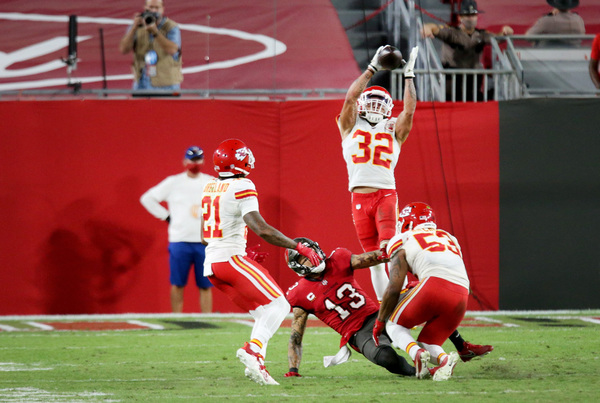
The Chiefs' first drive was helped by some Bucs penalties and highlighted by 57 yards of passes to Hill. But it was determined by Reid's decision to kick a field goal on fourth and goal from the 1-yard line.
The TV cameras caught Mahomes trying to sell Reid on going for it, and also the star quarterback's disappointment when the kicking unit came onto the field.
The data is clear here: Go for the touchdown. Go for it basically always on fourth and 1, but go for it in capital letters (ALWAYS) on fourth and goal from the 1.
Reid — historically more aggressive than most in these spots, but still short of where the numbers say coaches should be — went conservative.
"I just felt like I wanted points coming out of that," Reid said. "I know they're tough in the red zone, and points were important there. Especially early."
The Bucs ranked 25th in red-zone defense entering the week and had stopped half of opponents' attempts on fourth and 2 or shorter. The Chiefs are league average on this in 2020 — 16th in attempts, 15th in percentages.
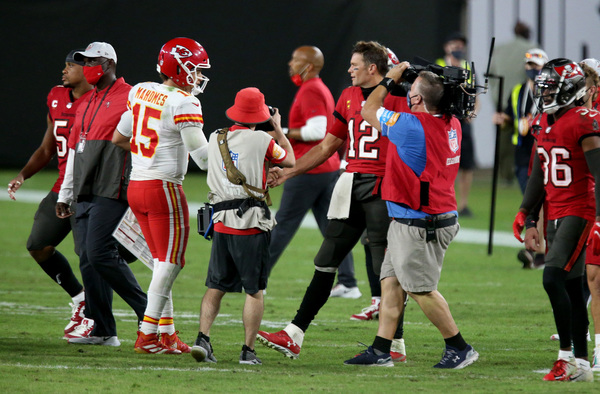
Reid has an analytics department headed by Mike Frazier, and the numbers almost certainly told him to go for it. But those last two words of Reid's answer — especially early — are important, too.
The same way coaches don't like two-point conversions early, they often change their calculus to secure easy points early. They want to take the lead and at least a small share of control.
Reid can be fairly criticized here for not fully utilizing the league's best offense, and it's likelier than not that if he had the Chiefs would've been protecting a seven-point lead late instead of a three-point lead.
But the debate is layered enough to see both sides, and Reid's response to the second decision is more proof he can tolerate risk:
The Chiefs had second and 9 at midfield coming out of the 2-minute warning, a three-point lead on their side and no timeouts for the Bucs. They could have run the ball twice and, even assuming they didn't gain a first down, a decent punt would've given the Bucs possession inside their own 20 with 25 seconds or so and no timeouts remaining.
Most coaches would've done that. Tony Romo, the game's highest-paid analyst, was calling for the Chiefs to do that, too.
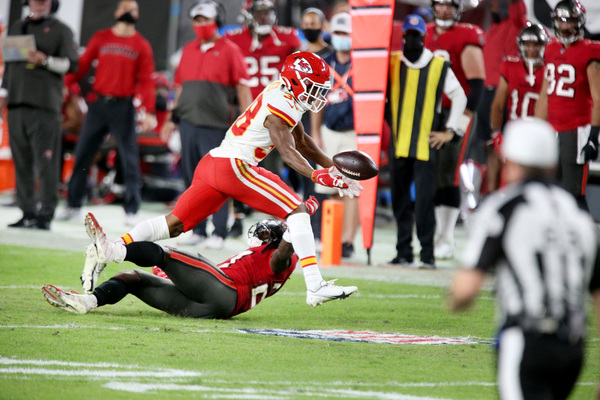
Reid called two passes.
"It's a lot of trust Coach puts in me to make the right decision," Mahomes said. "You can see that I'm trying to get the ball out of my hands quickly, get it to the guys and let them make plays in space."
These were not normal passing plays. Both were designed to negate the Bucs' strong pass pressure and to keep the clock moving.
On the first, Mahomes held the ball for less than 2 seconds before throwing to Clyde Edwards-Helaire out of the backfield. The throw arrived low and required the running back to make a skillful adjustment. The gain on this play was just 2 yards.
The second play — on third and 7 — was more interesting. Mahomes did a designed rollout to his left, stepping up into the relocated pocket to give Hill enough time to beat single-coverage along the sideline.
At Mahomes' release, two defenders were within arm's reach and the ball had to be accurate enough to allow Hill to keep both feet inbounds.
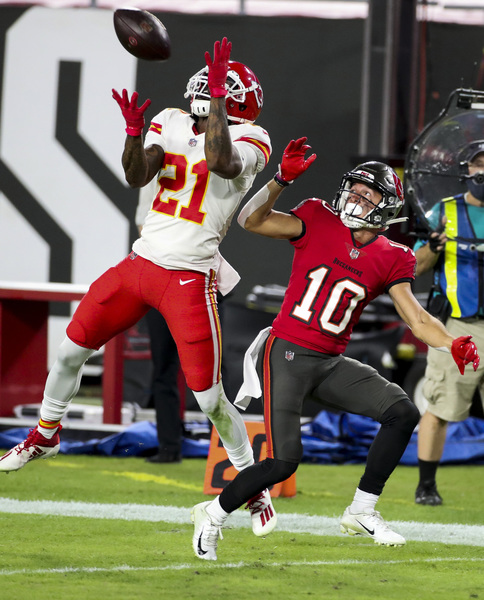
The stakes of Reid's calculus were significant, but his explanation was simple.
"I've learned a long time ago you don't give Tom Brady another shot," he said. "That's why he's the GOAT, right? Don't give him the ball back."
Reid's mind, and by extension his play-calling, is creative enough that what happened against the Bucs is not necessarily predictive of what he'll do in the future.
And we should also recognize that these decisions are always most widely judged by the results — a failed attempt from the 1 early would've brought criticism, same as a dropped pass or interception late.
But Reid is showing that his decisions are guided at least in part by the uniqueness of his team and tailored to the opponent. Even with an offensive line that has long struggled with short-yardage runs, the playbook stretches defenses horizontally enough to find space more times than not.
And by showing opponents that he's willing to take on added risk to fully utilize the strength of Mahomes in traditional run situations, he's changing the way the next similar spot will be defended.
The Chiefs' ultimate success or failure this season will be shorthanded, the same as 2018 is about Dee Ford being offsides and 2019 is about having enough time to run Wasp.
But it will be decided by a million smaller moments like those highlighted here, and the decisions that guide them. They're not as simple as "aggressive" or "conservative." Agree or not, Reid is showing his process to be too nuanced for simple labels, or certain predictions.