KANSAS CITY, Mo. _ In a stunning plot twist, Team Logic now has a one-case winning streak over the NCAA.
Let's see if we can make it two.
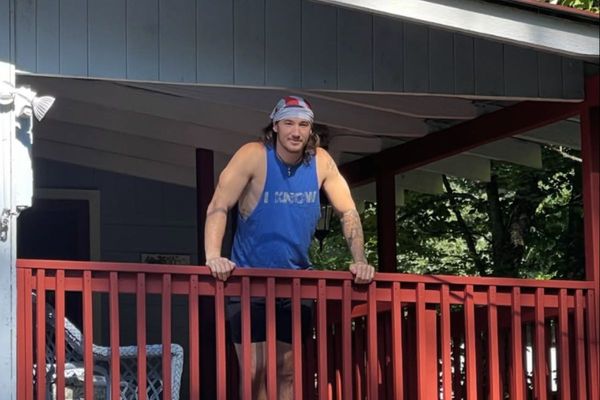
Kansas basketball forward Silvio De Sousa won his appeal, with a group of officials from universities and leagues around the country agreeing that the NCAA overstepped in issuing a two-year suspension because his guardian received money from an Adidas rep and agreed to take more money from the same person.
De Sousa is an NBA G-League prospect at best but had said he would begin a professional career if he lost the appeal. Now, he will be NCAA-eligible for the 2019-20 season, an important part of what could be a loaded KU frontcourt. He will be better prepared for a basketball career and life now.
Good on the NCAA. Reason won the day, finally. De Sousa did not direct, know about, or even benefit from the payment. To punish him so egregiously was one more awful look for the NCAA, another knock on the bureaucracy's credibility.
Thankfully, the NCAA's decision was corrected by the Committee on Student-Athlete Reinstatement.
Now, it's time for the NCAA's appeals committee to do the same for Mizzou.
Jim Sterk, the Mizzou athletic director, would not take optimism or hope or anything tangible from one NCAA decision being overturned. Two different schools, two different situations, two different committees hearing the appeals.
"I'm really uninformed on that (De Sousa) case, so I can't comment on it," he said. "I am informed on the decision that was made on our case, and I really think it calls into question the future of the NCAA, as far as any cooperation goes, if it's not overturned."
Sterk is right, and in a just world, this would be an easy decision. In the real world, where the NCAA is hopelessly overmatched and often overzealous when it finds an opportunity to punish, nobody can be sure. Missouri's appeal will be heard in July, with a decision expected soon after.
The committee assigned to Mizzou's case is different than the one that heard De Sousa's case, but here is one area of similarity _ the appeal will be heard by a different group than the one that made the initial decision.
"It's a fresh set of eyes and we're able to put together a case that shows all the precedent that wasn't followed and (that the punishment) was so far outside," Sterk said. "With the reasons it was unreasonable."
The "crime": one tutor, acting alone and without the university's knowledge or direction, violated NCAA rules by doing course work to ensure athletes in football, baseball and softball passed certain courses.
Mizzou found out when the tutor _ upset that she could not apply to grad school without settling a financial debt with MU _ went to social media and worked with the NCAA's investigation.
Mizzou cooperated fully, and even self-imposed penalties.
The NCAA blasted MU anyway: postseason bans for football, baseball and softball; probation for the entire athletic department; and recruiting restrictions and scholarship reductions.
Think about that: The NCAA was so angry that something happened without Mizzou's knowledge that it is eliminating academic and athletic opportunities for student-athletes who had nothing to do with the misdeeds.
The punishment oversteps the crime by a margin that would be laughable if it weren't so plainly unfair, and if student-athletes and a university that had no knowledge or plausible way of knowing about the violations weren't being harmed.
David Roberts, the NCAA's chief hearing officer for the case, was asked if schools will now be less likely to cooperate or be honest after seeing Mizzou's punishment.
"You can certainly make that argument," he said.
The NCAA isn't merely punishing Mizzou too harshly, then. It is also actively limiting its ability to find future violations.
Sterk described his emotions during the process as "a spectrum." He was disappointed that the NCAA used its Level I designation _ saved for "severe breach of conduct" _ instead of reclassifying to a lower set of punishments. He said the school's case includes precedents that weren't followed.
De Sousa's case provides no tangible help for MU. In the NCAA's mechanics, it is like comparing a TV show to a bag of oranges. But maybe it's a sign. Maybe it's something.
Maybe the fact that one outrageous overreach by the NCAA was overturned for one local school means the same can be done for another.