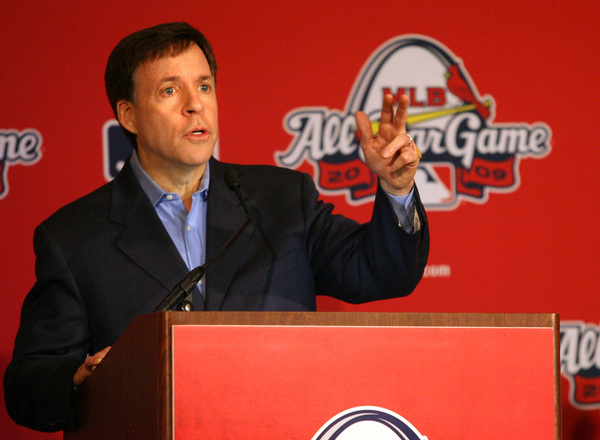
Bob Costas will stay on the phone nearly an hour, and in a world without other obligations we could've made it nearly a week. In a world without other obligations, maybe you'd have time to read all of it, too.
You don't, of course, so Costas will do his best to quickly explain why one of the greatest and most influential sports broadcasting careers of the last generation is now all but done with football and taking on more and more baseball.
"I'm going to get in trouble for this, no matter how well you write it," he said. "And I know you'll write it well, and it'll get picked up in 50 places, and by the time it gets to the fifth or sixth place it'll be: 'Costas Hopes NFL Dies.' "
This is complicated, in other words, and at a time when Costas has felt comments made at a recent journalism symposium about the NFL were taken out of context by many, he's as aware as ever about the value of context.
Here's a good place to start, though:
The recently announced winner of the Ford Frick Award given by the Baseball Hall of Fame is increasing his time in that sport while giving up a football gig that helped him reach 20 million people every Sunday night.
The feelings behind the comments at the symposium _ "The reality is that this game destroys people's brains," he said _ are at least a small part of this.
The line about football destroying brains was a response to a question about what he believed the biggest issue in sports is today. Costas has long been one of the most outspoken network broadcasters on the issue of brain trauma in football and was annoyed that some took the line as a shot at football on his way out the door.
But the truth is the feelings behind those words are part of an altered view of football that make it easier for him to give up one of the highest-profile jobs in American sports television _ particularly as it means more time with baseball, a sport he's always loved.
"You're onto something," Costas said.
This is a fundamental shift in Costas' professional life. He is one of the most gifted broadcasters of his time, having worked years on the NBA, NFL, Major League Baseball and 12 Olympics.
Some of this is a 65-year-old man not ready for retirement but motivated to simplify his schedule to the things that matter most. He decided to give up hosting the NBC's Olympics and Sunday Night Football coverage this year. His last scheduled football work is the Super Bowl in February.
Meanwhile, he did more baseball work in 2017 than he had in years, and he plans on doing even more in 2018.
That means embracing a smaller audience for work around a sport he enjoys more.
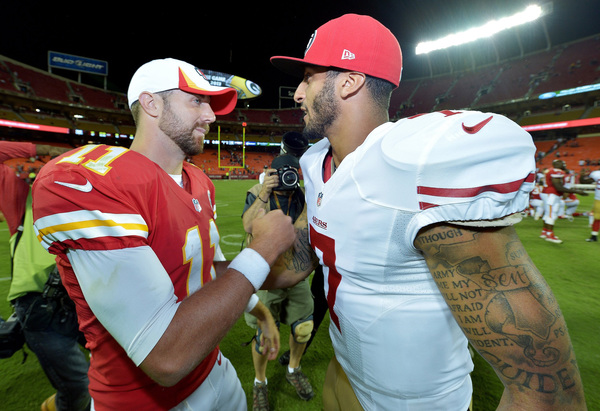
"Do I feel some ambivalence for football?" he said. "Yeah, I do. I recognize how exciting and dramatic it is. You can't watch Aaron Rodgers or Tom Brady operate, or Tyreek Hill in the open field or Antonio Brown, and not appreciate that. And some of the best people I've met in sports are football people.
"I'm also aware of the less pleasant realities."
Those "realities" were part of his work at NBC, including halftime essays, a 90-minute show on football and head injuries in 2012 and interviews on three documentaries about concussions. Last month, the Concussion Legacy Foundation honored Costas at its annual gala.
At some point over the years, Costas began to think more about the NFL's long denials of research linking football and head injuries, which seem to darken with time. A football player's future became less about needing a hip replacement in middle age and more about remembering what day it is.
Costas wondered about the long-term viability of the sport, and he's not talking about the next five years, or 10, or even necessarily the next 20. But at some point, more parents forbidding their sons to play football hurts the quality of high school teams, then college, and eventually the NFL.
The more time that passed, Costas said he became less interested in "simply presenting the games" and more interested in "covering the sport." But the dynamics are different with a network hosting job.
"If you quote me on that, please make it clear, I'm not saying that with any anger or bitterness," he said. "The people I worked with were very good to me."
Football's future has long been hotly debated. We hear and talk a lot about falling TV ratings, or empty seats at stadiums, or declining participation at lower levels. The world is too complicated to blame all or even most of this solely on the fear of head injuries.
TV ratings are down for nearly all programming, there have never been more options for entertainment dollars and kids have more activities available to them than ever before. Besides, any "problems" with the health of the NFL as a business must be taken in the context of a $14 billion-and-growing industry.
But Costas has done this a long time. He's proven himself versatile, smart and adept at reading the winds of change.
That's why it's notable that in the same calendar year, he has given up football and taken on more baseball. He has been honored for promoting awareness of head injuries around football and received the top broadcasting award from the Baseball Hall of Fame.
This is a small part of what change looks like.
"As you get older, you sort of narrow your focus to the things that matter most to you," Costas said. "I loved the Olympics, and still do, but I did 12 of them. I appreciate the drama and excitement of football, but it just felt like those things had peaked for me. My interest in baseball was still strong.
"It wasn't a matter of rejecting something else, as much a matter of, if you're going to slow down, what is it you really want to do? And if I'm going to confine to a few things, I wanted it to be baseball."