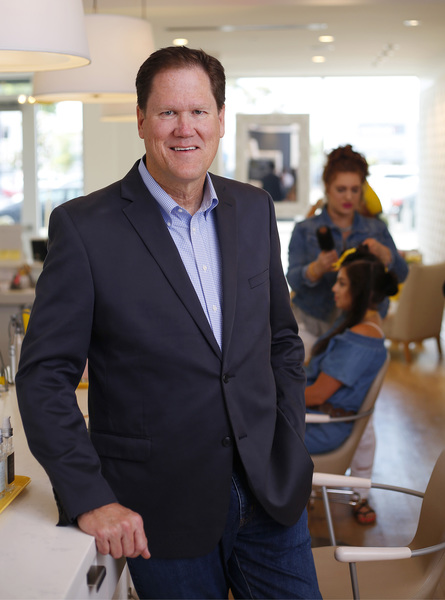
SAN DIEGO _ John Heffner has worn many managerial hats in his career. His latest gig, since 2013, is CEO of Drybar, whose business slogan is no cuts, no color, just blowouts.
While Heffner expects his employees to do the best that they can, he also makes a point to be accessible. He often chats with employees, asking about their family and weekend.
"It goes beyond banter," said Heffner, 54. "I have a genuine (interest) in people and my team's well-being."
Below, Heffner, who has lived in the San Diego area for about two decades _ talks about why he makes himself accessible to employees, motivating workers and micromanaging. (The interview was edited and condensed.)
Q. What's the best way to motivate employees?
A. Probably the single best way is to communicate effectively and consistently. You need to establish and share a vision and help show that pathway to success for individual teams within the organization and as part of that in mind, share organizational milestones ... and recognize individual wins and accomplishments.
I pride myself on being highly accessible to everyone. I answer my own phone and keep my door open. I'm not ensconced in my office. I make a point to walk around frequently during the day. I try to personalize the conversation, ask about their family, what they like to do outside of the office.
Over time, people feel that there's a willingness and openness to hear them and that lowers those barriers that people inherently have for any manager really. I think it's important to be visible _ a key component to accessibility.
Q. Do employees take advantage of you being accessible?
A. Not to the extent I would like them to. It's a constant exercise to (remind people that) it's OK. I'm CEO in title only. But I'm a team member.
Q. What's the worst way to motivate employees?
A. Communicate ineffectively and inconsistently. I hate micromanagement. I abhor it. I will not allow it. It leads to disengagement, disempowerment and demotivation. Not being an active listener is highly demotivating. Cultural insensitivity is highly demotivating. The CEO needs to be the caretaker for culture and guard it aggressively and ensure that the organization serves as safe haven for productive contribution and workplace enjoyment.
Q. How do you define micromanagement?
A. Not trusting. I think micromanagers tend to feel they can do it better and that's wrong. Even if they have greater experience ... you are telegraphing you don't have confidence in the person and that's highly destructive to a healthy relationship.
Q. What's the biggest challenge of motivating employees? How do you overcome it?
A. Understanding individual motivational drivers. In other words, there's not one-model-fits-all platform and the most effective way to overcome that is to get to know each individual and understand their situation.
While sound in theory, it can be a real challenge. It's not practical for a CEO to know (nearly 4,000) people. So what he or she should do is instill in their direct reports the same values and make (it) the backbone of the culture. If done correctly, then it'll permeate the company.
Q. In business, why do you put a huge premium on the human component?
A. What other component is more important? The human component is the backbone, the essence of any business. There are a few very high-profile companies in the news lately facing significant cultural challenges stemming from not sufficiently valuing the human component. It starts and stops with people. Unlike a machine, people are fluid, always changing and in need of support, guidance and motivation.
Q. You have said one of your strengths is in building a great team. What key things do you ask or look for in potential candidates during a job interview?
A. I look for, first and foremost, great character, great work ethic. I look for intelligence and experience. I really insist someone be team oriented and share my same cultural sensitivities. My interview style is very conversational. More often than not, I can size up a person pretty well.
Q. What do you do when you've realized you may have hired the wrong person?
A. We all make hiring mistakes, myself included. The way you manage that, as difficult as it is, is to articulate the issues and make a change. There's a natural tendency to hesitate, work through the issues. When it's apparent that you've made the wrong hire, it's necessary to fix it fast. It doesn't go away. It can have a material impact on the well-being of the organization.
Q. In your bio on Drybar's website, it says: "He is one of the nicest guys you'll ever meet." People don't usually describe CEOs like that. Can you give some advice on how to run a company as the nice guy?
A. While being nice is an attribute I appreciate, it doesn't fully capture my management style. I would say that I'm fair, trusting, accessible, culturally sensitive. So I can be very direct and firm when necessary but always respectful. I'm also highly communicative. There are worst things than being known as nice.
Q. Are being nice and respectful different?
A. Very different. You can have a very difficult discussion but be very respectful. The more important words are respectful and professional. In my day-to-day interaction, am I nice? I hope so.