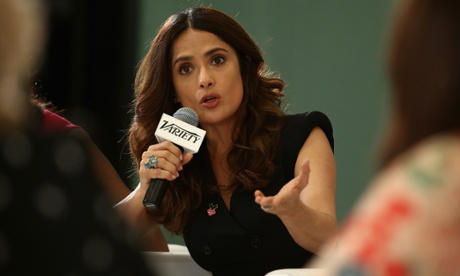
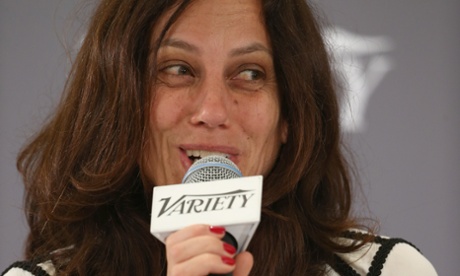
Salma Hayek, Parker Posey and Aishwarya Rai were among those leading a call for greater gender equality in film at Cannes on Saturday. Speaking at the forum organised by trade magazine Variety and UN Women’s HeForShe campaign, the actors spoke of their own experiences of institutional sexism and called on studios, audiences and journalists to alter the discourse.
“Cinema undermines women’s intelligence,” said Hayek, who appears in Matteo Garonne’s competition entry The Tale of Tales. “They don’t see us as a powerful economic force. It’s incredible ignorance. Hollywood doesn’t have this business vision.”
Hayek said her experiences battling prejudice against Hispanic people had taught her “the one colour Hollywood doesn’t ignore is green. We have the power to save their film industry that is collapsing. We cannot stand as victims – [they] don’t care. There’s only one thing people in power care about: money. And we deserve entertainment for us, not our children or husbands.”
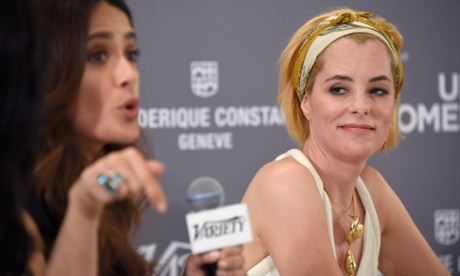
Posey, who co-stars in Woody Allen’s Irrational Man, suggested that far for being in a progressive era, “we live in very masculine times. The culture is eating nature; it’s overpowering storytelling. Movies are turning into games - it’s abut the image not nuance. We’re also live in very ghoulish times. It’s very bloody.”
The actor echoed the sadness of others on the panel that the romcom was no longer a respected genre. “I love the romcom. I thought I had a career playing the best friend. What happened to that? It’s really sad to me.”
UN Women Senior Advisor Elizabeth Nyamayaro cited findings by the Geena Davis Institute on Gender and Media that only 12% of the protagonists of top-grossing films over the last decade were women, and only seven percent of the top 250 movies in the past decade were directed by women.
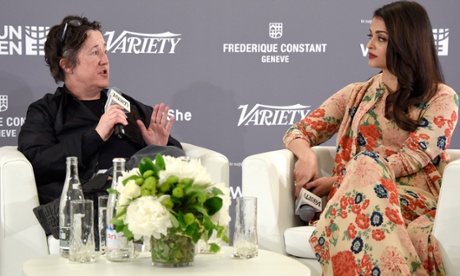
Christine Vachon, the veteran producer whose latest movie, lesbian romance Carol, has premiered to rave reviews, said that funding for projects was still based on “ridiculous systems” determined by the apparent value of the male stars. Hayek added that the casting process was “very sexist”. She recalled one role for which she was sought by a director, who put her forward for consideration by the male lead. “They get approval of leading ladies. The dude didn’t approve me and I got kicked out.”
But a positive note was sounded by Carol co-producer Elizabeth Karlsen. She championed the likes of The Fault in Our Stars and The Best Exotic Marigold Hotel for subverting stereotypes and giving voice to oft-marginalised demographics. She also said she thought longterm organic change was inevitable. “It wasn’t that long ago we got the vote.”
Karlsen called upon other bodies to pull their weight for gender equality, including journalists and the British Board of Film Classification. She attacked the BBFC’s decision to award Made in Dagenham (about the female strike at the Ford factory which helped overhaul the employment laws) a 15-rating on account of its language. “The Social Network was a 12A. If you want to take a whole generation of young girls to teach them about social history you can’t. Instead they can see a movie in which women have coke snorted off them. The censorship bodies need to think beyond the word ‘fuck’.”
Yet for all the rallying cries, the conclusion seemed to be that the film industry had a long way to go before gender equality was in sight. Said Vachon: “I’m so used to being patronised it doesn’t really bother me. I take it in strides. It’s part of the job.”