Robin Williams might get a lot of the plaudits for Mrs Doubtfire, but co-star Sally Field deserves credit for improvising one of the film’s most memorable moments.
In the 1993 comedy, Field, 79, plays Miranda Hillard, the ex-wife of Williams’ character Daniel Hillard, who disguises himself as an elderly Scottish female housekeeper to continue seeing his children.
Throughout the film, Mrs Doubtfire becomes a part of the family, only for her true identity to be disclosed at the end.
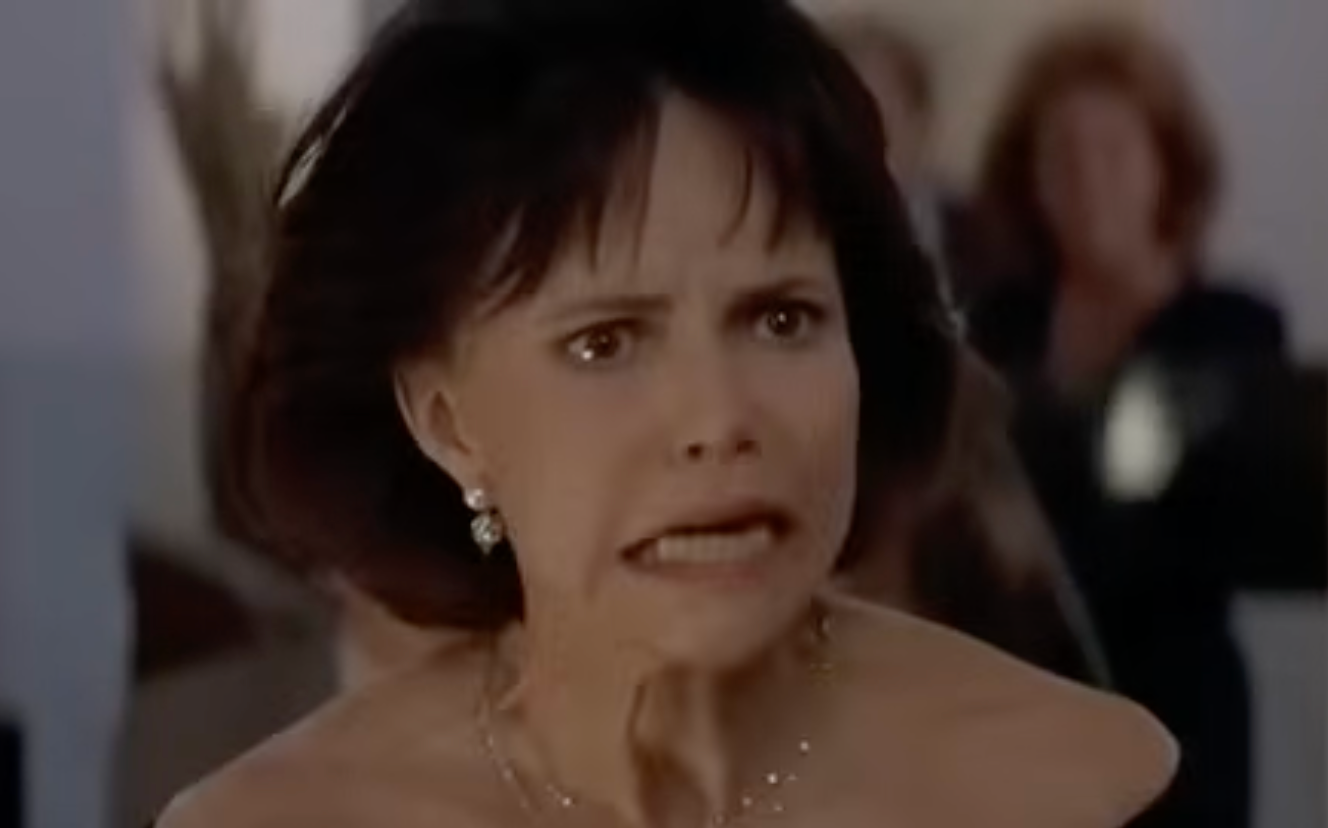
This results in a memorable line delivery from the Oscar-winning actor, who throws her hands to her mouth and, flipping from shock, confusion and anger in the space of five seconds, exclaims in an increasingly frantic manner: “The whole time?!”
It turns out the scene was originally supposed to be “very calm” – until Field ad-libbed.
“That was me improvising,” she told The Hollywood Reporter. “That whole sequence, we shot it at the end of the film. It was several days in that restaurant. But that moment, that is an ad-lib because the line was [supposed to be] very calm. ‘The whole time’ was an improvisation.”
Field credited Williams with helping her “create a relationship” where they could go off script, and also praised director Chris Columbus for encouraging them to do so. She said this helped avoid making Miranda the film’s villain.
“The script wasn’t what was on the page because of what Robin and I were allowed to do by Chris Columbus,” she continued. “We did not want – and Robin felt this strongly, too – the mother to be the villain. We both felt that there were no villains in this divorce. Marriages don’t always last. Sometimes there are no bad guys. It’s time to move on. Without getting in the way of the comedy, it was a delicate dance to allow her to not be mean.”
In May, Field recalled the sweet moment that Williams – who died in 2014 aged 63 – ordered she be sent home rather than work during a moment of personal grief.
During the filming of a pivotal scene in which she and Williams’s characters fight for custody of their children, Field learnt that her father had died.
“[Robin] pulled me over to the side asking if I was all right,” she told People Magazine. “And I started to cry. I said that my father just died… Robin turned around and [told everyone] ‘That’s it for the day, guys! We’re wrapped here. You can get a few shots at the kids and maybe one of Mrs Doubtfire, but Ms Field’s going home.’ And he walked me out. That was Robin.”
Williams, whose other credits included classics Dead Poets Society, Good Will Hunting and Aladdin, died by suicide, following a misdiagnosis of Parkinson’s disease. It was only revealed following his autopsy that he was experiencing Lewy body dementia, an incurable brain disease.
Earlier this year, Field reflected on working with another actor – Hollywood screen icon Robert Mitchum – claiming she couldn’t understand a word he said.
During her downtime on 1967 western The Way West, Field, overwhelmed by the filming experience, would often sit alone, but would be joined by the sleepy-eyed Mitchum, whose credits included Out of the Past (1947), The Night of the Hunter (1955) and the original Cape Fear (1962).
“Mitchum would sit with me, and I never could understand a single word he said,” Field told Talking Pictures podcast.
“I didn't know what he was saying. I don't know if he was stoned or what, but I couldn't string two words together. And I would go, ‘yeah, yeah,’ and [I’d laugh] and pretend I understood what he said.”
She said she got the sense that Mitchum was being “good to me” and “that he was somehow accepting of me”, adding: “The only thing that I understood that he said to me – and then I thought, did I understand that right? – he said, ‘You know, you're one of us.’ And I went, ‘Well, OK.’”
Field hit the big time in the 1970s, with starring roles in Smokey and the Bandit, Hooper and 1976 miniseries Sybil, for which she won an Emmy.
She won two Oscars in the 1980s – for Norma Rae and Places in the Heart – and racked up credits in films Murphy's Romance (1985), Steel Magnolias (1989), Mrs Doubtfire (1993) and Forrest Gump (1994).