In theory, I should love the Salford music map. As a pedant, as the son of Salfordians (tragically, I grew up just over the border, in Bolton), as someone whose musical character was forged in the strobe lights of Madchester, I should be fascinated by this attempt to document the city's musical history.
"So much of what's often called Manchester music," the map states, "actually comes from the city of Salford." However, by staking its claim to musical fame in chippy opposition to Manchester, the project, co-ordinated by the council's tourism department, just looks petty.
"Now's the chance to find out more ... and put the record straight," it claims. Except that no one outside of Salford cares. To 99.9% of visitors to Manchester, and even to most Mancunians, the two neighbouring, intertwined cities are culturally and musically united. The Happy Mondays were from Salford, not Manchester? People in Droylsden don't care about such distinctions, nevermind music fans in Buenos Aires or Milan.
We could, if this was a different blog, have an interesting discussion about the political and socio-economic ways Salford has lingered in Manchester's shadow. Or about the local snobbery it endures. But music does not respect civic boundaries. Manchester city centre has always been the hub of activity that has drawn in talent from the whole of Greater Manchester. It is, therefore, pointless to try and define Ardwick, Oldham or Bury as the definitive seat of local creativity. If you want to get a sense of the environment that shaped the music created locally, then they all matter.
Salford should either celebrate its part in this wider creative history, or shut up. There is no evidence that Manchester has stolen its musical thunder. Salford's most significant claims to musical fame are: Islington Mill, the creative complex where the Tings Tings formed; Ewan MacColl's standard Dirty Old Town, which was written about the city; and the fact that the Happy Mondays, Graham Nash and 10cc's Graham Gouldman were all born and raised there. That, pretty much, is it.
Yes, Tony Wilson was actually a Salfordian; Tim Burgess lived here until he was nine; and half of New Order went to Salford Grammar, but, like the Buzzcocks, they all made their name "in town", not Salford. Indeed, there's a whiff of desperation to the way the map (which is accompanied by an exhibition, Quiffs, Tiffs and Riffs, until October 2009) has been bulked out with, say, a road on which that quintessential Salford icon, er, Nico, once lived; the site of a secret Sugababes gig; or – how tenuous? – the Salford student flat from where Howard Devoto organised the first Sex Pistols' gigs in Manchester.
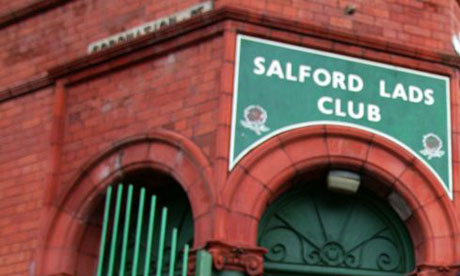
These supposed landmark sites are a problem, too. There's a kitsch value for Smiths fans in being photographed outside Salford Lads Club, but how will gawping at a church where a band once rehearsed, or the bungalow where their bassist was born, deepen your appreciation of their music? Salford is not alone in this. In Liverpool, everywhere from Paul McCartney's childhood home and upwards has been turned into a Beatles heritage site.
Does it work when a city tries to profit from its musical past? If you want to understand Motown's relationship with Detroit or why electronic music is so vibrant in Berlin, can you really get that from a tourist trail? Maybe, if you want to get a true musical sense of a city, you'd be better off exploring, iPod in hand, its bars, bus routes and back streets.