What do sake brewers do with the lees, a by-product of the sake brewing process?
For one long-established brewery in Kobe, making sweets using sake lees is an answer.
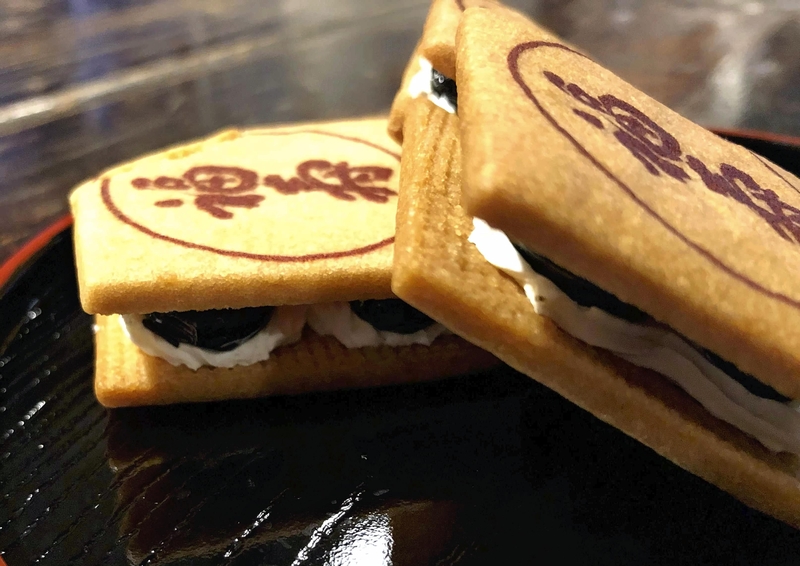
Buttercream made with sake lees is sandwiched between two cookies marked with two kanji characters reading "fukuju," which means happiness and long life. On biting into the sweet made by Kobe Shu-Shin-Kan Breweries Ltd., the crisp texture is followed by a pleasant sake aroma and a distinctive flavor. Sake lees are the sediment from pressed fermented mash called moromi and known for their high nutritional content.
Fukuju is also the name of a main brand of the brewery in Kobe. Sake connoisseurs may know that this sake has been served at official Nobel Prize events.
The brewery has been working hard to make use of sake lees. The buttercream cookie sandwich was released around two years ago, and ice cream made with sake lees has also become a regular product.
"At a time when the consumption of sake lees is declining, we've turned to using them in sweets as they can be enjoyed by a wider range of consumers," said Kazuhiro Sakai, manager of the company's sales promotion department.
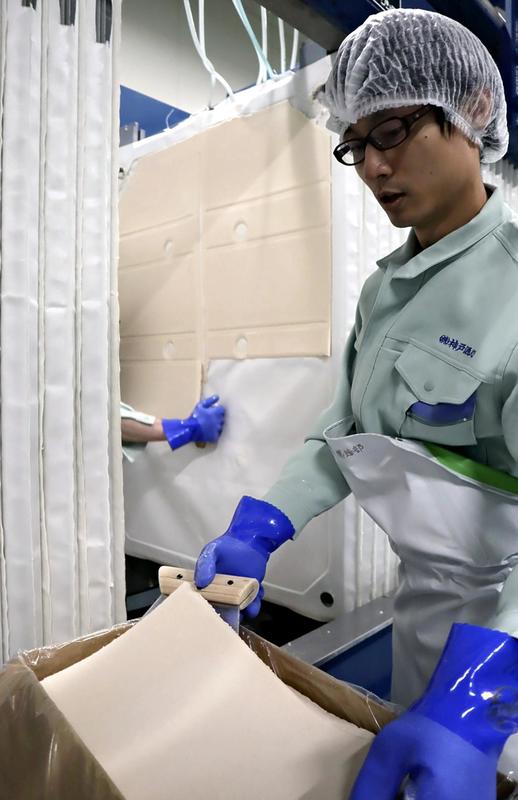
When making sake, Kobe Shu-Shin-Kan puts the moromi mash into a machine with a layer of filters and presses it carefully to separate sake from the solids, increasing force in stages. The brewery does not fully press the moromi to prevent its sake from developing odd flavors, leaving the obtained lees with a richer flavor.
While sake is part of Japanese cuisine, lees from the beverage have similarly been used as a traditional ingredient. For example, these lees are added to soup or used to pickle vegetables and fish. They can be served as a snack, too, by just toasting sheets of them. However, the tradition of eating sake lees is fading, mainly because the Japanese diet has been Westernized.
Kobe Shu-Shin-Kan launched a project about five years ago with a local shopping district where university students develop recipes, while local restaurants cook and serve dishes using sake lees. Examples include macarons and pancakes, part of a trend where sake lees are having a presence in confectioneries.
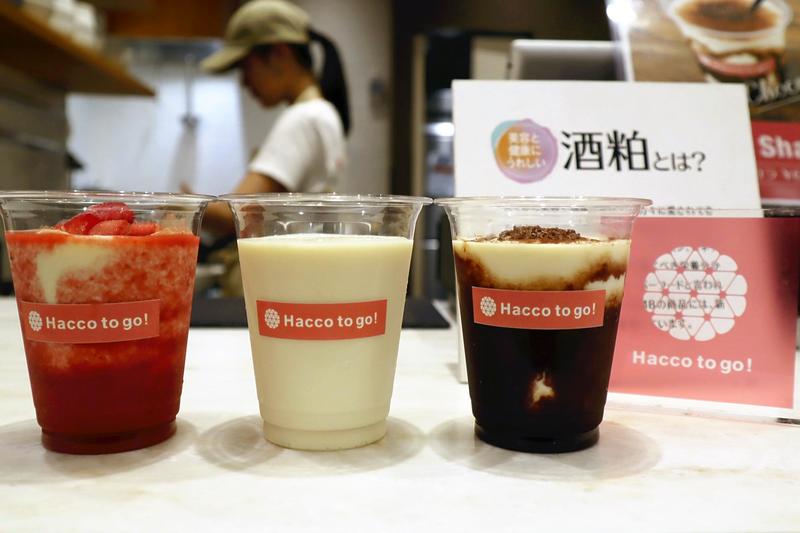
In the Akasaka district of Tokyo, the Japanese restaurant dashi+ added shakes and gelato that include sake lees to its menu in July last year. They are among products under the brand Hacco to go!, promoted by FARM8, a start-up in Nagaoka, Niigata Prefecture.
The company discovered that it was difficult for local small breweries to make use of lees after brewing sake. So instead of the breweries having to throw out much of the lees, the company collects the by-product from them.
"We remove the alcohol content while retaining the good sake flavor, which means [our Hacco to go! products] can be enjoyed by a wide range of people," said FARM8's Terumi Ishibashi. "We plan to collect sake lees from breweries in other places, too."
Fukumitsuya Sake Brewery in Kanazawa, known for its signature Fukumasamune brand, has also developed a range of sweets made with sake lees. These include caramels and madeleines, available at stores the company operates in Tokyo.
Hironobu Tsujiguchi, a globally renowned pastry chef, has also been using sake lees for his products, with his attention on their various advantages.
"I can use sake itself, but the lees can better retain their flavor, even after heating," he said. "They also leave a good aftertaste."
Using sake lees in French confectionery would have once been considered a wrong approach. However, this view started to change after washoku was added to UNESCO's Intangible Cultural Heritage list in 2013. This achievement has prompted pastry chefs overseas to use sake lees as a premium ingredient, while also raising the profile for sake lees in Japan.
"There are many fine sake products across Japan and their lees taste different," Tsujiguchi said. "I hope we can help customers to appreciate these differences through sweets."
Read more from The Japan News at https://japannews.yomiuri.co.jp/