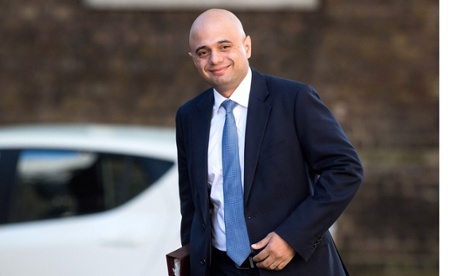
You have to at least admire the consistency. On Monday night, the business secretary ticked off the CBI for showing its hand too early with support for the EU: at departmental questions the following day, Sajid Javid was hell-bent on leading by example and keeping his policy cards close to his chest. The Labour benches thought it best to check whether this was force majeure or a cunning plan? Just in case.
“Can he tell industries around the country whether he still has an industrial policy and, if so, what on earth it is?” asked Stephen Doughty, the shadow trade and industry minister. A fair question given that, in the previous five minutes, Javid had twice appeared to downgrade his department’s commitments. First from policy to strategy and then from strategy to approach. Javid’s reply further lowered expectations. “We intend to have an active dialogue,” he insisted. Presumably through soft play and interpretative dance.
This new touchy-feely, Play school approach to industrial approaches was confirmed when Javid reiterated his commitment to the Red Tape Challenge. A new TV series for Anneka Rice is surely on the cards, though Labour’s Andrew Gwynne did wonder if Javid was aware that Iain Duncan Smith’s universal credit system was adding to business red tape faster than his department was succeeding in reducing it. The active dialogue approach to approaching things hadn’t yet extended to an inter-departmental active dialogue. Slowly, slowly.
Having spent the best part of 20 minutes explaining why the inactivity in his own department was actually a sign of active engagement, Javid stood down to let the small business minister, Anna Soubry, talk up the inactive dialogue approach. Like many ministers, Soubry has an inverse relationship with stridency and self-belief and her Thatcherite delivery suggested she has little knowledge of her department’s plans for a northern powerhouse. Or anything else much.
The best she could offer anyone was a new Twitter account @CutRedTape to which people could tweet suggestions about how to cut red tape. That should do it. Soubry seemed amazed no one had come up with something this brilliant before.
When asked by the shadow higher education minister whether university tuition fees would go up in this parliament, Jo Johnson couldn’t bring himself to lie. Or even varnish the truth. The thing was, he explained sadly, much as he loved and valued all universities and further education colleges – including those he might be obliged to close in the active dialogue approach to creating 3 million apprentices – he just couldn’t really say one way or the other. It was all a bit above his pay grade. As is everything in the Department for Business, Innovation and Skills at the moment, because it can’t create any policies until the chancellor tells it how much money it hasn’t got.
Johnson said: “It’s all part of the national savings effort.” A delightfully second world war description for 21st-century austerity. Next, he’ll be calling for land girls to dig for victory. The happiest face on the government front bench belonged to George Freeman, the minister for life sciences, who wasn’t called upon to answer a single question: mainly because no one had previously been aware of his existence. Anonymity is an approach to approaching things that could catch on.