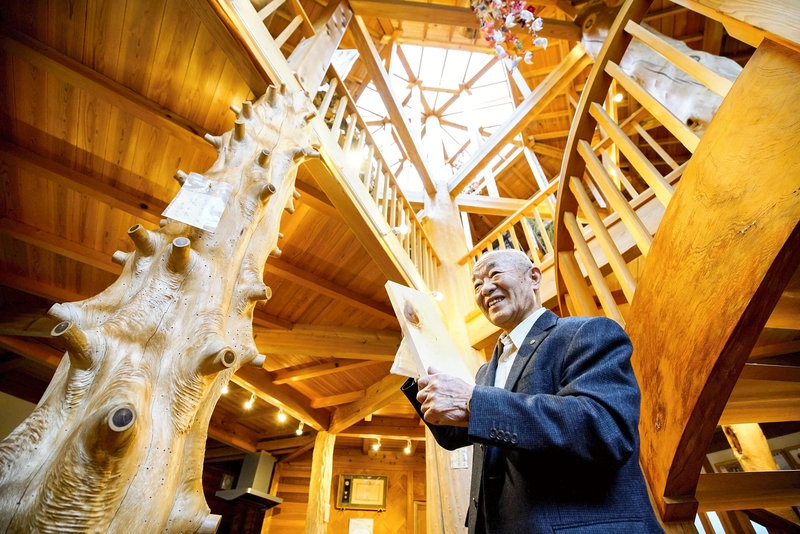
Tadao Otsuki, 83, a former lumber company president, built the Kiryokukan museum in Saitama City because he wanted to show off the beauty of domestic timber.
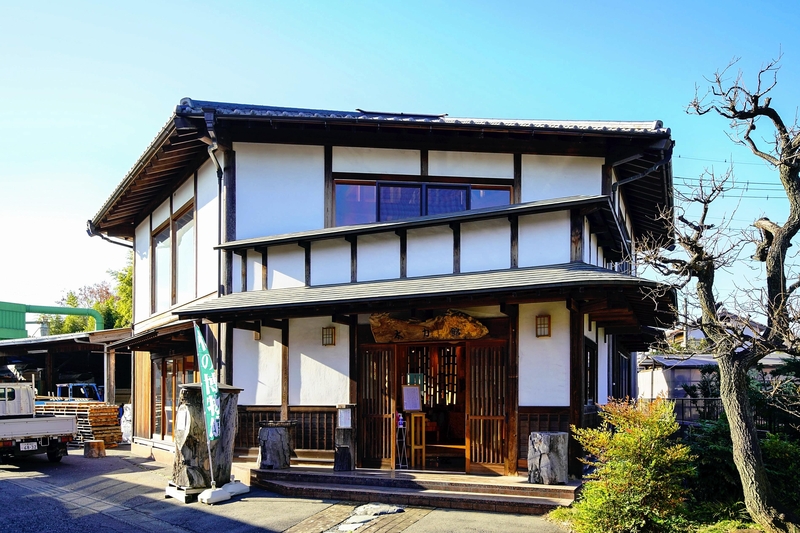
The museum not only displays various types of timber but is also a work of art itself. The structure is constructed with domestic timber, such as hinoki cypress and sugi cedar, and was built using traditional techniques. Kiryokukan literally means "the house of the power of wood."
The museum is a hexagonal two-story building with a main pillar that is a poplar log from Tochigi Prefecture. All of the pillars have holes bored into them for the beams to fit into. This construction method, called "toshinuki koho," makes the building very stable.
Seeing a wooden spiral staircase is apparently extremely rare because it requires assembling curved pieces, which are all carved using planes and chisels.
"You think that's a defect, don't you?" Otsuki asked me, pointing to a split in one of the beams.
He told me splits that occur during the drying process are actually a good sign the timber has lost moisture and have become more firm and durable. To prevent cracks from appearing in pillars, a method called "sewari," in which invisible cuts are made in the sides, is used. Another method used to avoid splits is to heat the timber at a high temperature. However, the smell of the timber and its ability to regulate humidity will be lost, Otsuki said.
He handed me a wooden board, and when I held it close to my nose I could smell the hinoki cypress. The scent only became stronger when I wet the surface with a towel. I did the same with another board that was heated at a high temperature, and its aroma was very faint.
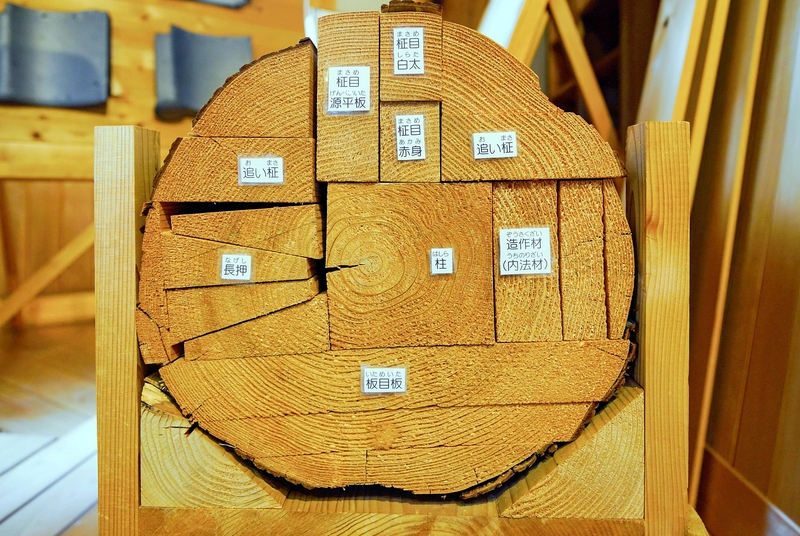
The museum also has a section where visitors can compare domestic timber, such as cherry, pine and Japanese zelkova trees, with timber from around the world.
Otsuki holds a woodworking class at the museum to let participants feel the warmth of wood. He also gives presentations at elementary schools and has donated wooden tsumiki blocks to nursery schools in the neighborhood. He is actively engaged in promoting domestic timber.
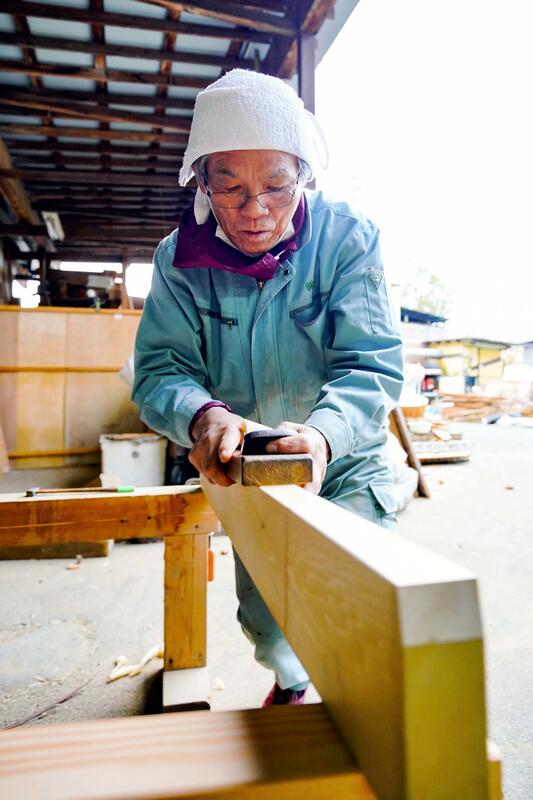
"Trees that are decades old are still too young to be cut into timber because, at that point, it's still their job to help the environment by taking in carbon dioxide," said Otsuki. "When they have lived for at least 80 years, then they can finally become timber, like me."
This museum is definitely filled with the enthusiasm of someone who used to run a lumber company.
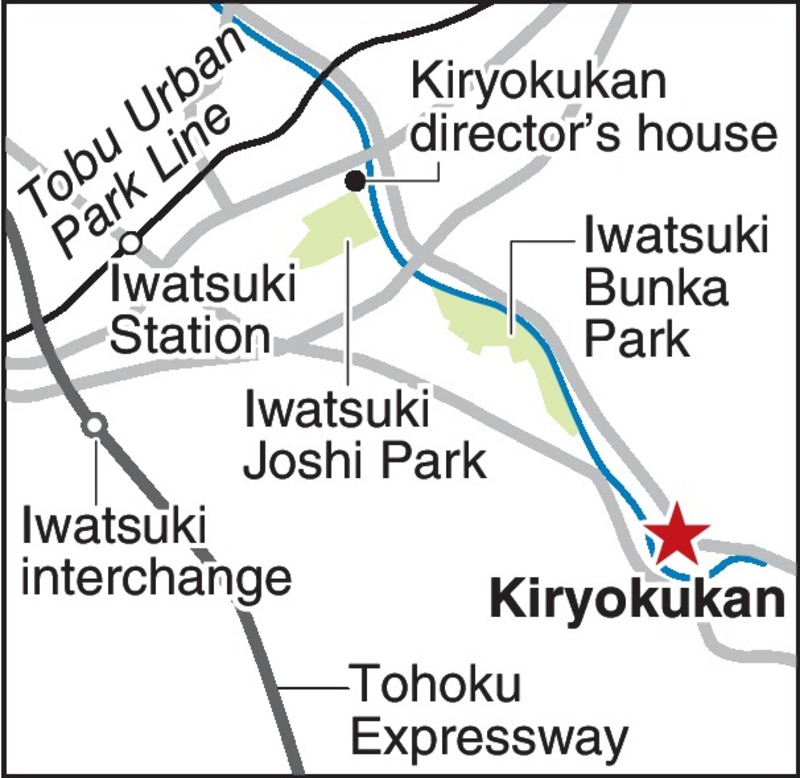
Kiryokukan: 558-2 Niigatasuka, Iwatsuki Ward, Saitama City, Saitama Prefecture
Read more from The Japan News at https://japannews.yomiuri.co.jp/