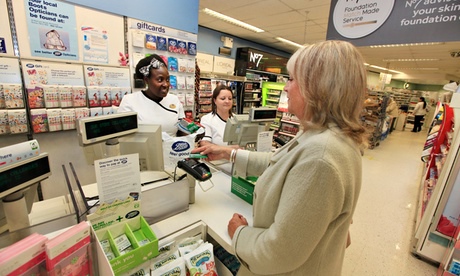
Contactless card payments are booming, and the technology is about to receive a double boost. Next week the card limit will rise from £20 to £30. Meanwhile, one of Britain’s biggest retailers, Sainsbury’s, is finally about to embrace the “wave and pay” revolution.
However, there are still millions of people who are locked out of contactless. Several banks and building societies are still sending out cards that can’t be used in that way. For example, while HSBC’s debit cards are contactless, for some undisclosed reason the banking giant has decided not to give its credit card holders access. Similarly, Nationwide’s credit cards don’t allow contactless payments.
Mass take-up of the technology was slow to start with, but usage exploded last year: MasterCard this week revealed that spending by British consumers on contactless cards has rocketed by 560% in the past 12 months. As an example, MasterCard has been working with the venues hosting Rugby World Cup matches – next month and in October – to ensure they can take contactless payments. Twickenham has connected more than 450 terminals, including all its shops, bars and concession stands.
More retailers are set to sign up to the technology as a result of the limit being upped to £30 from Tuesday 1 September. However, the change is not going to happen everywhere overnight. All terminals will need a software update, though most outlets will probably be ready by 31 October.
The new payment limit is psychologically important because the average debit and credit card transaction in a supermarket is worth just over £25. It is the supermarkets that arguably hold the key to contactless really challenging cash and chip-and-pin, but in the past, the low limits meant they were less interested than other retailers such as coffee chains and fast food outlets.
So it is surely no coincidence that Sainsbury’s has just confirmed it will launch contactless payments in its stores “before the end of the year” and expects the roll-out to be complete during the first half of 2016.
Tesco already has contactless in its London stores – around 500 outlets – but it won’t be drawn on whether and when it plans to roll out contactless across the rest of the UK.
It’s not all been smooth sailing for the technology. Last month researchers at consumer organisation Which? claimed users could be unwittingly opening up their bank account to fraudsters. They bought cheap, widely available card scanners that allowed them to read crucial card data that was meant to be hidden – enabling them to go on an online shopping spree. Industry body the UK Cards Association dismissed the findings, saying Which?’s report was “not a new story”.