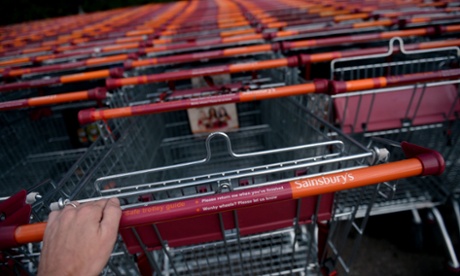
Sainsbury’s has reported its first annual loss in a decade after being forced to cut prices and write down the value of its stores and property assets.
The company fell £72m into the red in the year to 14 March, before tax, after £628m of impairment and onerous contract charges relating to sites where it no longer plans to build supermarkets.
Total sales declined by 0.7%, excluding fuel, to £23.8bn. The group admitted that sales at its main stores had fallen by over 2% over the year, offset by a rise of more than 16% at its convenience stores, to £2.1bn. Online sales rose over 7% to £1.1bn and sales of non-food including clothing rose 9%.
Mike Coupe, chief executive, said: “The UK marketplace is changing faster than at any time in the past 30 years which has impacted our profits, like-for-like sales and market share. However, we are making good progress with our strategy, and our investment in price and quality is showing encouraging early signs of volume and transaction growth.”
Coupe said that Sainsbury’s had increased the volume of items it was selling and attracted new shoppers after spending £50m on cutting prices in the second half of its financial year. Volumes rose an average 6% on the 1,100 items where prices were cut. Coupe said shoppers now had an average £16 a week more to spend and were buying more products even where Sainsbury’s had not cut prices.
Sainsbury’s has pledged to spend £150m more on price cuts over its current financial year, taking its total investment to £200m, £50m more than previously pledged. But the company said that up-lifts in volume were completely off-setting the additional cost to the business.
Coupe insisted the company had the financial capacity to match any moves by its rivals “toe-to-toe”.. Some analysts believe the retailer is vulnerable to a revival at Tesco which has been cutting prices and improving service under new chief executive Dave Lewis.
Coupe said that grocery industry price deflation was likely to continue throughout this year and possibly into next, but suggested widespread price cuts by all the major supermarkets were beginning to impact discount chains, such as Aldi and Lidl.
Like all its major competitors, Sainsbury’s has been suffering from the rise of the low-price German chains, falling food commodity prices and shoppers’ ongoing caution about spending.
“We are beginning to see some uptick of volume in the market and that is undoubtedly good for the whole market, not just ourselves. But it is a little early to call the turn at this moment in time. I’m not going to get carried away. Being overly optimistic is the wrong thing to do,” Coupe said. “The market will remain extremely challenging for the next 12 to 18 months.”
Sainsbury’s has already axed jobs at its head office and stores in a bid to save £500m in order to invest more in price and quality of its products. The retailer has also reined in capital spending from £947m last year to no more than £550m in the year ahead as it slows the pace of new store openings.
The company has also slashed its full year dividend by almost a quarter, to 13.2p a share.
Its decision to pull out of building 40 planned stores, as well as poorer trading in 40 of its existing stores, led to the massive property write down that pushed Sainsbury’s into the red. It also spent £53m on transition costs in relation to Sainsbury’s Bank after taking full ownership of its joint venture with Lloyds Banking Group. The company admitted that “transition costs” at the bank would rise to between £80m and £120m, more than expected.
Excluding one-off charges, Sainsbury’s delivered pre-tax profits of £681m, nearly 15% down on a year before but well ahead of analysts’ expectations of about £660m. However its shares fell 2.6% to 267.9p, making it the biggest faller in the FTSE 100.
“The underlying profitability of the business is remarkably robust in an extremely challenging environment,” Coupe told Radio 4’s Today Programme.
Last week it emerged that had Coupe has been sentenced to two years in jail in Egypt for embezzlement. The company is appealing against the legal action which relates to the supermarket’s attempt to open stores in the country in 1999. An appeal hearing is expected within the next fortnight.
Coupe, who was forced to fly to Egypt last month as part of the appeal process, insisted that it was business as usual as Sainsbury’s legal team handled the process. “It hasn’t affected the day job,” he said.