Picture this: you're three days into a solo crossing of Patagonia's Torres del Paine, the wind is picking up, and the trail markers have gone under fresh snow. You reach into your jacket and pull out your phone. Within seconds, you have your exact GPS coordinates, a cached offline map showing the nearest refuge, and — if things genuinely go sideways — the ability to ping emergency services via satellite without a cell signal in sight. That's not a scene from a gear catalog. For a growing number of solo adventurers, it's a Tuesday.
The smartphone has quietly become the most consequential piece of kit in any traveler's pack — not because it replaced the camera or the compass in a single leap, but because it absorbed dozens of tools incrementally, until one day you realized you couldn't function in the field without it. For solo travelers and outdoor enthusiasts especially, what's riding in your pocket matters more than almost anything else you're carrying.
Your Phone Is Now a Search-and-Rescue Asset
GPS navigation was the first major shift. Dedicated devices like Garmin units still have their loyalists, and understandably so, but modern smartphones have largely closed the gap. Apps like Gaia GPS and onX Maps let you download full trail data before you leave the trailhead — so even in a national park with zero cell coverage, your phone knows exactly where you are.
The bigger story, though, is satellite communication. Until recently, this was the domain of expensive standalone gadgets. Now it's baked into flagship phones, and the iPhone 18 Pro is expected to push this significantly further. Rather than simple one-way emergency SOS texts over satellite, the device is reportedly set to support 5G via satellite — actual data connectivity in areas where no carrier infrastructure exists. Layer on the new self-developed C2 modem, which is engineered to hold signal more tenaciously and draw less power while doing it, and you're looking at a meaningful change in what a solo traveler can reliably count on in genuinely remote terrain.
For anyone who hikes alone, the shift from "emergency beacon" to "functional backcountry communication" isn't a spec bump — it's a qualitative change in safety. The question of whether to carry a dedicated PLB becomes a lot harder to answer when the iPhone in your jacket already covers most of those scenarios.
Why Fall 2026 Is Worth Paying Attention To
Apple's fall release window is predictable enough at this point, but not every year represents a genuine hardware leap — and the iPhone 18 Pro looks like it does. The lineup is expected to arrive with the A20 Pro chip, bringing substantially improved computational performance and on-device AI processing. The display moves to LTPO+ panels with more refined dynamic refresh rate management, which in practice means better battery efficiency during the long screen-on sessions that navigation demands. The Dynamic Island shrinks further, reclaiming real estate on a screen where every millimeter counts when you're reading a topographic map in gloves.
On the camera side, the headline feature is variable aperture on the main lens — the ability to adjust how much light reaches the sensor, which is something fixed-aperture smartphone cameras have never been able to do. There's also a new Dark Cherry finish joining the lineup and a redesigned rear ceramic panel that's reportedly tougher and better at distributing impact force than its predecessor. And supporting all the wireless features under the hood, the new N2 chip strengthens connectivity and near-field performance.
If you're running an older device and planning a serious trip for late this year or early next, the gap between where your current hardware sits and what's coming is worth factoring into your planning. [These are 10 reasons to upgrade to the iPhone 18 Pro in September] — and for solo travelers, the safety-related updates alone carry real weight.
Rethinking What You Carry
Solo travel imposes a discipline that group travel lets you avoid: every ounce is your problem, and every item you lose is irreplaceable until you find a shop. The traditional wallet — thick, full of loyalty cards you'll never scan abroad — is one of the first things worth reconsidering.
A MagSafe-compatible phone wallet changes the math. A well-designed one holds four to five cards, tucks in a couple of folded bills, and attaches to the back of your phone magnetically and securely. Your ID, your primary card, and your emergency cash travel with the one thing you're never going to absentmindedly leave on a café table. In pickpocket-heavy destinations, consolidating your valuables onto a single object isn't just a convenience — it's a real reduction in surface area for loss or theft. In the backcountry, it's one fewer thing to dig through your bag for.
Protecting the Device That Protects You
Here's the uncomfortable reality about using a smartphone as your primary field tool: it's fragile in a way that a paper map or a compass never was. A drop onto granite during a rocky scramble. Sand working into a port during a desert crossing. Rainwater on a mountain pass at 3,000 meters. These aren't edge cases on serious trips — they're the normal conditions.
This is where your choice of iPhone case stops being an aesthetic decision and starts being a practical one.
For day-to-day travel — urban solo trips, lighter trail days, destinations where the biggest physical risk is cobblestones — ESR's Classic Hybrid case for iPhone 18 Pro and iPhone 18 Pro Max hits the right balance. It's clear, lightweight, and genuinely protective without adding the kind of bulk that makes a large phone feel unwieldy. The fit is precise and the clarity holds well over time, which matters when you're using the rear camera constantly.
For harder environments — multi-day backcountry trips, technical terrain, conditions that will actually test the phone — the Cyber Tough case is built differently. It's a rugged iPhone 18 Pro case with military-grade drop protection, engineered to handle impacts across multiple angles without transferring that force to the display or the camera module. Yes, it adds thickness. In the context of a device that's serving as your navigation system, your emergency communicator, and your only camera, that trade-off is straightforward.
Worth noting for those planning ahead: ESR is currently developing a new protective case designed specifically for the iPhone 18 Pro's updated chassis. The redesigned rear ceramic panel and refined camera module placement that come with the 2026 lineup require case manufacturers to start from scratch rather than adapt existing molds, and ESR is treating this as an opportunity to introduce a new protection tier alongside the Classic Hybrid and Cyber Tough options. Details haven't been released yet, but it's worth checking back around launch.
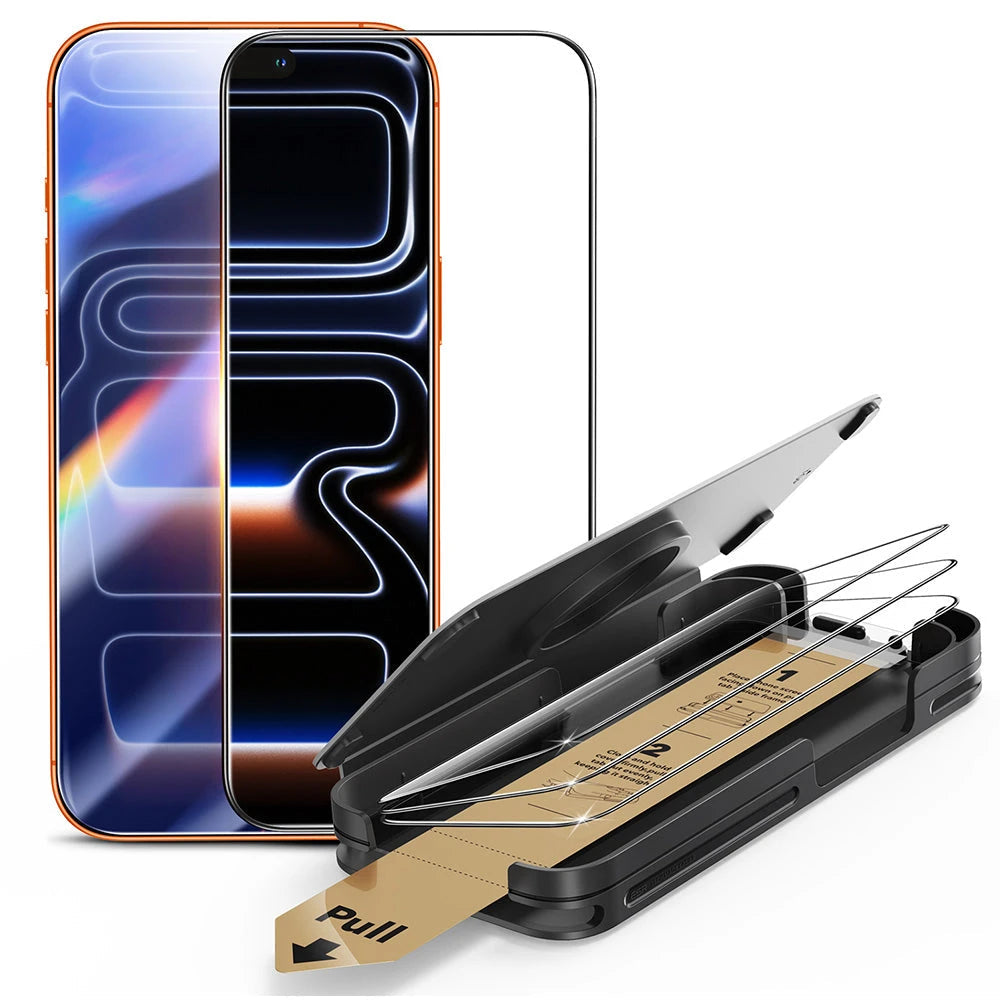
Beyond the case itself, screen protection belongs in the same conversation. A shattered display on day four of a ten-day route doesn't just cost money — it potentially takes your navigation and communication offline at the worst possible moment. ESR's Corning-certified tempered glass screen protectors offer the hardness ratings that matter when your phone hits something sharp, rather than just the cosmetic scratch resistance that thinner films provide. Adding a one-piece lens protection film over the camera module is equally worth doing; minor surface scratches on the optical stack degrade image quality gradually, and on a phone with a variable aperture system doing real photographic work, that degradation shows.
The Camera Question
The trade-off between carrying a dedicated camera and relying on a smartphone used to be clear: if photography mattered, you brought the camera. That calculus has shifted, and the iPhone 18 Pro shifts it further.
Variable aperture is the most significant change for travel photography in this cycle. The ability to move between aperture settings — widening to let in more light at dusk or at elevation, narrowing for maximum sharpness in full daylight — is exactly what makes dedicated cameras feel more expressive than fixed-aperture smartphone lenses. Combined with the A20 Pro's computational photography capabilities and the simplified Camera Control button (redesigned to cut down on accidental triggers and make one-handed framing more intuitive), capturing a bird of prey mid-flight or a star field at 4,000 meters becomes achievable without a separate camera body and lens in your pack.
The N2 chip supports real-time wireless features that become relevant when you're transferring video footage from the field or relying on live connectivity through the satellite 5G link. And the smaller Dynamic Island means more of the screen is available for reviewing map data or checking your last GPS waypoint.
Before You Leave
The smartphone is now, inarguably, the most versatile safety and travel tool most people carry. It navigates, communicates in emergencies, documents the journey, handles payment, and — with the right hardware — stays connected even where the infrastructure disappears entirely.
That last capability matters most for solo travelers, because when something goes wrong, there's no one to run for help. The device in your pocket, and the accessories around it, need to work when everything else hasn't.
Before your next departure, do the honest audit. Battery health — is it actually at a level you'd trust on a five-hour trail day? Is your current iPhone case rated for the conditions you're actually heading into, or is it just the one that came with a screen protector bundle two years ago? These aren't glamorous questions, but they're the ones that separate a trip that goes smoothly from one that doesn't.
Pair a capable device with the right iPhone case for the environment — the Cyber Tough for serious outdoor use, the Classic Hybrid for urban solo travel, and whatever ESR releases for the iPhone 18 Pro's redesigned body — and you stop carrying a phone and start carrying a system.