No spectacle of pious impotence is more complete than that of London’s Labour politicians railing against the global super rich. Their indignation about the power of City privilege, Mayfair billionaires and “rich foreign investors” buying “off plan” property from marketing suites in Hong Kong is dwarfed by their helplessness in the face of it.
There are, though, compensations for them too. Loudly denouncing this Monopoly board London as a menace to the greatness of London as a whole guarantees a hearty cheer for would be mayors from those on the same side of the political fence. What they don’t say with quite such force is that without the flow of filthy lucre down the Thames much of their vision for the city will disappear into a funding gap that nothing else will fill.
The latest hustings for those hoping to be Labour’s next mayoral candidate was the fourth I’ve witnessed, one of which (on housing) I have chaired. Hosted by the Guardian and reported here, it saw contenders Christian Wolmar, Gareth Thomas, David Lammy, Sadiq Khan, Tessa Jowell and Diane Abbott repeat their now familiar distaste for corporate tax-dodgers, banker salaries and growing inequality coupled with wish lists of things they’d certainly do about it if only national government would let them.
The cry for greater fiscal devolution to the capital is backed by all six - as it also is by Tories, Greens and Lib Dems - though how far towards becoming the city state envisaged by Thomas the present Westminster regime will allow London to travel remains to be seen. Meanwhile, as austerity gnaws into transport budgets, London’s poorest boroughs cope with some of the biggest spending cuts and Cameron’s treasury renews its inexplicable assault on the supply of housing that low and middle income Londoners can afford, politicians and planners must increasingly turn to private finance to pay for the things the public purse will not.
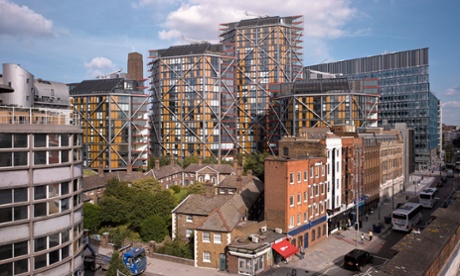
It’s an uncomfortable fact that about one third of all the “affordable” homes built in London in recent years have been the “planning gain” by-products of commercial developments, enterprises frequently paid for by international property giants often with the “off plan” upfront takings from those “rich foreign investors” now routinely blamed for proliferating towers of new luxury flats and London’s house-price inflation generally.
Protesters rail against “poor doors” and blocks of non-existent dwellings sold to far-off cash buyers on the strength of architects’ CGIs, but do they want more homes at sub-market prices or don’t they? Should London’s children do without the schools the rake-off from these deals supplies? Should its pedestrians and cyclists go without the street enhancements? Is the Northern Line extension into Nine Elms a bad idea? Such are the dilemmas polemicists can afford to ignore. For practical politicians, that option is not available.
The Section 106 agreement, unsatisfactory and undermined by “viability” shenanigans, is, like it or not, one of the most fruitful proxies for a tax London politicians can both raise and spend. It may make you want to spit, but the more exclusive the penthouse, the more plush the facilities the proles aren’t allowed to use in some monstrous prime site glass and steel edifice, the more chance there may be of someone on a waiting list in Southwark, Wandsworth or Newham having a half decent roof over their heads.
Things shouldn’t be like this, but unless and until the capital is awarded a devolution revolution something like the one heading Scotland’s way, its politicians can only dream of Tobin taxes, land value taxes, restructured council tax bands and all the rest of it. They might not care for London becoming a safe haven for footloose and sometimes mucky money, but what would happen if it went away?