In a case involving former requisitioned workers from the Korean Peninsula and others suing a Japanese company, South Korea's Supreme Court recently issued a decision ordering the defendant to pay damages. Reasons for the decision were many, including the validity of court rulings made in Japan and the extinctive prescription of the claim. However, considering international law, the most important issue here involves the 1965 Agreement on the Settlement of Problems concerning Property and Claims and on Economic Cooperation between Japan and the Republic of Korea (hereinafter referred to as the "Claims Agreement").
I participated in the negotiations leading to this agreement as an official in charge from the former Treaties Bureau of the Foreign Ministry. Having knowledge of the negotiation process, I believe the top court decision entails serious problems that cannot be overlooked.
The Japanese side negotiated with the South Korean side on the issue of claims with the intention of leaving behind nothing that would lead to future trouble. The resulting Claims Agreement states that the issue of claims between the countries and among their citizens has been "settled completely and finally," and that "no contention shall be made."
With respect to claims, it was the intent of those who drafted the related article at that time that the contracting parties and their citizens would not be legally bound to respond to any claim, on any basis whatsoever, made by either country. This has served as the legal basis for the friendly and cooperative relationship between Japan and South Korea since 1965.
The latest decision, however, stated that the Claims Agreement negotiations were not for claiming compensation for Japan's unlawful colonial rule, but rather for settling financial and civil claims regarding debts and credits between the countries by way of a political agreement. Thus, the plaintiffs' claim for damages is a claim for "compensation for crimes against humanity committed by a Japanese company in direct connection with the Japanese government's illegal colonial rule and war of aggression against the Korean Peninsula," and that the right to claim compensation for damages that the plaintiffs argue for against the defendant cannot be deemed to be within the scope of the Claims Agreement. The court thereby ordered the Japanese company to pay damages.
This interpretation, however, runs contrary to the negotiation process of the agreement, and it must be said that efforts made by both the Japanese and the South Korean sides to conclude the agreement will have come to naught.
It is well known and true that upon normalizing diplomatic relations between Japan and South Korea in 1965, there was conflict between the countries over the legal nature of Japan's 35-year rule of the Korean Peninsula. Specifically, the South Korean side took the position that the 1910 Japan-Korea Annexation Treaty had been invalid from the beginning, while the Japanese side took the position that it was effective at the time of its conclusion. On this point, compromises were eventually made by confirming in the draft text of the Japan-South Korea Basic Relations Treaty that all treaties and agreements concluded between the countries before Aug. 22, 1910, were already invalid. Despite the differences in basic views regarding the nature of Japan's rule over the Korean Peninsula, the Basic Relations Treaty and the Claims Agreement are accords that have been concluded by overcoming differences for the future of Japan-South Korea relations.
The important thing is that the Claims Agreement is a "package deal" that has been employed internationally in postwar settlements and other occasions to deal with reparations and claims issues. It was agreed that neither side would step into dealing with individual claims, but integrated into a single package the issue of the right to claim and economic cooperation totaling 500 million dollars.
If individual claims are to be dealt with more than 50 years after the agreement was concluded, the basis of the Claims Agreement and eventually the basis of the normalization of Japan-South Korea relations will be rendered completely ineffective.
With regard to the Claims Agreement, South Korea's claims against Japan tend to be the issue. However, it should be noted that the agreement entails bilateral matters, i.e., not only the claims of South Koreans against Japan and the people of Japan, but also the claims of the Japanese people against South Korea and its people are said to be settled.
In connection with this, the minutes of the Claims Agreement also clearly state that Japanese fishermen whose boats were seized by South Korea have given up their right to make claims.
Nowadays, not many people know that South Korea, after unilaterally declaring in 1952 the so-called Syngman Rhee Line contrary to international law, seized more than 300 Japanese fishing boats through 1965, detaining more than 3,000 Japanese fishermen for an extended period and placing them in an inhumane and inferior environment. There were some Japanese fishermen who were shot to death or otherwise killed at the time of the seizures.
These were serious crimes that could fall under the category of "crimes against humanity" under international law, but the Japanese side paid huge sums of compensation to Japanese fishermen who waived their claims.
This was incorporated in the Claims Agreement based on the nature of the pact that was created with the aim of starting over with a clean slate.
If we start saying things similar to what South Korea's Supreme Court has said, Japan would have to revive all its claims against South Korea, which could include not only those involving fishermen, but also those for assault on displaced Japanese citizens in the Korean Peninsula after the end of World War II, among other matters. In addition, Japan would have to seek a formal apology from South Korea for conduct against Japanese fishermen, and might have to consider pursuing the criminal liability and punishment of those who were involved.
I would like to point out another problem regarding the decision of the South Korean Supreme Court. It involves the relationship between the administration and the judiciary in South Korea. No country can evade its obligations under international law for any domestic reason, and the same can be said about a judiciary decision. Indeed, under the separation of powers, the judiciary is independent and the administration cannot control the judiciary. However, if the judiciary is to relieve the state of its international obligations, international law and international order will not hold.
At the same time, foreign policy belongs to the authority of the executive branch, not the judiciary.
In the past, the South Korean government held the position that the issue of claims by workers, including former requisitioned workers, had been resolved. It should be pointed out that this ruling also poses a serious problem in the sense that the judiciary overturned the decision of the executive branch, which has diplomatic authority.
Though it was at a time of war, stories of those who suffered a great deal of hardship are painful to hear. The Japan-South Korea Basic Relations Treaty and the Claims Agreement, however, were concluded with the utmost efforts from both sides for the future of both Japan and South Korea.
My abilities might have been limited, but as one who took part in the effort, I sincerely hope that the valuable legal foundation that has supported Japan-South Korea relations for more than half a century will not be damaged.
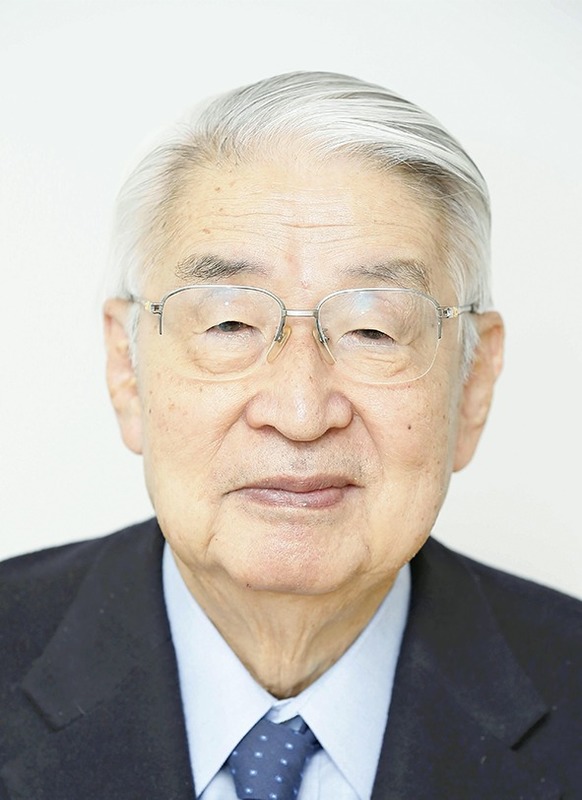
Fukuda, 83, is honorary of counsel to Marunouchi International Law Office in Tokyo. He joined Japan's Foreign Ministry in 1960 where he worked as ambassador to Malaysia and senior deputy minister for foreign affairs. He served as a justice of the Supreme Court from 1995 to 2005.
Read more from The Japan News at https://japannews.yomiuri.co.jp/