South Korea aims to cut some 30% of carbon emissions from railway travel by replacing all diesel passenger locomotives with a new bullet train by 2029, President Moon Jae-in said on Monday.
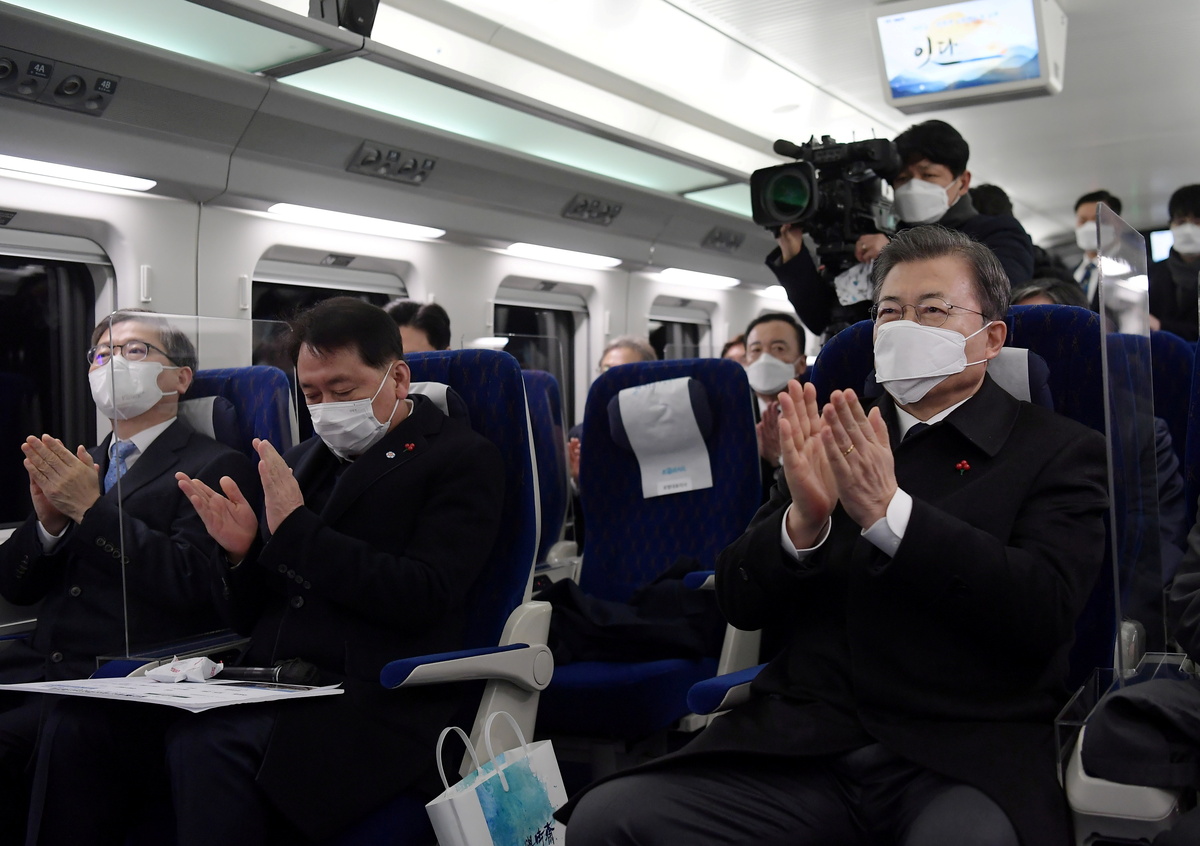
Moon joined a trial run of the KTX-Eum, an electric multiple unit train as South Korea, one of world's most fossil-fuel reliant economies, envisages a "greener" recovery from the novel coronavirus. Eum means link in Korean.
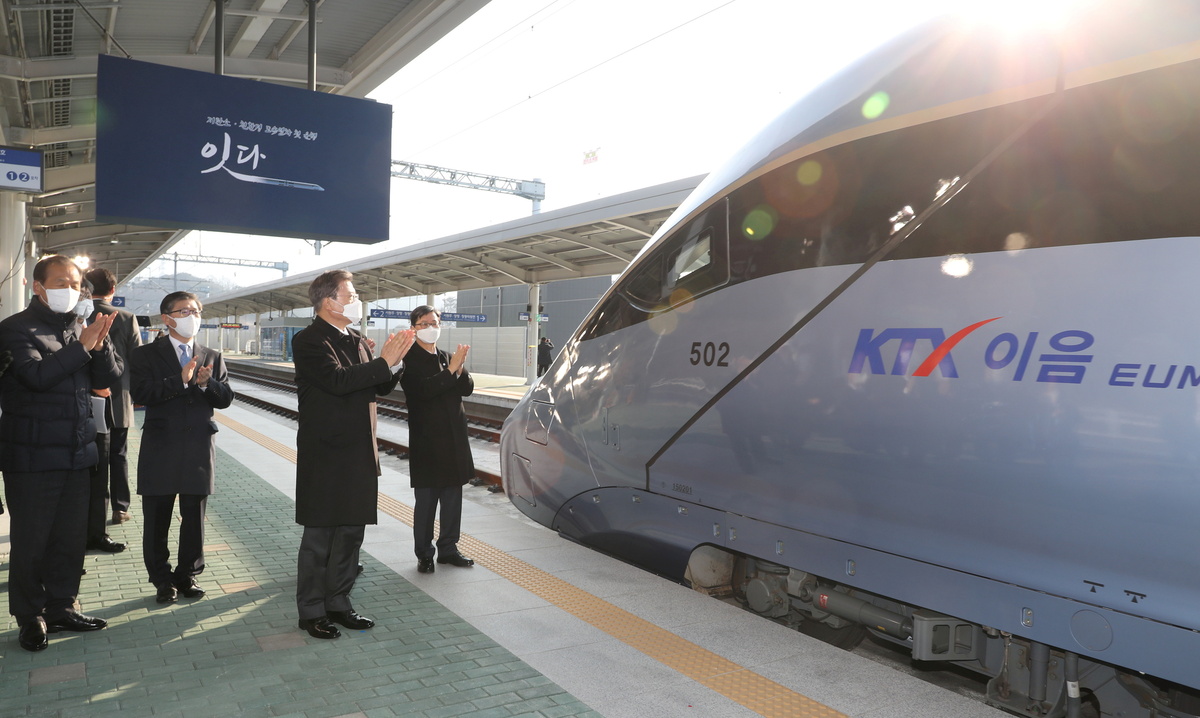
"We will replace all diesel passenger trains with the KTX-Eum by 2029 and establish eco-friendly railway transport nationwide," Moon said at a station in the eastern city of Wonju.
"By doing that, we will cut 70,000 tonnes of greenhouse gas emissions, which is equivalent to planting 10 million pine trees, and advance to a carbon neutral society."
The train, built by Hyundai Rotem Co, only produces some 70% of the emissions produced by diesel-powered trains, which generated 235,000 tonnes of emissions in 2019, according to state-run Korail Railroad Corp.
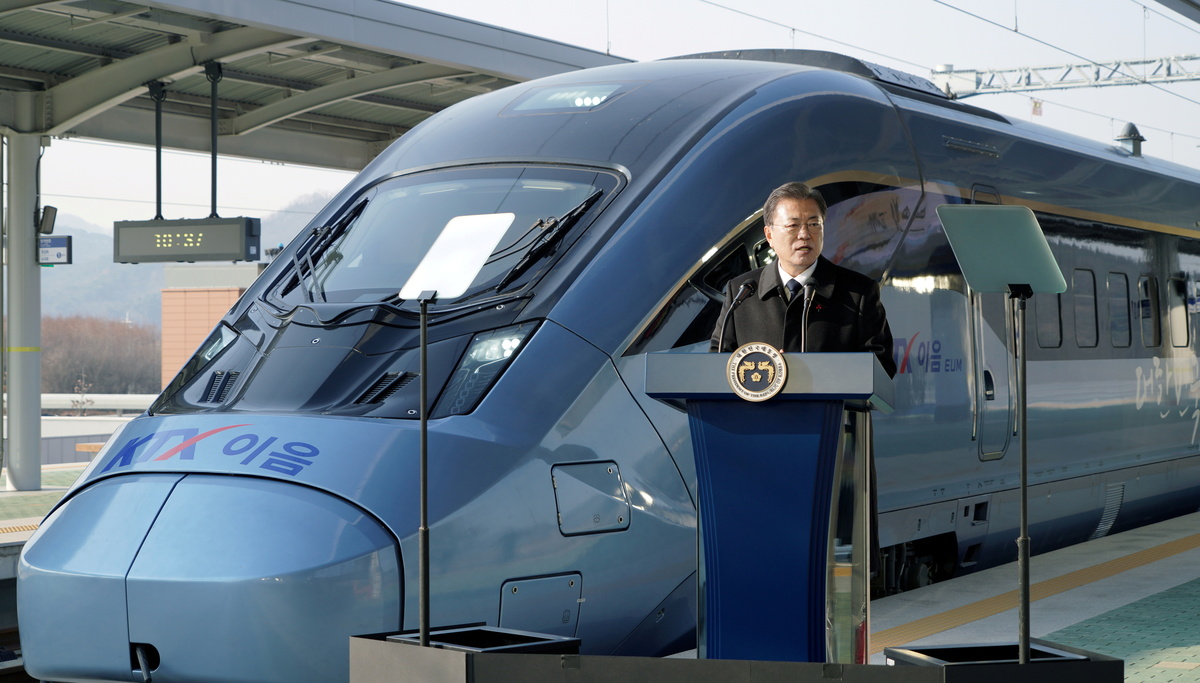
Its top speed is 260 km (162 miles) an hour, slightly slower than the 300 kmh of the regular KTX.
Moon is promoting a "Green New Deal", a six-year plan aimed at boosting jobs and curbing heavy reliance on fossil fuels in Asia's fourth-largest economy.
Moon has declared that South Korea would be carbon neutral by 2050.
The initiative focuses on investing in more environmentally friendly energy and transport, such as solar power and electric and hydrogen cars, and building digital infrastructure.
Korail chief, Son Byung-seok, told Moon that the company aims to expand high-speed services from 29% of all routes to 52% by 2024, as part of the government's plans to funnel 70 trillion won ($64.7 billion) into rail networks.
Coal makes up 40% of South Korea's electricity mix and renewable power less than 6%.
(Reporting by Hyonhee Shin; Editing by Robert Birsel)