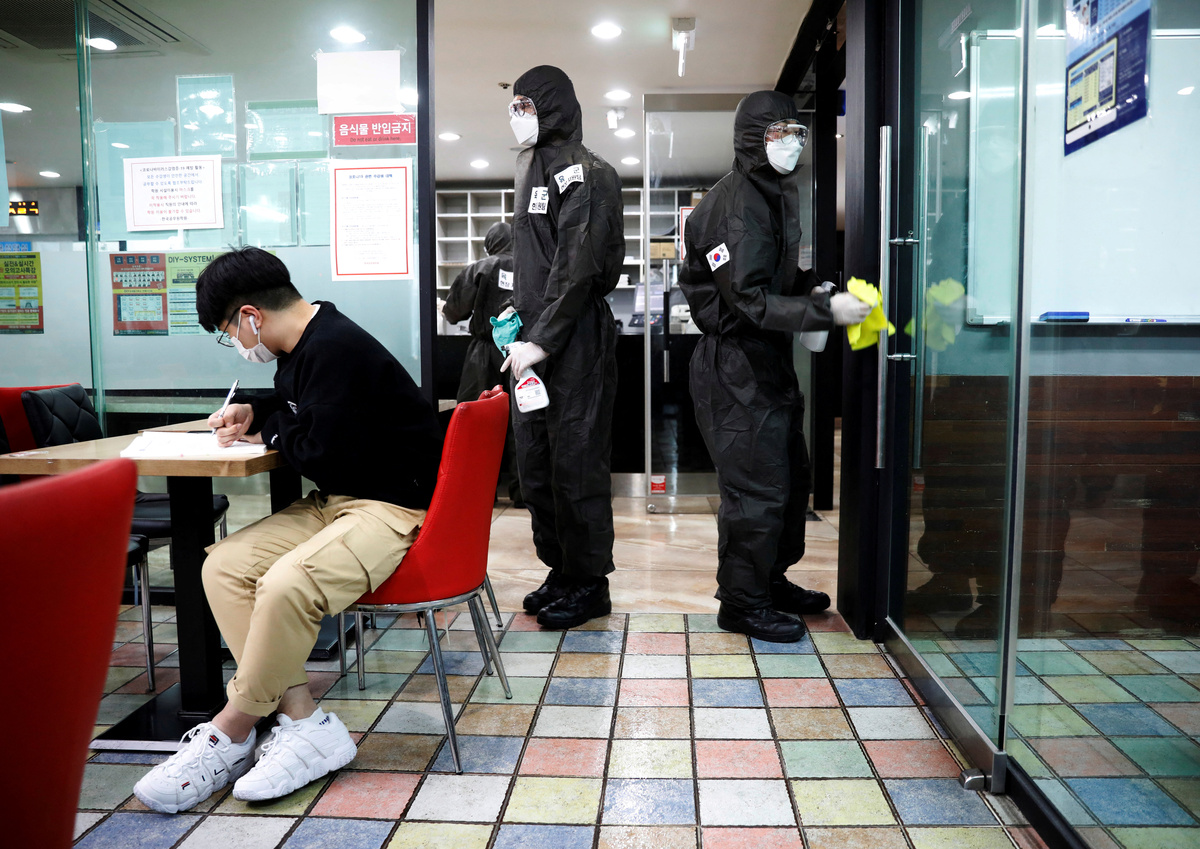
A South Korean court ordered that private educational facilities, including cram schools, should be temporarily excluded from government COVID-19 vaccine pass mandates, the health ministry said on Tuesday.
The injunction is one of the first legal obstacles to South Korea's vaccine mandates, which require passes or testing for entry to facilities including restaurants, cafes, gyms, and bars, as well as privately-run schools.
A Seoul administrative court ruled that the mandate at private education facilities such as tuition centres, libraries and study cafes should be blocked while it considers a legal challenge filed against the Ministry of Health by federations of private education and parents' groups, the ministry said.
The ruling said mandates effectively limit "the rights (of unvaccinated people) to use cram schools and study facilities," said Yonhap news agency. It first reported the exemption, which the ministry confirmed.
The health ministry said the mandate should be expanded to protect unvaccinated people and reduce the number of critically ill patients, and it will shortly decide whether it will appeal against the injunction in cooperation with the justice ministry.
The passes are required for people aged 17 and older and there is a plan to extend the requirement to children over the age of 12, but will not apply to public schools.
In the face of protests, the government delayed the start of the extended mandate to March from February, and then added a one-month grace period.
Prime Minister Kim Boo-kyum told a meeting with a group of students and parents last month that the vaccine pass was not intended to force vaccination or discriminate against anyone unvaccinated but to minimise the risk of infection at vulnerable facilities.
More than 42.6 million people, or 83.1% of the 52 million population, have been fully vaccinated, including about 19 million who have received booster shots, health authorities say.
(Reporting by Josh Smith and Hyonhee Shin;Editing by Robert Birsel and Barbara Lewis)