
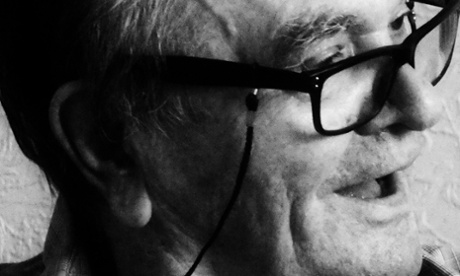
My father, Ryszard Drożdż, who has died aged 86 or 87 (nobody really knows), lived most of his adult life as a manual labourer, but the story of his life is a remarkable one.
Raised in Poland, he underwent experiences in his early years that read like the script of a film. He was born on a train travelling between Poland and Czechoslovakia to parents, Franciszek and Stanislawa, who had eloped due to family disapproval of my grandfather’s socialist beliefs. Ryszard grew up in Raków, where his father was the police chief, but his life changed for ever when he was sent to a Siberian labour camp with his mother and four sisters in 1940 after his father had been interned in a prison in Lithuania. His brother, Tadeusz, had by this time already been executed by the Russians.
At 13, he was declared an enemy of the Soviet state after his mother bribed a guard and bought his release from the labour camp. His mother and sisters remained in Siberia and all survived, returning to Poland in 1947. From Siberia, he travelled west after hearing that a number of fellow ex-detainees were heading to Iraq and so joined the exodus, making the journey via Kazakhstan, the Caspian Sea and Azerbaijan where, remarkably, he found his father, who had joined the mobilising Polish forces. It was the first time they had seen each other since 1940.
After joining the Polish Officer Cadet Corps, he travelled to Iran, where he and his fellow cadets regularly entertained the Shah and his entourage by staging mock battles. He was even taken flying by the Shah in his personal Sopwith Camel. The cadets then travelled to Egypt, and later Palestine. He represented the Polish army in the Jerusalem victory parade in 1945.
He arrived in the UK in 1946 in order to enrol at the Polish military academy in Scotland, and won plaudits as a scholar and amateur boxer. He earned 10 shillings a night as a fairground boxing-booth fighter and caused uproar among the locals of Bannockburn after staging the mock discovery of Bonnie Prince Charlie’s sword. He failed the entry exam for Edinburgh University and so headed to London, where eventually he met my mother, Pamela, an MoD employee, who was friends with his fiancee. Within weeks, they ditched their respective partners and married in 1957.
He spent his working life as a manual labourer (being given the title of “The Professor” by workmates) and worked in a number of trades until settling in Enfield, taking employment as a forklift driver. Always an active trade unionist, he finally retired in 1990 but continued to be a member of the TGWU (latterly Unite) up until his death.
As a father, he was my living calculator and encyclopedia, and still the only person to beat me at arm-wrestling.
Pamela died in 1993, and my elder brother, Mark, died suddenly in 2012. I am the only remaining person able to tell my father’s story.












