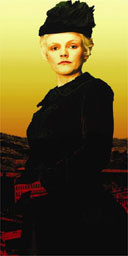
Githa Sowerby was a Fabian, a feminist and a friend of George Bernard Shaw. Her play Rutherford and Son, first produced in 1912, seemed to announce the arrival of a potential English Ibsen.
The play spoke on behalf of stifled, independently minded women in the vein of Nora and Hedda Gabler, and turned Sowerby into an icon of the women's movement. Ironically, she married after the play's success and fell mysteriously silent.
Sowerby downplayed the text's status as a radical tract, claiming it to be "a story, nothing more". But it is essentially her own story, growing up in a loveless house in the north, crushed by the declining fortunes of her family's glass-manufacturing dynasty.
Director Sarah Frankcom presents a dark reading of the play in every respect. The lighting is so murky that one is left squinting at stiff-corseted shapes wandering about in the gloom; while the actors come on with taut faces and a deathly pallor as if they have just seen a ghost.
It is remarkable that Maurice Roeves's basilisk-featured Rutherford has the emotional capacity to introduce a glimmer of light. Sowerby felt that too many actors played the glass baron as a remorseless, stone-hearted despot. Roeves's character is not one you'd wish to engage in an argument, but at least he argues with a sardonic glint suggestive of a certain humanity. "I've never said a word against you," he barks at his son's unwelcome new bride. "Or for you," he adds, with impeccable timing.
Christine Bottomley takes the abuse with quiet fortitude as the despised interloper, Mary, and pays it back with interest in the final scene in which she and her father-in-law trade concessions to reach an uneasy compromise. Their fragile truce is factored around seemingly unworkable pledges, but the moral must be that people in glass factories shouldn't throw bones.
· Until February 19. Box office: 0161-833 9833.