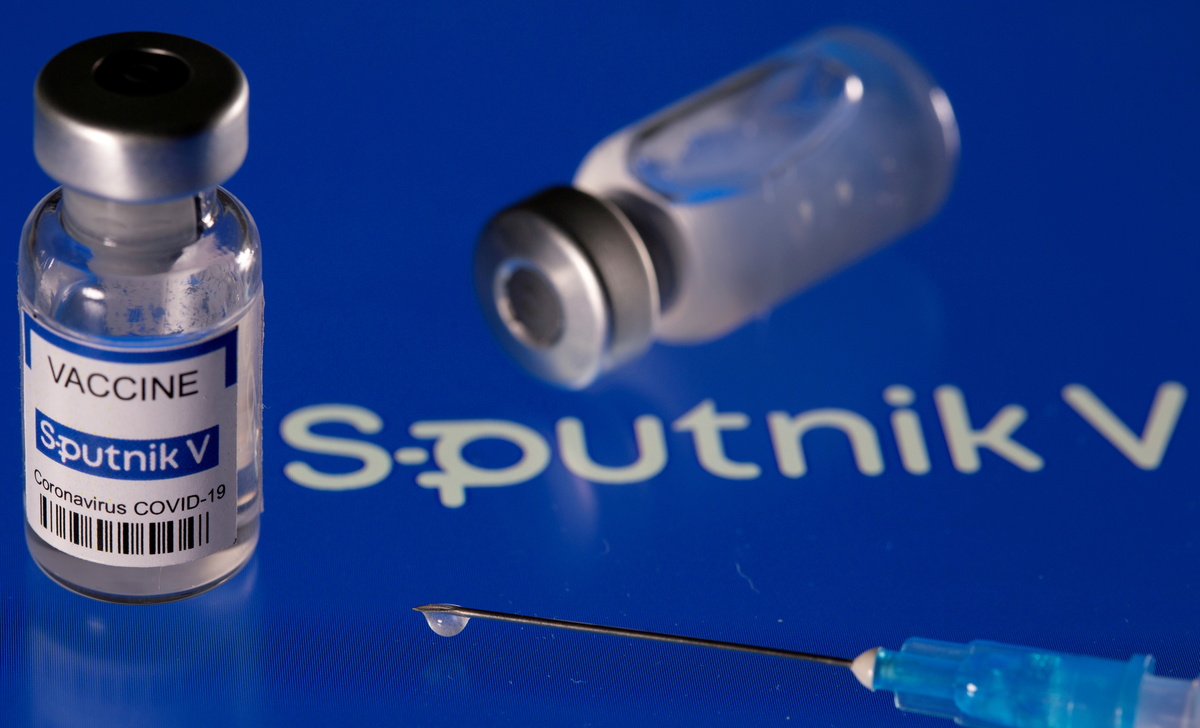
The Russian developer of the Sputnik V coronavirus vaccine said on Thursday it would sue the Brazilian health regulator Anvisa for defamation, prompting a stern rebuttal from the agency.
Anvisa's board on Monday denied requests by Brazilian states to approve Sputnik V for import. The agency's manager for medicines and biological products, Gustavo Mendes, said there was evidence an adenovirus used in the vaccine could reproduce, which he called a "serious" defect.
Adenoviruses - a category of viruses that can cause a range of illnesses in humans like the common cold - are sometimes repurposed as viral vectors for vaccines. Such viral vectors are often used to transport genetic material for a protein - in this case, from the novel coronavirus - to elicit an immune response from vaccinated individuals.
However, global health guidelines warn against "replication-competent adenoviruses" (RCA) that could multiply inside a patient's body, possibly creating a negative reaction.
Denis Logunov, who developed Sputnik V at Russia's Gamaleya Institute, denied on Tuesday that the two adenoviruses used to produce the vaccine could replicate.
Sputnik V's official Twitter account on Thursday quoted Mendes, who cited Gamaleya Institute's test results at a public hearing on Monday as the basis to deny an import license.
"Following the admission of Brazilian regulator Anvisa that it did not test Sputnik V vaccine, Sputnik V is undertaking a legal defamation proceeding in Brazil against Anvisa for knowingly spreading false and inaccurate information," the Sputnik V tweet said.
"Anvisa made incorrect and misleading statements without having tested the actual Sputnik V vaccine."
In a press conference on Thursday, Anvisa officials rejected the "grave accusation" and insisted the Gamaleya Institute's own paperwork flagged potentially risky levels of RCA in the finished vaccine.
"The data presented by the Gamaleya Institute show the presence and acceptance of the replicating virus in the finished product," said Anvisa's Mendes in a Thursday briefing. "That specification is 300 times higher than the highest regulatory threshold we could find."
(Editing by Brad Haynes, Aurora Ellis and Kevin Liffey)