Summary
• The British government has suspended all flights between the UK and the Egyptian resort of Sharm el-Sheikh after US and UK officials said they believe the Russian plane that crashed over the Sinai peninsula may have been brought down by an explosive device.
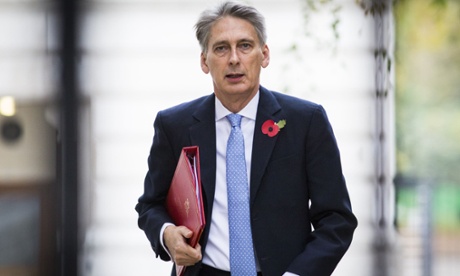
The UK foreign secretary, Philip Hammond, said his government is now advising against all but essential travel through Sharm el-Sheikh airport in Egypt as there is a “significant possibility” that the plane was brought down by an explosion on board, the strongest remarks yet by an official on the cause of the crash.
• US officials believe that the cause of the crash involving the Russian airline over Egypt’s Sinai peninsula at the weekend was “most likely” a bomb planted by ISIS or an ISIS affiliate, according to reports by US television news networks.
Among them, CNN stated it has been told that US intelligence has not yet reached a formal conclusion.
Intercepted communications played a role in the tentative conclusion that the Islamic State group’s Sinai affiliate planted an explosive device on the Russian plane, according to a US official being quoted by the Associated Press.
• The suspension of flights in and out of Sharm el-Sheikh in Egypt will affect around 20,000 British travellers who are in the Red Sea resorts of the Sinai peninsula, according to the British government.
The British government flew additional consular staff to the city on Wednesday to help holidaymakers who might be stranded following its decision to halt all flights to the UK from Sharm pending security checks at the airport. Officials said Downing Street believed the Russian plane that crashed over Sinai on Saturday may have been brought down by an explosive device.
• The Egyptian government has reacted angrily to reports linking the downed Russian airliner to an ISIS bomb plot and suggested that the UK’s move to suspend flights to and from Sharm el-Sheikh was “premature and unwarranted”.
An Egyptian Cabinet Spokesman sad that Investigators have taken samples from the bodies of passengers killed in the crash, and they are being analysed by forensic experts for any further clues as to what might have brought down the plane.
Updated
So, if it was a bomb, how could it have been put on the Russian airliner that went down at the weekend?
Emma Graham-Harrison and Ruth Michaelson in Cairo have been looking at that question and have been told by an expert on security in Egypt’s Sinai Peninsula that if an explosive device was slipped on to the plane, it was probably done by someone on the ground exploiting a lapse in airport security, rather than a passenger managing to get a device past officials.
You can read their analysis in full here.
Amid the series of reports today quoting anonymous US officials on a possible ISIS link to the downed Russian airliner, a note of caution has been struck in Washington DC by Adam Schiff, ranking member of the House of Representatives permanent select committee on intelligence.
He told CNN a little earlier:
I have been briefed and I guess I would urge people not to jump to any conclusions yet.
We are still trying to confirm what the cause of the crash was. It is certainly possible that it was an explosive, but it’s also possible that this was a structural problem with the plane.
With the tail section of the plane. So at this point, I don’t think we’re prepared to draw any conclusions. But obviously we’re investigating it, and directing our intelligence resources to try to determine the cause of the crash.
At Wednesday’s White House briefing, spokesman Josh Earnest declined to comment on the investigation.
He said the US wouldn’t be following Britain’s measures because it doesn’t need to: no US airlines regularly operate out of Sharm el-Sheikh, whereas British ones do.
Since March the US has advised civil aviation to avoid flying at lower altitudes - under 26,000 feet - over the Sinai because of the potential risk.
Updated
British people who have returned recently from Egypt’s Sharm el-Sheikh resort have been criticising security at the airport there as fears grow that the Russian airliner which crashed in Egypt was brought down by a bomb.
A BBC weather forecaster, Paul Hudson, tweeted: “I returned from Sharm El Sheikh airport Friday morning just b4 plane crash. Security seemed shoddy to me and officials overstretched.”
I returned from Sharm El sheikh airport Friday morning just b4 plane crash. Security seemed shoddy to me and officials overstretched.
— Paul Hudson (@Hudsonweather) November 4, 2015
Martin Parker, another Twitter user, replied to him, saying: “Matches my experience. We even had to carry our hold luggage to the plane because of handling problems! Security seemed weak”
Tidy-Harris, a 54-year-old from the English city of Leicestershire who had spent time in Sharm el-Sheikh as a tourist and had also been a stewardess on an airline, criticised security at the city’s airport and at hotels.
“We were there last November and would have liked to go back this year but security is lax at the airport and at some of the hotels,” she told Britain’s Press Association wire agency.
“Taxi drivers said airport security staff were very badly paid. They were either asleep, or on mobile phones. They would have their rifles just leaning against the side.”
“At Sharm we just put our two-litre bottles of water on the conveyor, and nobody took them off us.”
Some awkward discussions appear certain to be in store when the Egyptian President, Abdel Fatah al-Sisi, meets with Britain’s Prime Minister David Cameron in London tomorrow.
Sisi is believed to have arrived in the UK a few hours ago and opponents of his regime and critics of its human rights record have already been on the streets.
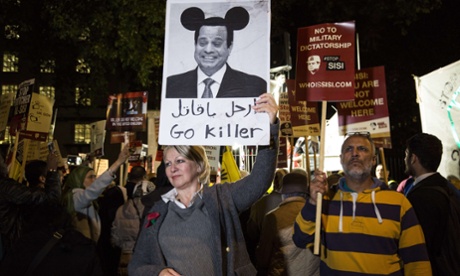
Diplomatically however, the UK decision late on Wednesday in relation to flights could not have come at a worse time.
Egypt has already made it clear that the UK’s announcement is catastrophic for the millions of Egyptians who depend on the tourism industry, one of the last threads of the country’s stuttering economy.
Britain’s Foreign Secretary, Philip Hammond, said earlier this evening that he recognised the impact that it will have on the Egyptian economy but the UK government had to put the safety of its citizens first.
As it is, British tourists make up the second largest group in Egypt’s Red Sea resort area.
Hammond told the BBC a little earlier that he had spoken to his opposite number in Egypt, adding:
“With respect to him he has not seen all the information that we have.”
Updated
A US official has told the AFP news agency that a bomb on the Russian plane which went down over Egypt’s Sinai Peninsula, with the loss of more than 220 lives, is a “highly possible scenario”
Using an alternate acronym for the so-called Islamic State group, he added: “A bomb is a highly possible scenario. It would be something that ISIL would want to do.”
But the official cautioned: “I am not saying it’s a definitive statement of what happened.”
Britain’s Foreign Secretary has said that there was a “significant possibility” that the Russian airliner which crashed into Egypt’s Sinai Peninsula at the weekend was brought down by a bomb.
Speaking after a meeting of Cobra, the multi-agency emergency committee which advised the British government on security issues, Hammond said:
Unfortunately and very reluctantly, this evening we have concluded have to change our travel advice and we are now advising against all but essential travel by air through Sharm El Sheikh airport.
That means there will be no UK passenger flights out to Sharm El Sheikh from now. Passengers on the ground in Sharm El Sheikh will be returned to the UK.
We are working with the airlines and the Egyptian authorities to put in place emergency procedures for additional screening and additional security to make sure they can get home safely either on the original dates or if they wish to leave earlier on an earlier date.
Hammond apologised to those cannot fly and said said he recognised it would cause “immense disruption and inconvenience” to people.
He also stressed that the UK is not changing its assessment about the threat level in Sharm El Sheikh resort.
Updated
Intercepted communications played a role in the tentative conclusion that the Islamic State group’s Sinai affiliate planted an explosive device on the Russian plane that went down on Saturday, according to a US official being quoted by the Associated Press.
The news agency added that US intelligence agencies have assembled preliminary evidence that a bomb brought down the Russian airliner.
Officials who spoke to the AP said there had been no formal judgment rendered by the CIA or other intelligence agencies, and that forensic evidence from the blast site, including the airplane’s black box, were still being analysed.
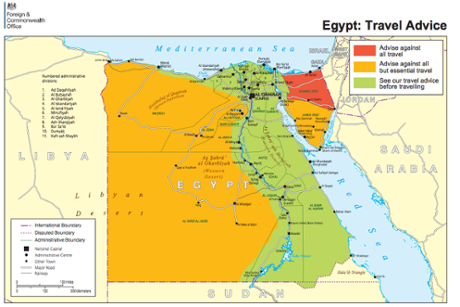
Here is the map of Egypt on the British Foreign Office’s travel advice website.
It was updated earlier today but doesn’t seem to have yet caught up with the announcement by the British government that it is temporarily suspending (a step up from a delay) all flights between the UK and the Egyptian resort of Sharm el-Sheikh.
Updated
UK advises against "all but essential" flights to Sharm
Britain is now advising against “all but essential” flights to Sharm el-Sheikh and Britons there already will be returned home, the UK’s Foreign Minister has said.
That is a hell of a lot of people to move. As we reported earlier, the UK government estimates that around 20,000 British travellers are in the Red Sea resorts of the Sinai peninsula.
The Guardian’s Rowena Mason will be providing more detail shortly on that announcement by Philip Hammond, Secretary of State for Foreign and Commonwealth Affairs.
Philip Hammond: we are advising all but essential flights to Sharm el Sheikh. No flights out. Brits already there will be returned home
— Rowena Mason (@rowenamason) November 4, 2015
Egypt: suspension of flights "premature"
A senior Egyptian government official has suggested that it was premature to attribute the crash to a bomb, although he declined to comment directly on the UK’s decision to ground flights.
Hossam El Qawish, Egyptian Cabinet Spokesman, was speaking to Ruth Michaelson, who is covering the story from Cairo for the Guardian.
He added: “We are waiting for the international investigations team to produce their latest report on the black boxes.”
Investigators have taken samples from the bodies of passengers killed in the crash, and they are being analysed by forensic experts for any further clues as to what might have brought down the plane, he added.
“They took random material samples from passengers to screen and we are waiting for the report.”
Egypt’s foreign minister, Sameh Shoukry told the BBC that was the UK’s move to suspend flights from Sharm el-Sheikh was “a premature and unwarranted statement” which risked devastating consequences for Egypt’s vital tourism industry.
The Egyptian authorities have also been pushing back against reports, via CNN, that US officials believe the Russian airliner may have been brought down by a bomb.
FM Shoukry's comments to @CNN's @camanpour on #UK decision to delay flights from Sharm El-Sheikh to UK https://t.co/T09IWYG1Qa
— Egypt MFA Spokesman (@MfaEgypt) November 4, 2015
Updated
CBS News joins the other US news networks in carrying those US intelligence suggestions of an ISIS link to the downed Russian airliner.
BREAKING: @CBSNews learns U.S. intelligence officials now say there is a possibility #ISIS planted a bomb on downed Russian jet.
— David Goodman (@davidgoodmanCBS) November 4, 2015
The Egyptian government isn’t happy at all about reports linking Saturday’s crash involving Russian airliner in the Sinai Peninsula to a possible bomb.
Frank Gardner, BBC Security Correspondent, tweets:
#Egypt reacts angrily to UK announcement that Russian airliner may have been downed by a bomb. Calls it premature.
— Frank Gardner (@FrankRGardner) November 4, 2015
After CNN, a second US news network is now meanwhile running with that line from US officials suggesting that ISIS were behind a bomb that was supposedly placed on the Russian airliner.
BREAKING: US official tells @NBCNews that evidence indicates a bomb, possibly planted by ISIS, brought down Russian airliner over Sinai.
— CNBC Now (@CNBCnow) November 4, 2015
The UK’s suspension of flights in and out of the Egyptian resort Sharm el-Sheikh in Egypt will affect around 20,000 British travellers who are in the Red Sea resorts of the Sinai peninsula.
One of them is Terry Wylde, 35, from Newham in east London, who is was among the British tourists currently stuck in Sharm el Sheikh.
He told the Guardian’s Rob Booth:
We have had no information from our Thomas Cook tour representatives even just to give an update. But it is important they put safety first.
We’re currently due to fly back on Friday afternoon and were not too concerned about it just yet.
US believe crash was likely to have been bomb - report
US officials believe that the cause of the crash involving the Russian airline over Egypt’s Sinai peninsula at the weekend was “most likely” a bomb planted by ISIS or an ISIS affiliate, according to a report by CNN
However, the news network also says it has been told that US intelligence has not yet reached a formal conclusion.
Bill Neely, a journalist at NBC News, also tweets this:
UK Gov't about to claim knowledge of a new "specific threat" from Egypt's Sinai. After raising concern about explosive device on Russian jet
— Bill Neely (@BillNeelyNBC) November 4, 2015
Updated
The British airline, Easyjet, has issued a statement to passengers informing them that it has been meeting with the UK government and is taking direction on advice about its flights to and from the Egyptian resort of Sharm el-Sheikh.
Two Easyjet flights which were due to depart from Sharm el-Sheikh have been delayed overnight in the light of the statement by British authorities.
The airline added:
Please be advised that following the statement by the UK Government this evening we are currently assessing our flying programme to and from Sharm El Sheikh.
We are sorry about this situation and the uncertainty it is causing
There’s been an absence of reportage by Russian state televison about the UK’s decision on flights to Egypt or British suspicions about a bomb, according to the Guardian’s Alec Luhn in Moscow.
However, Rossiya 24 did carry a report on student riots in London.
Alec adds:
Presidential spokesman Dmitry Peskov, when asked about the possibility of a terrorist attack earlier this week, said such “hypothetical thinking is out of place” and called on the media not to connect the crash with Russia’s Syria air strikes.
A rally in Moscow for national unity day (below) that drew tens of thousands of people on Wednesday began with a moment of silence for the victims of the A321 crash in Egypt.
But calls to take harsh action against the airline involved and others have not won wide support. A Change.org petition asking president Vladimir Putin to shut down Kogalymavia, the company that operated the A321 that crashed, and introduce a law to check planes more thoroughly, had gathered only 1,000 signatures since it was introduced after the disaster.

Updated
I’ve been talking to one of the many people who had been looking to a break in the sunshine in Sharm el-Sheikh but now face disappointment.
“I only booked it a week and a half ago and I have been nervous the whole time,” said Susan Baker, a Londoner who had been looking forward to a break in the sunshine just outside of Sharm el-Sheikh in the next few days.
She added: “I don’t know why but I had a really bad feeling. Probably just intuition or something. I decided that I wanted to go there but it took me two whole days to press the button and book because I just had a bad feeling.”
Will she go now?
“It’s hard because I have just heard that Thomson have cancelled heir flights. I think Easyjet should just do the same because it will at least take the decision away from us. I have never wanted to go before but I just needed a break and found a few flighst, but at the same time I don’t live my life being dictated by a bomb, if it was, or terrorists.”
Updated
Ireland grounds Sharm el-Sheikh flights
Ireland has now followed the UK’s decision. The Irish Aviation Authority has said that it has directed Irish airlines not to fly to the area over Egypt which includes Sinai Peninsula airspace.
A statement said:
The Irish Aviation Authority (IAA) directs Irish airline operators not to operate to/from Sharm el-Sheikh Airport, Egypt or in the Egyptian Sinai Peninsula airspace until further notice.
An update will issue once further information becomes available.
Separately, it’s worth remembering that the Russian airline which came down on Saturday was registered in Ireland.
Irish authorities have already made contact with their counterparts to offer assistance in the investigation into the crash over the Sinai peninsula.
Updated
Crash probe looking at possibility of "object" on board - sources
An investigation into the crash of a Russian plane in Egypt last Saturday is looking into the possibility of an object stowed on board causing the disaster, a Russian aviation source has told Reuters.
The said:
There are two versions now under consideration: something stowed inside (the plane) and a technical fault.
But the airplane could not just break apart in the air - there should be some action. A rocket is unlikely as there are no signs of that.
Among those who now potentially face being stuck for longer than anticipated in Sharm is a group of people from Newham Union, a voluntary group in London. They’ve tweeted the following:
So flights have been suspended from #sharmelsheikh we fly back in two days time. However security is more important than a missed flight
— Newham Union (@newhamunion) November 4, 2015
Thomson Airways, which operates flights between the UK and Egypt, has confirmed tonight that it had temporarily suspended flights to and from the Egyptian resort of Sharm el-Sheikh.
In a statement, the company said:
Following the Government’s announcement this evening, Thomson Airways can confirm that it has temporarily suspended flights to and from Sharm-el-Sheikh with immediate effect.
We apologise for any inconvenience caused to our customers. We will be in contact with those customers affected as more information becomes available.
A source who works inside Sharm el Sheikh airport has been defending the security arrangements there, and claimed that it would be “incredibly hard” to put a bomb on a plane from that location.
They’ve told Ruth Michaelson, a Cairo-based journalist working for the Guardian that a request by the British Consulate to increase random security checks inside the airport took place seven or eight months ago, rather than weeks ago.
The source said: “This decision to increase random checks was from all destinations in the Middle East, not just Sharm el Sheikh.”
The extra security checks include “random checks at departure gates, additional scans for passengers and their hand luggage.”
He also pointed out that there is precedent to this decision, that “Air Berlin stopped flying to Sharm el Sheikh for a month in 2014.”
Asked about the decision taken today to ground flights from the UK to Sharm el Sheikh, he said:
It’s something new, this kind of order affecting all airlines has never happened before. Even during the January 2011 revolution, nothing happened, everything was smooth here in Sharm, all the flights were operating normally.
You pass three or four security checks normally, plus an additional one for British flights- so that’s five security X-rays and screenings. It would be incredibly hard to put a bomb on the plane.
They even scan the catering entering the airport for restaurants. I went to check this after what happened [Saturday’s crash] - they check catering staff and everything that goes into restaurants inside the terminal.
Updated
Another UK-based airline, Monarch, has been telling customers this evening that it is “awaiting information” but posted a statement saying that there are no further flights between the UK and Sharm el Sheikh tonight.
A Thomson flight to the Britain’s Manchester airport was scheduled to take off at 6.35pm (Egyption time), according to Sharm el-Sheikh Airport’s website.
An easyJet flight was due to leave for Luton airport at 6.45pm, with another to London Gatwick at 7.05pm.
The British government’s announcement is beginning to filter through to travellers in Egypt and in the UK.
On Twitter, journalist Sonia Dridi of France 24 tweets:
2 easyJet flights awaiting on the Tarmac in #sharmelsheikh (until experts arrive) #Egypt #UK #russianplane
— Sonia Dridi (@Sonia_Dridi) November 4, 2015
Easyjet, which flies between the UK and Egypt, and other airlines are now meanwhile being fielding queries from travellers who have been looking forward to travelling in the next few days.
The airline has been directing travellers to its flight tracker.
A leading global security expert, Philip Baum, editor of Aviation Security International, said that Sharm el-Sheikh airport was no riskier than most airports - but warned that current practice across the industry was “fallible” and imprecise.
He said Britain’s move to assess security at the Egyptian airport did not necessarily indicate a bomb was confirmed:
They have to move as if all possibilities are realities.. I would like to think they would be working on that premise two days ago. But it is going to be tokenistic and not going to make any difference if we don’t know where the bomb was - in cargo, catering, luggage? We need to know where it was to know where to begin in the airport.
If we’re relaying on x-raying baggage, then we’re in trouble wherever we are - you only have to look at the you only have to look at the US Transport Security Administration’s own reports to see the fallibilities of the x-ray screening operation.
Baum said the Yemen cargo planes plot in 2010, when an explosive device in a printer initially reached Britain undetected, showed that x-ray screening alone was not enough. He said effective security required the “integration of technology with profiling processes.”
Although some Russian flights to Egypt have been delayed or rerouted flights have not been stopped after the crash on Saturday, reports my colleague Alec Luhn.
It was reported shortly after the crash that Russia’s transport regulator would stop Metrojet’s flights to Egypt, but in the end the company was allowed to continue operations after additional safety checks.
Russian companies including Ural Airlines, Orenair and Red Wings have followed other carriers in stopping flights over the Sinai peninsula (although they are still flying to Egypt).
A flight from the Egyptian resort town of Hurghada to Perm was delayed for nine hours on Monday, and some reports said this was due to suspected technical faults.
In an online survey by the news site Rosbalt, the a third of the 3,300 respondents said they would continue to “fly without reservations—you can’t outrun fate”. Other options were less popular. Only 20% said they would not fly to countries “where there are safety problems”.
In the aftermath of the Egypt crash, Russian state television has focused on theories that a technical malfunction was to blame for the catastrophe, almost entirely ignoring the possibility of an attack.
If it was a terrorist attack that brought down the A321, it would call into question Russia’s air campaign against rebel forces in Syria. A number of Islamic extremist groups in the Middle East have called for attacks against Russia since the air strikes began in late September, and fears of a terrorist bombing have risen here. The Russian authorities have detained dozens of people for allegedly recruiting for ISIS and other Islamic extremist organisations in several high-profile raids over the last month.
Updated
White House: no low-altitude US flights over Sinai since March
The US Federal Aviation Administration has advised civil aircraft to avoid flying at low altitudes over the Sinai since March, the White House has said.
This is the latest update from Reuters:
No US airlines regularly operate out of Egypt’s Sinai Peninsula, where a Russian passenger plane crashed on Saturday, and the federal government has had a flight advisory for the area since March, the White House said on Wednesday.
White House spokesman Josh Earnest said the Federal Aviation Administration has advised civil aviation to avoid flying at lower altitudes over the Sinai, citing a potential risk associated with extremist activity.
Patrick McLoughlin, the UK transport secretary, said the government had been following the investigation into the crash very closely. He added:
We cannot categorically say why the Russian jet crashed but we have become concerned that the plane may well have been brought down as a result of an explosive device.
Safety will always be the priority and that is why the Prime Minister last night called President Sisi to express concern and to ensure that the tightest possible security arrangements were put in place at Sharm el-Sheikh.
As a precautionary measure we have decided that flights due to leave Sharm el-Sheikh this evening for the UK will be delayed and that will allow us time to ensure the right security measures are in place for flights.
Downing Street’s bomb warning came just as Egypt itself issued a statement saying that further analysis of the crash was needed before drawing further conclusions, reports my colleague Patrick Kingsley.
Egypt’s civil aviation ministry announced this evening that the plane’s black box had been retrieved, and will be subject “to detailed analysis by the investigators”. It said:
The Cockpit Voice Recorder (CVR) is partially damaged and a lot of work is required in order to extract the data from it. Consequently, no further comment on the content of the CVR can be made. Examination of parts on site is continuing.
The UK has intervened despite playing no part in the crash’s official investigation committee, which is formed from representatives from Ireland (where the plane is registered), Russia (where its operators are based), France (where the plane was designed) and Germany (where it as made).
Separately, Cameron’s decision to suspend flights from Egypt may help to distract from criticism of the prime minister for welcoming Egypt’s president, Abdel Fatah al-Sisi, to Britain this week. Sisi has overseen the killing and jailing of thousands of opposition members, and his critics fear that his state visit to Britain gives him more legitimacy than he deserves.
Reuters has a little more detail on the cause of the Russian airplane crash.
It quotes a source close to the investigation of the airplane’s black boxes as saying:
It is believed to be an explosion but what kind is not clear. There is an examination of the sand at the crash site to try and determine if it was a bomb.
Here’s what we know so far about the Russian plane crash, by my colleague Emma Graham-Harrison:
The plane that crashed over the Sinai desert had taken off from Sharm el-Sheikh early on Saturday morning and disappeared from the radar around 25 minutes later at around 6.20am local time.
An Islamist insurgent group in Sinai claimed responsibility but Russia has said this cannot be considered reliable and Egypt said such claims were IS propaganda.
Russian officials have said the plane broke up in midair, and the plane’s owner insisted it was in “excellent technical condition”, although the head of Russia’s aviation authority said it was too early to determine what caused the accident.
A US military satellite picked up a heat flash on the final moment’s of the plane’s flight path, the New York Times reported.
That the explosion was strong enough to be picked up by the satellite increased the likelihood that it was caused by a man-made device, but a mechanical failure was still possible, the paper quoted a military intelligence official saying.
Details of images from the wreckage in Sinai appear to show the skin of the fuselage peeling outwards, which some sources suggest also points to an onboard explosion.
The Russian state news agency RIA Novosti quoted an unnamed investigator as saying that the pattern of injuries to passengers could indicate that a strong explosion occurred on the plane before it hit the ground.
Investigators are yet to officially release data or findings, but according to unverified reports from Russia, cockpit recordings reveal unusual sounds at the moment the plane went off the radar, but confirm there was no distress call from the pilots.
Updated
PM to hold emergency COBRA meeting
My colleague Rowena Mason reports that David Cameron is due to hold an emergency meeting with ministers and security chiefs, known as a COBRA meeting, at 6.45pm UK time. They will discuss whether to allow flights to take off for Sharm El-Sheikh on Thursday.
At the moment, the Foreign Office advises against travel to a small area of eastern Egypt and “all but essential travel” to much of west Egypt.
However, it is not currently advising against travel to tourist destinations along the Nile river or the Red Sea Resorts of Sharm El Sheikh and Hurghada.
Rowena reports:
It is understood Cameron took the dramatic decision to order extra security assessments in Sharm el-Sheikh after new intelligence information came to light in the last 24 hours - after the point at which he had a conversation with Sisi about the plane crash on Tuesday night.
Some 20,000 Britons in Sinai
My colleague Rob Booth has just spoken to a Downing Street spokesman who says there are around 20,000 Britons currently in Sinai, the Egyptian peninsula that includes the Sharm el-Sheikh resort. Extra-consular assistance is being flown in to assist them, he said.
Updated
The Daily Mail’s deputy political editor, Jason Groves, has tweeted:
UK sources saying up to 15,000 Brits potentially stranded in Sharm-el-Sheikh by grounding of flights over bomb fears
— Jason Groves (@JasonGroves1) November 4, 2015
Updated
The Downing Street statement comes on the eve of talks in Downing Street between David Cameron and Abdel Fatah al-Sisi, the Egyptian president who took power after a coup in 2013.
Here is the full statement from the prime minister’s spokeswoman:
“While the investigation is still ongoing we cannot say categorically why the Russian jet crashed. But as more information has come to light we have become concerned that the plane may well have been brought down by an explosive device.
“In light of this and as a precautionary measure we have decided that flights due to leave Sharm for the UK this evening will be delayed. That will allow time for a team of UK aviation experts, currently travelling to Sharm, to make an assessment of the security arrangements in place at the airport and to identify whether any further action is required. We expect this assessment to be completed tonight. In terms of flights from the UK to Sharm, there are no more departures [scheduled] today.”
Downing Street stressed it was a “precautionary step” and that there was no travel ban to the area yet:
“We recognise that this information may cause concern for those in Sharm and indeed for those planning to travel to Sharm in the coming days. We have deployed extra consular staff to Sharm who will be on hand at the airport, working with the airlines, to assist British holidaymakers there. For others, either in resorts at Sharm or planning a holiday to Sharm in the coming days, our advice is to contact your airline or tour operator. At this stage we are not changing the level of our Travel Advice.”
The British government has suspended all flights to the UK from the Egyptian resort of Sharm el-Sheikh after declaring it believes the Russian plane that crashed over Sinai on Saturday may have been brought down by an explosive device.
In a statement, a spokesperson for the prime minister David Cameron said flights due to take off from Sharm el-Sheikh to the UK have been delayed this evening while security assessments are carried out. It said there will be also be no more departures in the other direction on Wednesday.
It is the first statement by any country that they believe a bomb or other device could have downed the flight, which is being investigated by Russian and Egyptian authorities.
Here is the full story from my colleague Rowena Mason.
We will be covering updates as we get them.
Updated