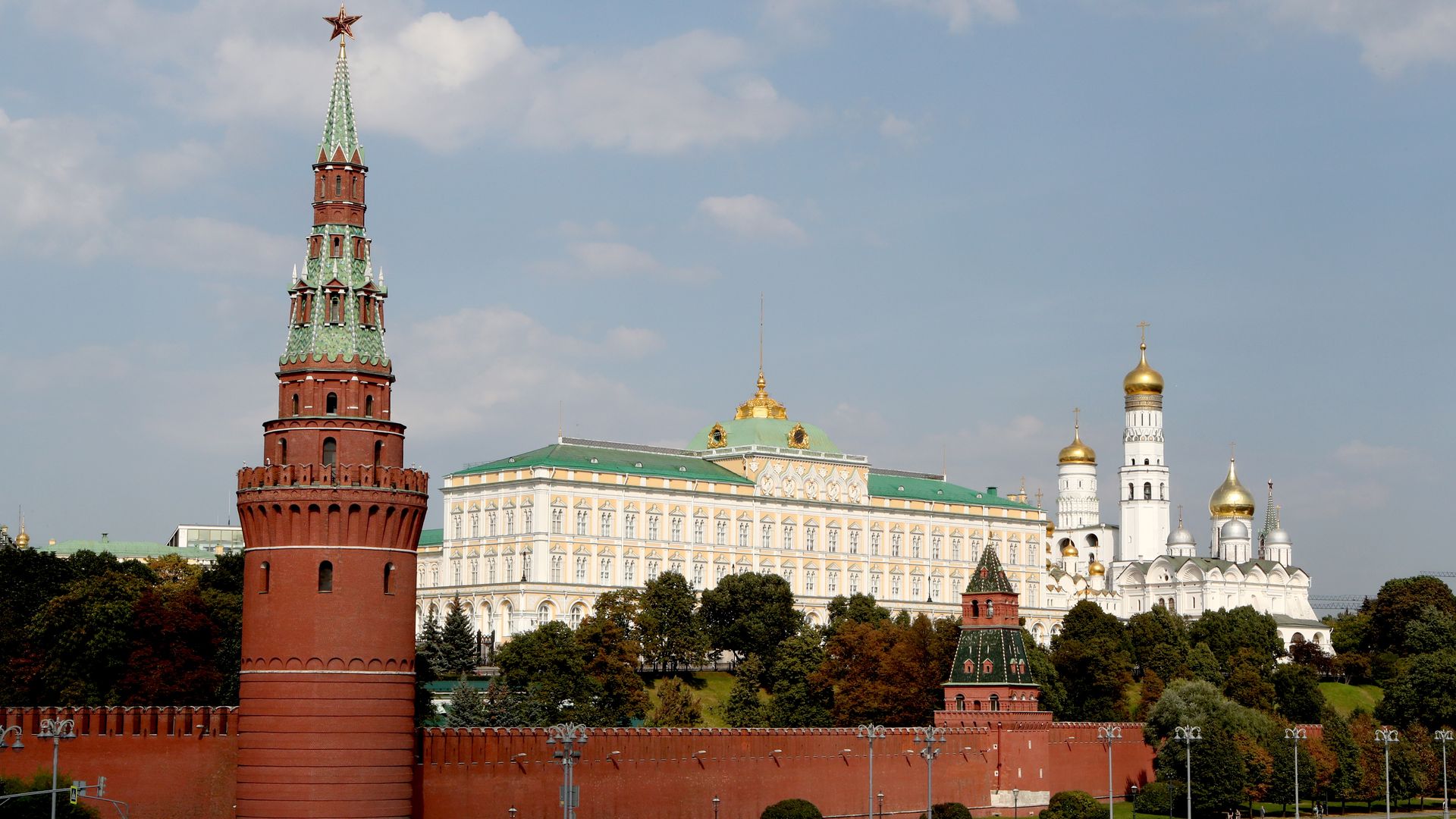
Kremlin-spawned influence campaigns that falsely accuse Ukraine of interference in the 2016 U.S. presidential election have successfully furthered Russia's yearslong geopolitical battle against its largest European neighbor.
Why it matters: In addition to deflecting blame for its own well-documented meddling in American politics, the Kremlin has an interest in making support for Ukraine a more polarizing, partisan issue in the U.S. American military assistance is critical to Ukraine's efforts to defend itself against Russian aggression and territorial incursion.
Driving the news: U.S. intelligence officials briefed senators in recent weeks on the Russian campaign to frame Ukraine for interfering in the 2016 U.S. presidential election. The briefing also covered the evolution of the Kremlin's tactics, including a much improved ability to cover its tracks.
- On Thursday, former top National Security Council official Fiona Hill testified that the Ukraine conspiracy theory is "a fictional narrative that has been perpetrated and propagated by the Russian security services themselves."
Context: Moscow has a history of using state media, online troll farms and a network of sympathetic agitators to promote content designed to deflect culpability for the Kremlin’s misdeeds.
- After Russian military intelligence poisoned former British-Russian double agent Sergei Skripal and his daughter Yulia in the U.K. in 2018, Russian state-controlled news agencies promoted conspiracy theories about alternate culprits, including the U.S., the British government, a drone and even Yulia Skripal’s future mother-in-law.
- Russia deployed similar tactics after the downing of Malaysian Airlines Flight 17 over Ukraine in 2014 by Russian-affiliated rebels. Its Ministry of Defense released doctored satellite images in an effort to pin blame on Ukraine.
What to watch: Ahead of the 2020 U.S. elections, much attention has been paid to the potential for social media operations of the sort Russia's infamous troll farm, the Internet Research Agency, carried out in 2016. But such operations take many forms — often relying, as in this case, on the use of proxies to spread a narrative across the information ecosystem.
The bottom line: Russia's Ukraine conspiracy theories offer a reminder that disinformation spreads through various channels, both online and offline. While elections are a prominent flashpoint, these interference campaigns are ongoing and put a range of political events in their crosshairs.
Jessica Brandt is a fellow at the German Marshall Fund and the head of policy and research for its Alliance for Securing Democracy.