Russia is attempting to spread disinformation about potential coronavirus vaccines through anti-vaccination social media groups, the head of the UK’s armed forces has warned.
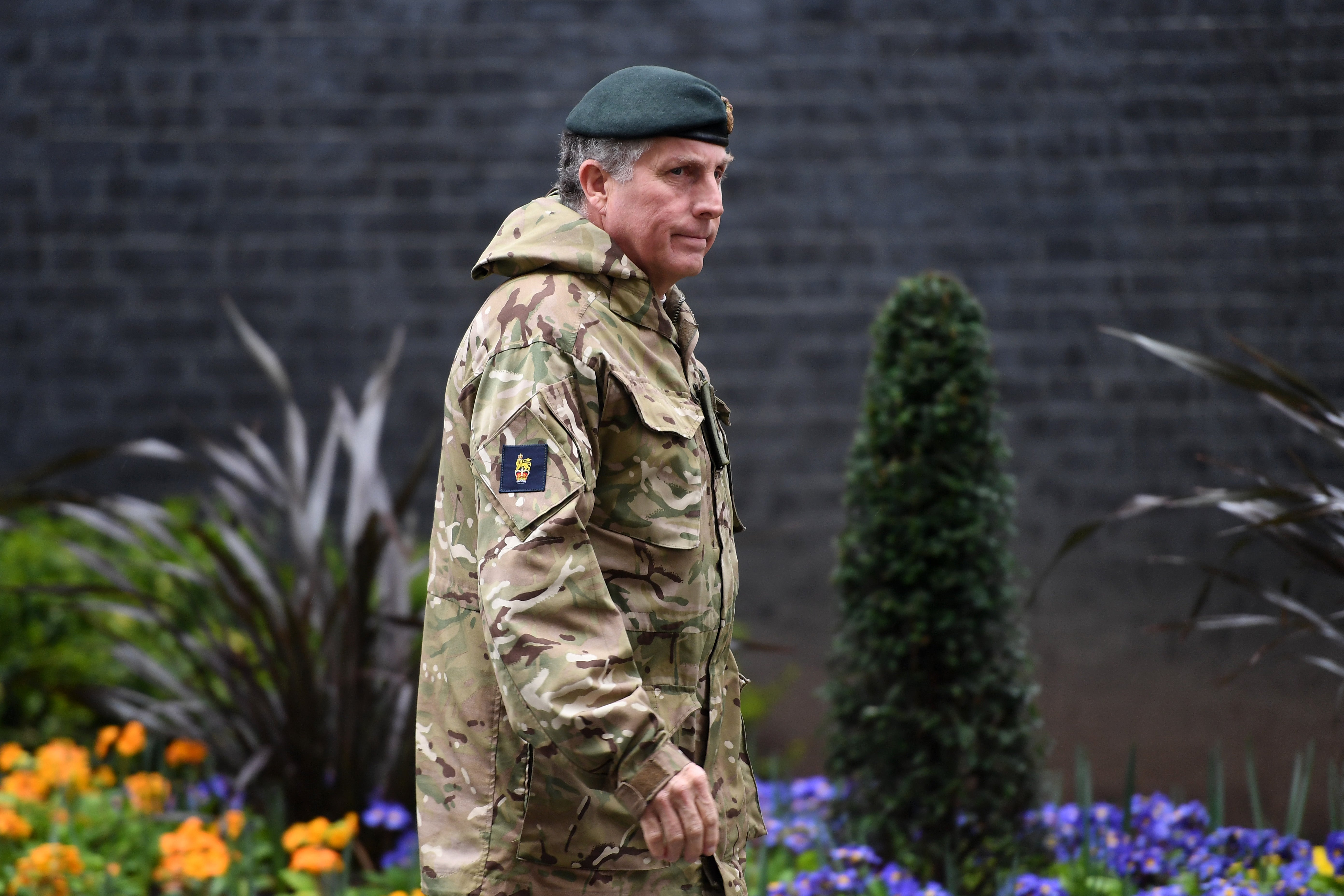
General Sir Nick Carter, the chief of the defence staff, said authoritarian regimes, such as Russia and China, were using a strategy of “political warfare” to “undermine cohesion” and “erode economic, political and social resilience” in the western world.
In a speech for the Policy Exchange think-tank on Wednesday, Sir Nick highlighted the work of an Australian defence policy think-tank which has been tracking how some countries have sought to exploit the Covid-19 crisis.
“The Covid crisis has highlighted how the use of propaganda, data misuse, disinformation, and strategic influence is presenting complex and rapidly evolving challenges for researchers, civil society, and of course for policymakers,” he said, warning that “autocratic rivals” were utilising these techniques most effectively.
“The Australian Strategic Policy Institute is tracking how a range of actors are manipulating the information environment to exploit the Covid-19 crisis for strategic gain - including pro-Russian vaccine politics whose disinformation narratives are designed to permeate anti-vaccination social media groups.”
Sir Nick added that authoritarian regimes had adopted disinformation strategies to avoid physical conflicts with other nations.
“Their goal is to win without going to war, to achieve their objectives by breaking our willpower, using attacks below the threshold that would prompt a warfighting response,” he said.
His warning came as Russian media claimed the country had completed clinical trials for a second potential vaccine against Covid-19, developed by Siberia's Vector Institute.
It followed the controversial decision by Russian regulators to license the country’s Sputnik V coronavirus vaccine for domestic use in early August after small-scale human trials.
Health experts criticised the move to license the vaccine as it had not passed so-called phase 3 testing, recommended by the World Health Organisation, on a large number of people.
The vaccine is currently being tested on 40,000 people in Russia in a trial that launched on 26 August.
Additional reporting by Reuters