The European Court of Human Rights has ordered Russia to compensate four domestic violence survivors, including a woman whose hands were chopped off by her husband.
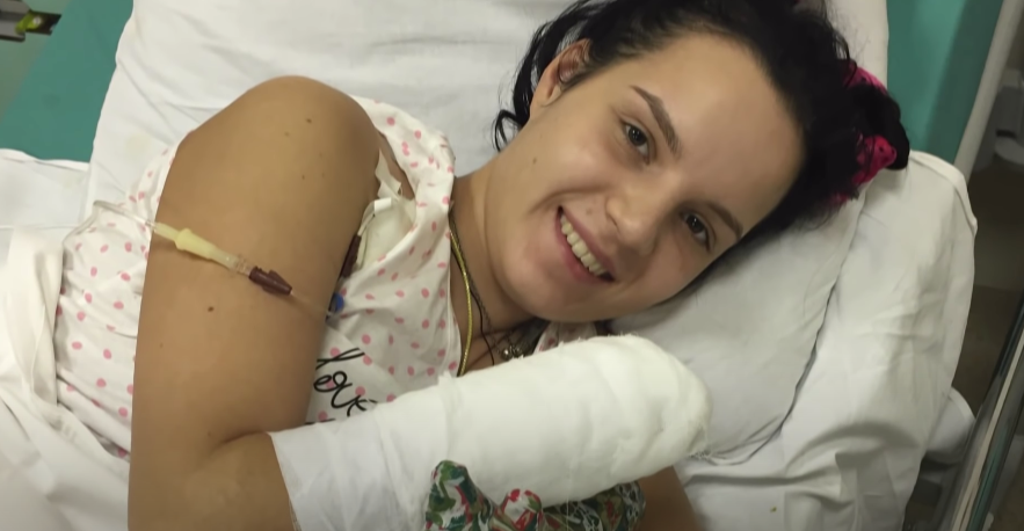
After Margarita Gracheva told her husband that she wanted a divorce in 2017, he abducted her and took her to a forest, where he attacked her with an axe. Her left hand was completely mutilated and had to be sewn back on, while her right hand has been fixed with a prosthetic.
During testimony in court, Dmitry Grachev claimed that he felt like his life was over after she sought a divorce. He was sentenced to 14 years in prison. Ms Gracheva had informed the police about her husband’s violent behaviour but she claimed that they ignored them.
The European court directed Russian authorities to pay Ms Gracheva around €370,000 (£315,000) for medical expenses, loss of income and non-pecuniary damages. Three other women, also domestic violence survivors, will be paid €20,000 (£17,000) each.
The court urged Russia to take urgent measures to avoid such violent attacks on women in the country and also called out the country’s “staggering scale” of domestic violence.
In the past, Russia has opposed compensation claims saying that the country cannot be held accountable for domestic violence committed by individuals.
But the European court ruled that Russia had breached two articles of the European Convention on Human Rights and said that the rate of domestic violence in Russia was high.
Mari Davtyan, one of the lawyers representing the women, wrote on her Facebook that “each of these women was seriously injured as a result of the state’s inaction in the situation of domestic violence.”
In 2017, Russia had passed a law that weakened penalties for domestic violence. The law mandated that if a victim was not hospitalised, then it was not considered a criminal offence. Punishment was also, accordingly, weakened.