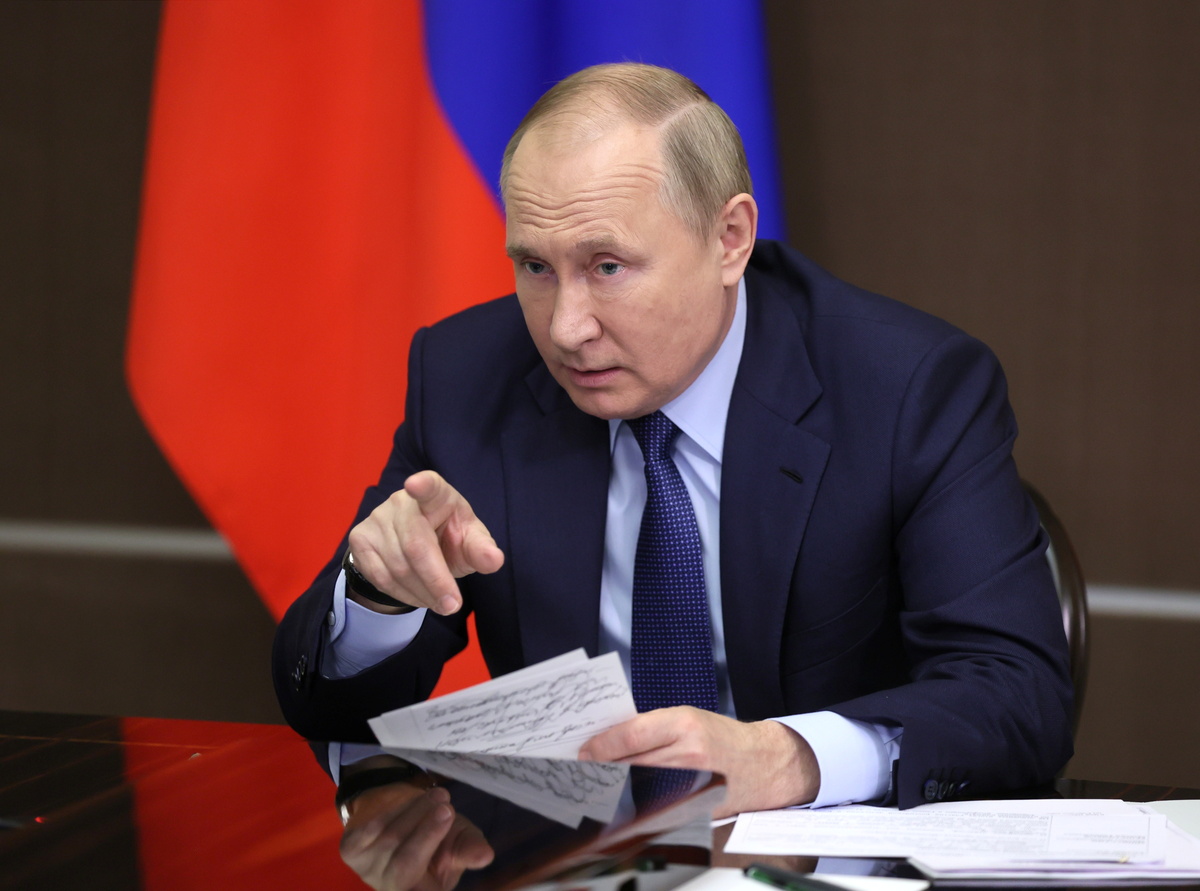
Russia said on Wednesday it planned to export a nasal form of its Sputnik vaccine against COVID-19, which President Vladimir Putin said he had taken as a booster.
Putin said in televised comments that he had been re-inoculated six months after his initial dose of the Sputnik V vaccine because his antibody levels had dropped.
He said the booster took the form of an injection, followed the next day by a powder sprayed into both nostrils - though the Kremlin later clarified that the spray was in fact a liquid, not a powder.
"That was all - I didn't feel anything. Nothing. Today, after these two procedures, I already did some sport in the morning," Putin said.
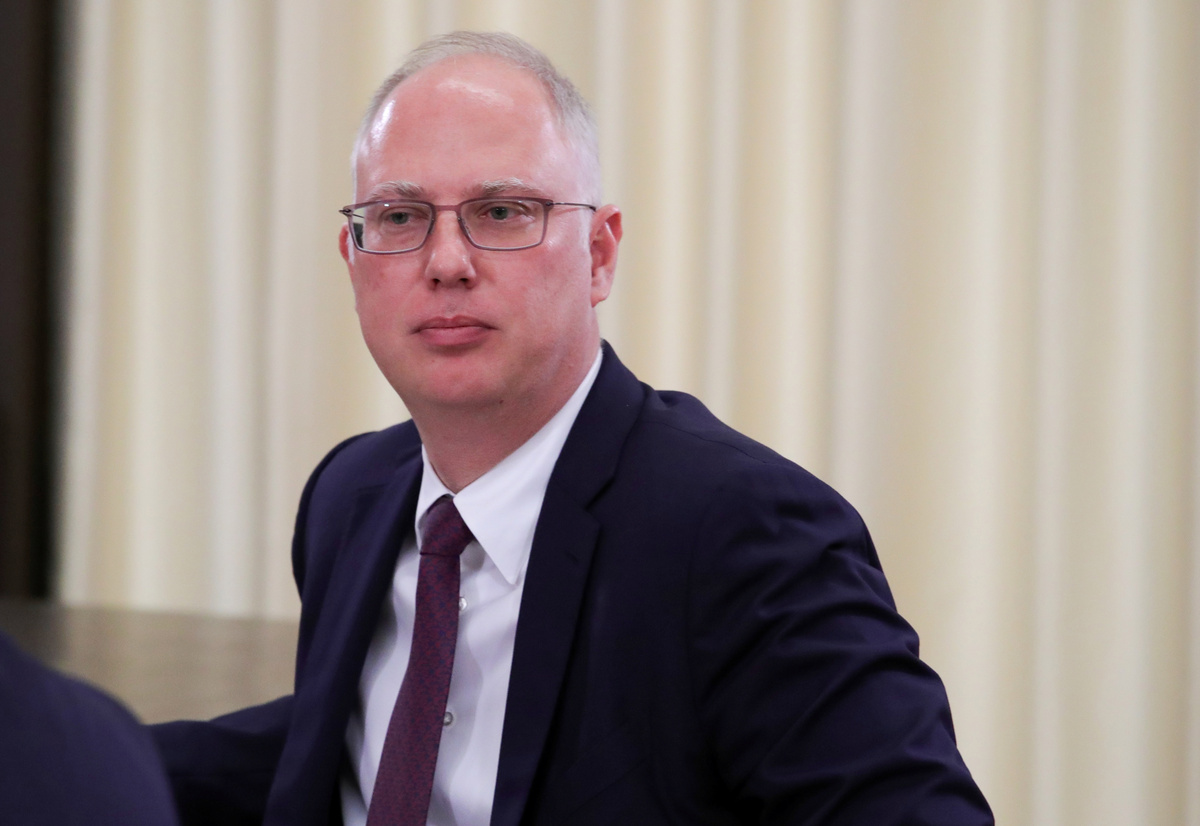
Kirill Dmitriev, the head of the Russian Direct Investment Fund (RDIF), which invested in Russia's flagship vaccine and markets it overseas, said Russia would sell the nasal form to other countries next year.
Research has been going on in countries around the world to develop nasal sprays to help prevent and treat COVID-19, particularly given that the lining of the nose has been identified as a key entry point for the virus.
The original version of Sputnik V, consisting of two injections, has not yet been approved by the World Health Organization and European Medicines Agency. Until that happens, the nasal form, which is still being tested in Russia, would likely face similar regulatory headwinds.
Dmitriev said Russia was Russia expecting a specialist team from the WHO to visit in December to work on a review of Sputnik V for possible approval.
If granted, that would mark a significant breakthrough for the vaccine after a process that has dragged on all year, and give it the same status as eight others already approved by the organization for use during the COVID-19 pandemic.
RDIF and the Gamаleya Institute, which developed the shot, said that trials in San Marino with 18,600 participants showed that Sputnik V was 80% effective six to eight months after inoculation.
Russia was quick to develop Sputnik V last year but the Kremlin has blamed a recent surge in cases on widespread public reluctance to get vaccinated. October was the deadliest month of the pandemic so far in Russia.
Many people are hesitant to take the jab and distrustful of official assurances about its safety - an attitude that Putin has tried to counter by talking about his own experience of it.
Deputy Prime Minister Tatiana Golikova announced separately that the health ministry would register a new Sputnik M vaccine for use for children aged 12-17 later on Wednesday, with shots expected to be available at the end of December.
(Reporting by Anton Zverev and Polina Nikolskaya; Writing by Alexander Marrow and Mark Trevelyan; Editing by Alex Richardson)