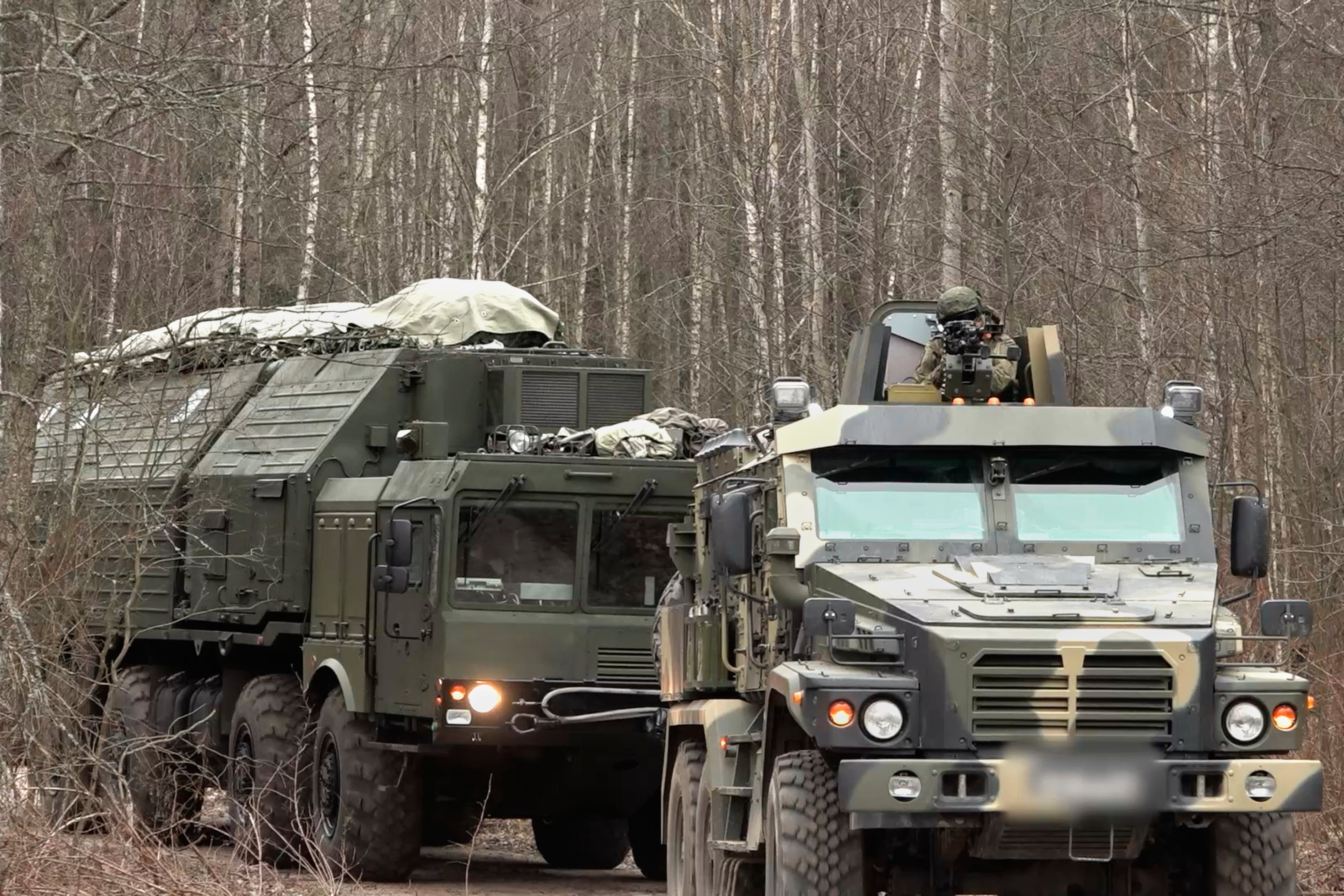
Russia’s nuclear-capable Oreshnik missile system has officially entered active service, the country’s Ministry of Defence announced on Tuesday, as diplomatic efforts continue to seek a resolution to Moscow’s conflict in Ukraine. The deployment of the advanced weapon system took place in neighbouring Belarus, where troops participated in a brief ceremony to mark its operational status.
While the ministry confirmed the activation, it refrained from disclosing the number of missiles deployed or providing further specific details regarding the system’s capabilities or location within Belarus. This move follows earlier remarks by Russian President Vladimir Putin in December, who stated the Oreshnik would be combat-ready this month.
During a meeting with senior Russian military officials, Putin had warned that Moscow intended to expand its territorial gains in Ukraine should Kyiv and its Western allies reject the Kremlin’s demands during peace negotiations.
The announcement coincides with a sensitive period for Russia-Ukraine peace discussions. Donald Trump recently hosted Ukrainian President Volodymyr Zelenskyy at his Florida resort on Sunday, asserting that Kyiv and Moscow were "closer than ever before" to reaching a peace settlement.
However, negotiators are still searching for a breakthrough on key issues, including whose forces withdraw from where in Ukraine and the fate of Ukraine’s Russian-occupied Zaporizhzhia nuclear power plant, one of the 10 biggest in the world. Trump noted that the monthslong U.S.-led negotiations could still collapse.
Putin has sought to portray himself as negotiating from a position of strength as Ukrainian forces strain to keep back the bigger Russian army.
At a meeting with senior military officers Monday, Putin emphasized the need to create military buffer zones along the Russian border. He also claimed that Russian troops were advancing in the eastern Donetsk region of Ukraine and pressing their offensive in the southern Zaporizhzhia region.
Moscow first used the Oreshnik, which is Russian for “hazelnut tree,” against Ukraine in November 2024, when it fired the experimental weapon at a factory in Dnipro that built missiles when Ukraine was part of the Soviet Union.
Putin has praised the Oreshnik’s capabilities, saying that its multiple warheads, which plunge toward a target at speeds up to Mach 10, are immune to being intercepted.
He warned the West that Moscow could use it against Ukraine’s NATO allies who've allowed Kyiv to use their longer-range missiles to strike inside Russia.
Russia’s missile forces chief has also declared that the Oreshnik, which can carry conventional or nuclear warheads, has a range allowing it to reach all of Europe.
Intermediate-range missiles can fly between 500 to 5,500 kilometers (310 to 3,400 miles). Such weapons were banned under a Soviet-era treaty that Washington and Moscow abandoned in 2019.