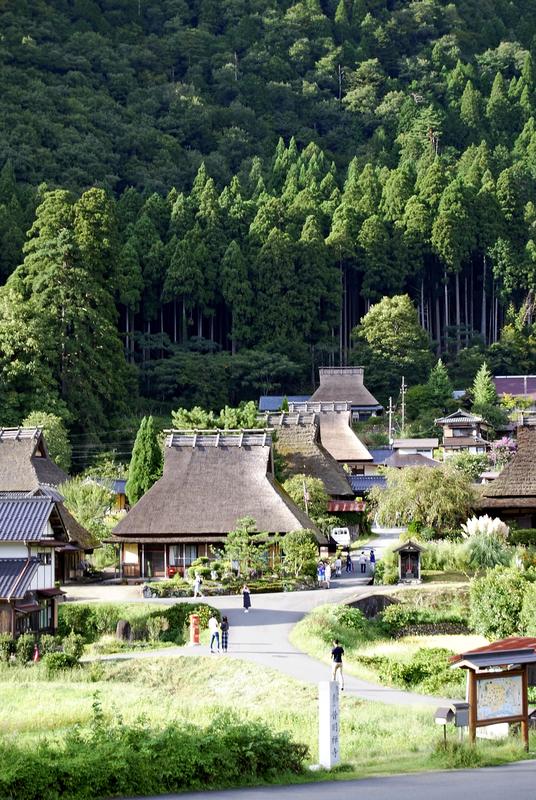
Heading north on a mountain road, out of the blue the land opens up to reveal dozens of thatched-roofed houses on a slope across from a field of white buckwheat flowers, backed by forested hills.
We leave our car at the parking lot and walk into the scene. This other world, pretty as a picture, exists not even a two-hour drive from Kyoto.
Miyama's Thatched Village is a hamlet of 39 thatched-roof buildings in the Miyama district of Nantan, Kyoto Prefecture. Miyama was once a busy stop on the "western mackerel road" that brought marine products from Wakasa Bay on the Sea of Japan to Kyoto. Thatched houses were built here during the Edo period (1603-1867) and up to the early Meiji era (1868-1912).
The area was selected by the Cultural Affairs Agency in 1993 as an Important Preservation District for Groups of Traditional Buildings.
"With young people leaving, we decided to make the whole hamlet a sightseeing spot so the village could survive. But we decided not to make it the kind of tourist destination that has lines of shops. Thatched-roofed buildings can't be maintained if people don't live in them," said Tadaki Nakano, 66, head of a local preservation group.
So while the hamlet might look like a theme park at first glance, closer inspection reveals the thatched-roof homes have cars parked in front of them, laundry hung out to dry and other signs of modern life. Most of the houses are residences.
Tourists can enter only a few, including the Miyama Folklore Museum, which is a farmhouse that's open to the public, and a soba restaurant run by a company with local investors.
As a tourist destination it's quite simple, but for many people, that's the attraction. Particularly noticeable are tour groups from Taiwan who come by bus.
"A woman from Taiwan stayed at an inn here a few years ago. She raved about it online and it became famous throughout Taiwan. Now we get visitors from mainland China, as well as ethnic Chinese from places like Hong Kong, Malaysia and Singapore," said Nakano.
Perhaps because the village is so ordinary, just walking around is calming.
Rolling roads
Nantan stretches across the central part of Kyoto Prefecture, and is mostly forested mountains. Its gently rolling roads are fun to drive, as evidenced by the many touring motorcycles one sees.
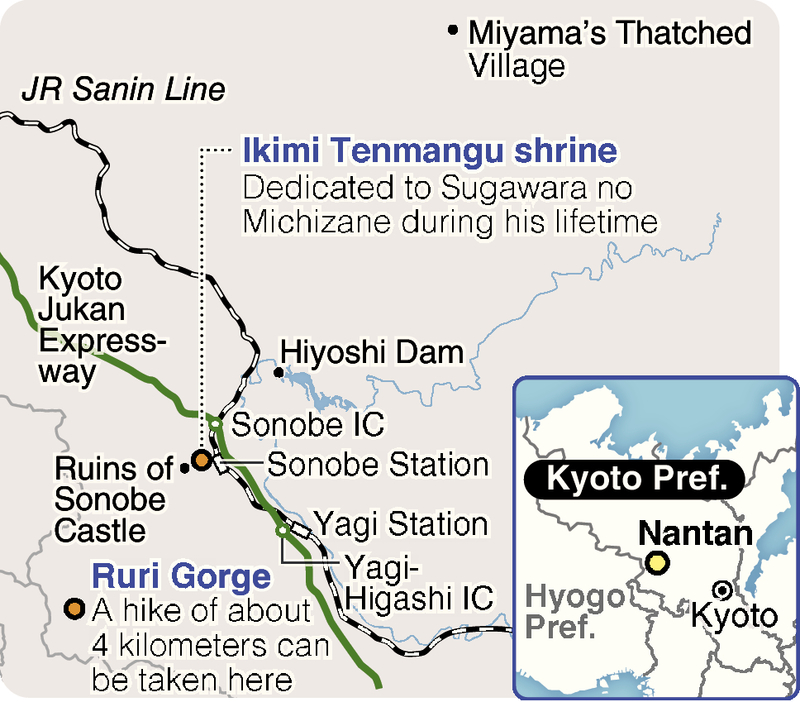
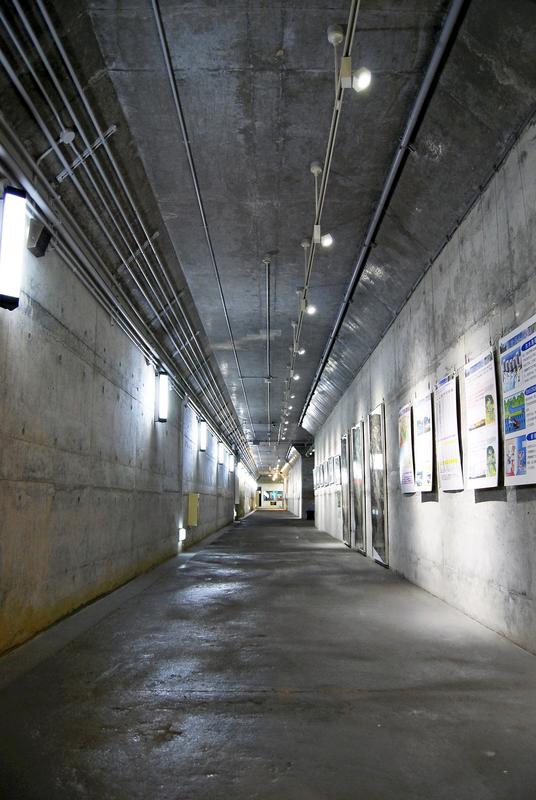
One of the places these riders like to stop is Hiyoshi Dam. In addition to the nearby Springs Hiyoshi roadside station, which has a hot spring, a heated pool and a barbecue area, you can visit an informational gallery inside the dam itself.
While its display panels are a bit technical, the high-ceilinged tunnel carved out of concrete gives an impressive sense of the enormity of the dam.
The city of Kyoto looms large in Kyoto Prefecture -- Kyoto guidebooks have almost nothing about anything outside the city. Yet not too far away await some incredible sites.
Homemade egg pudding
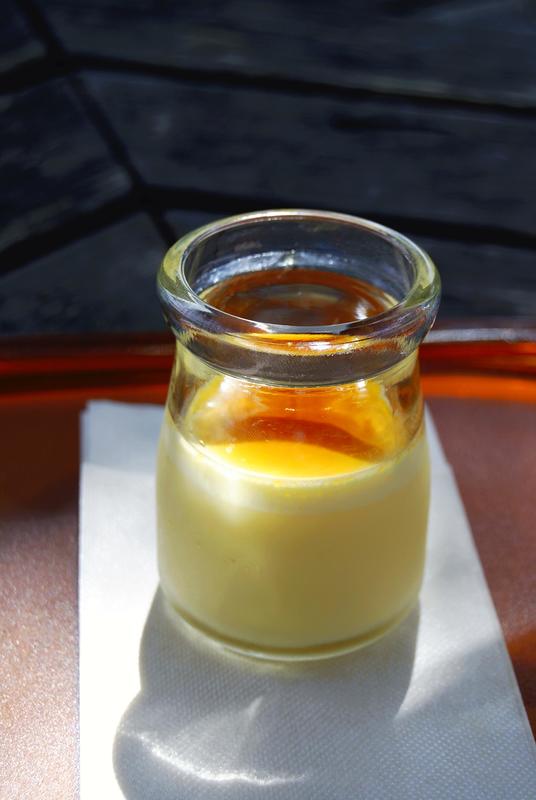
One of the most popular products available at Milan, a cafe in the thatched village, is pudding (300 yen).
Proprietor Yoshitomo Nakano, 58, makes it using fresh eggs from his indoor cage-free chicken farm and milk purchased direct from a dairy farm.
He opened the cafe about seven years ago to create a place where tourists could stop by. At first Nakano sold mostly local products, but his pudding soon became so popular that the cafe is now the main business.
Nakano only makes a limited amount and quality control is difficult, so pudding is not available for take-out or wholesale purchases. It's something you can only taste by visiting Miyama's Thatched Village.
Game curry
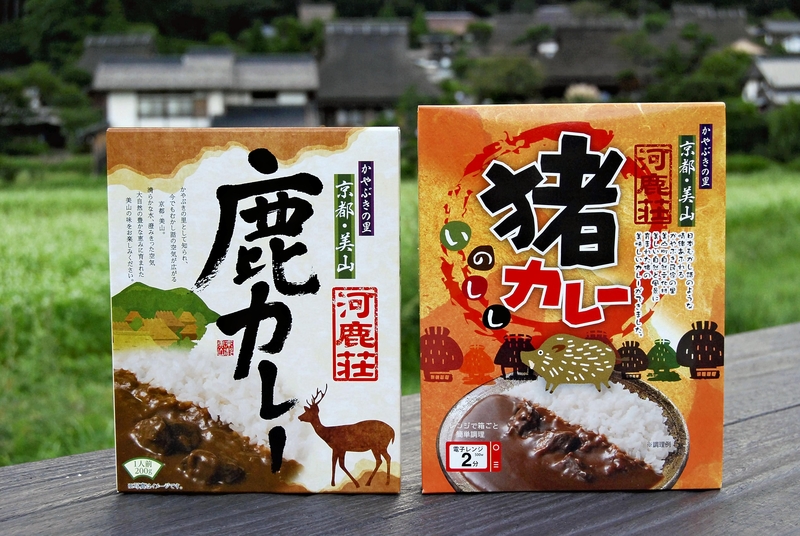
Dishes made from wild deer and boar are a specialty of Nantan, particularly the Miyama district. Venison is the main ingredient in the "Dam Curry" sold at the Springs Hiyoshi roadside station near Hiyoshi Dam.
People who are not used to eating wild game may enjoy the boar or venison curries made by Miyama Furusato (both 540 yen). The venison curry meat is light and tender, while the boar curry has a more rustic taste.
They can be purchased at the Miyama Nature & Culture Village Kajikaso and roadside stations in the city.
Access
It takes 2 hours and 10 minutes to get from JR Tokyo Station to Kyoto Station on the Tokaido Shinkansen bullet train. Then it's another 35 minutes to Sonobe Station on the Sanin Line. There are also direct buses from Kyoto Station to Miyama's Thatched Village.
The tourism exchange office of the Nantan city government can be reached at (0771) 68-0050. For information about Miyama's Thatched Village, call Miyama tourist information at (0771) 75-1906.
Read more from The Japan News at https://japannews.yomiuri.co.jp/