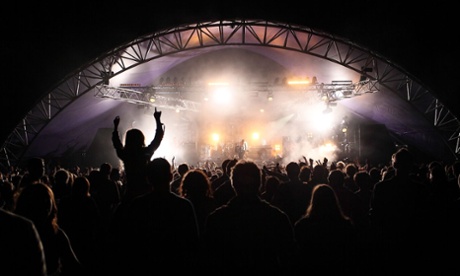
Like many festivals, Standon Calling was accidental, starting as a 23rd birthday barbecue for Alex Trenchard and about 100 friends on the lawn of his parent’s manor house in Standon Lordship near Ware, Herefordshire. That was in 2001. Each year numbers swelled, acts started getting booked, tickets and camping became part of the equation, and Standon Calling ultimately became a key part of the festival calendar. This year’s festival is set to attract 8,000 and a line-up that includes The Magic Numbers, The Horrors and Basement Jaxx.
“The festival has grown out of a country house party,” says Trenchard, who admits he was clueless about how to organise a festival when he first started. He called in favours from friends to help sort everything from the stage to the website. “It still has plenty of charm. It’s got the balance of being big enough to be a festival but small enough to stay intimate.”
Brits’ love for a festival shows no sign of abating, and this demand is pumping millions into the economy: the Association of Independent Festivals (AIF) estimates that independent festivals generated £296m in 2014 alone.
However, while the festival landscape is swelling – festival guide website Efestivals lists 975 festivals for 2015, up from the 496 in 2007 – it’s a tough gig, and many have closed over the years, including Sunderland’s Split Festival and Hop Farm Music Festival in Paddock Wood.
Trenchard understands the difficulties only too well: he went to prison after stealing £355,000 from his employer to help pay off debts incurred by the festival. “I have an amazing team at Standon Calling who have all stood by the festival during this journey, who ran it without me in 2011 when I was in prison,” he says. “I’ve learned to become more open and look to others when getting into trouble. It’s also meant that after all of this we focused on ensuring the festival was put on a much more sustainable financial footing.”
Trenchard advises festival owners facing money issues to be open and trust their team. “Make sure you have someone whose job is to say ‘no’ when it comes to expenditure,” he says. “It can be very easy to get carried away with things.”
“Running a festival at any level is very high-risk,” says Paul Reed, general manager of the AIF. “The margins are incredibly tight. There is a misconception that all of the money and power in the music industry has shifted to the live sector and despite there being more festivals and gigs than ever, it simply isn’t true,” he says.
“You’re running a small town for a weekend,” adds Andy Smith, co-founder of Kendal Calling in Cumbria. “You’ve got to have water supplies, power, food and sanitation to keep 20,000 people going for days. There’s numerous challenges and pressures.”
From Kanye West at Glastonbury to The Chemical Brothers at Bestival, festivals try to stand out by having a killer line-up – but this can be fraught with challenges.
“Negotiations can sometimes take years to lock down and even then it’s not 100% guaranteed until they are on stage,” says Lak Mitchell, co-founder and creative director of BoomTown Fair in Winchester. “Being independent puts us in a harder position as we don’t have the market clout that some of the other festivals run by huge companies booking artists do. Even though we’re booking for a 50,000-capacity festival, it’s still a long 14-month game of intense negotiations and many 4am phone calls with people on other side of the world,” he adds.
“If I did it for the money, I’d choose a less stressful job,” says Smith, who recalls the time a headline act decided to cancel after looking at a map and realising they wouldn’t be able to reach Cumbria in time after playing another gig that day.
“It was terrifying,” he admits. “I had this really large artist set to play and had spent the past six months telling everyone that they were playing. A friend told me to get in touch with a law firm and they organised a five-way conference with lawyers. Then I got a bill for £3,000 [from the law firm, which he later disputed]. I rang up the artist with what the law firm had said and they ended up playing.”
DJ Robert Gorham, otherwise known as Rob da Bank, who runs Bestival, Camp Bestival and Common People festivals alongside his wife Josie, says he’s not in the festival business to make money.
“Even if you’ve had a credible year and it’s sunny and sold out, you might make a small amount of profit. But if anything goes wrong, you lose money,” says Gorham. “I’ve lost more money than I’ve made, but that’s never been our aim. Bestival isn’t about money. It doesn’t come into the equation. I book bands that I want to book and if at the end of the day it works out then that’s great.”
Smith says Kendal Calling sells out every year, but other factors can make it an unpredictable earner.
“Last year it rained all weekend,” he says. “It rained constantly for 72 hours. I’d never had a rainy festival like that before. The entire site was bogged. It affected income, sales at the bars went down, although merchandise went up. It cost money to repair the ground.”
To make sure he’s not so reliant on one festival, Smith runs two other events: Live from Jodrell Bank, a series of live music events set in Macclesfield, which started in 2011, and another boutique festival Forgotten Fields in Tunbridge Wells, Kent, which will launch this year.
For those seeking to join the festival owners, Reed says it’s essential from the outset to manage finances and cashflow correctly, cultivate good relationships and dialogue with local authorities and the emergency services, and work with the right suppliers.
“Of course you must ensure that all relevant licensing, insurance and health and safety procedures are in place. Above all else, ensure that the audience has a safe, enjoyable and amazing experience every step of the journey. Audiences have so many choices now and will vote with their feet if not treated properly.”
Sign up to become a member of the Guardian Small Business Network here for more advice, insight and best practice direct to your inbox.