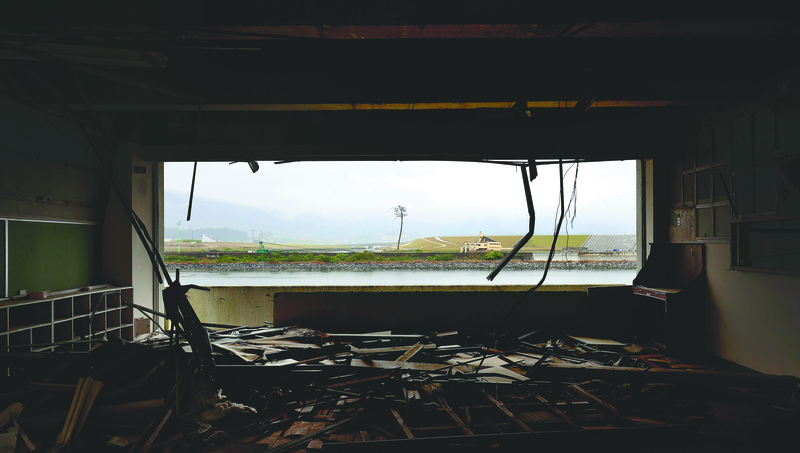
RIKUZENTAKATA, Iwate -- The ruins of buildings in Rikuzentakata, Iwate Prefecture, tell a tragic tale of the Great East Japan Earthquake and the massive tsunami that struck the area on March 11, 2011.
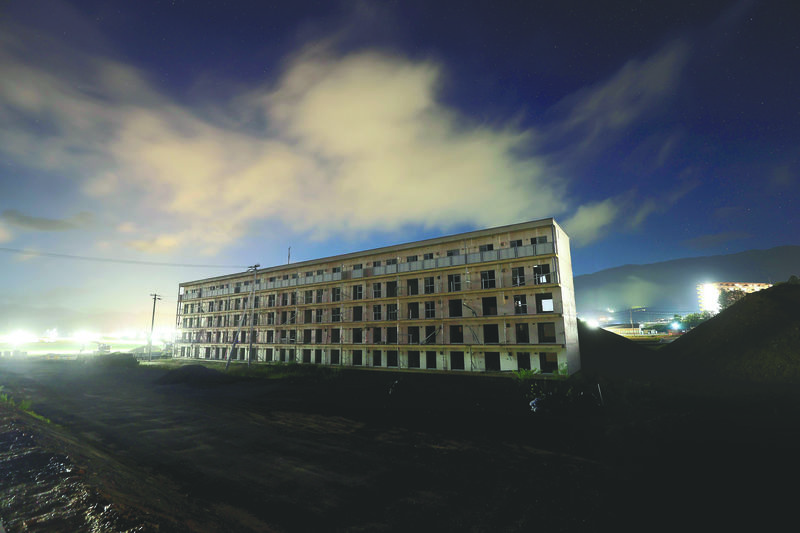
The former Kesen Junior High School in the city was hit by a 14.2-meter tsunami that reached its roof. Although the three-story school building, located near the mouth of the Kesen River, was completely engulfed, all of the students, teachers and staff, were able to evacuate to safety on higher ground.
After getting permission, we went inside the school building, which is off-limits to the public. What we saw there was a stark reminder of the tragedy.
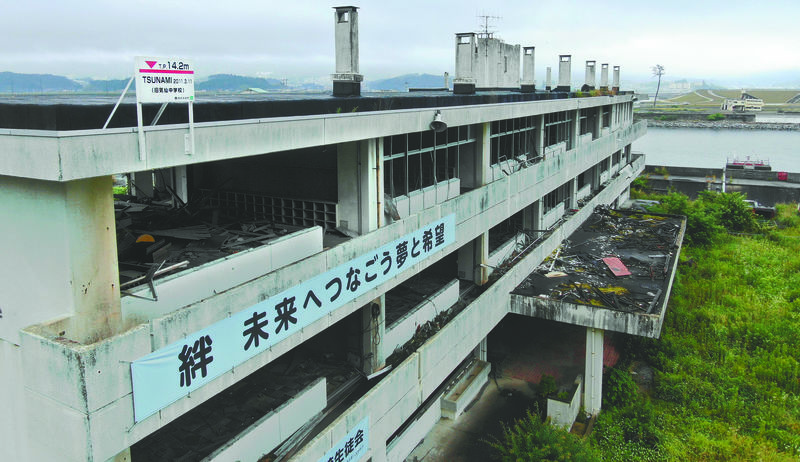
The music room on the third floor remains littered with mud-covered desks and chairs. Parts of the corridors are blocked by debris that had been washed away, and textbooks covered in dry earth and sand are scattered across the floor.
There is a faint trace of chalk on a blackboard that reads "March 11th," and the clock in the teachers' room is stopped at 2:46 p.m., the time of the earthquake.
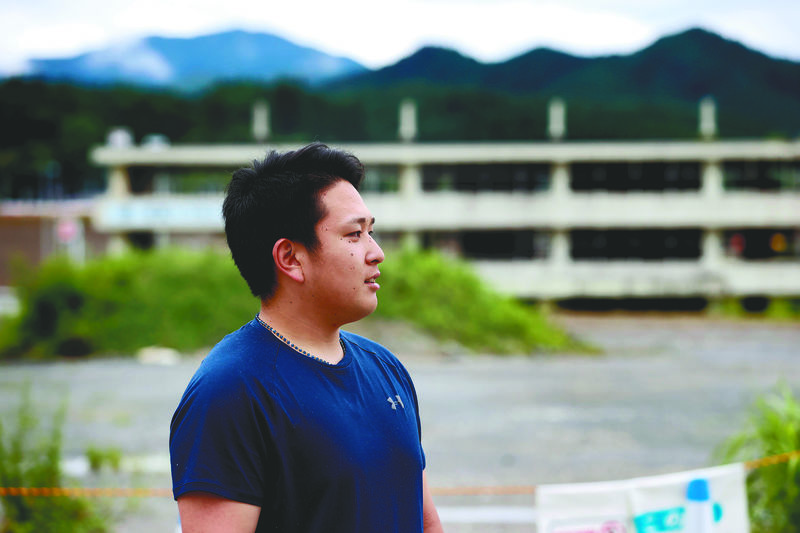
Miki Onoda, 22, a member of the first-year junior high school baseball team at the time, said: "The quake was so strong that I couldn't even stand. I could see the waves receding out to sea, and I thought a tsunami would definitely be coming. I just ran up the hill."
The city plans to preserve the building and turn it into a museum where visitors can view inside. Full-scale work started in September with the aim of reopening the building to the public next year.
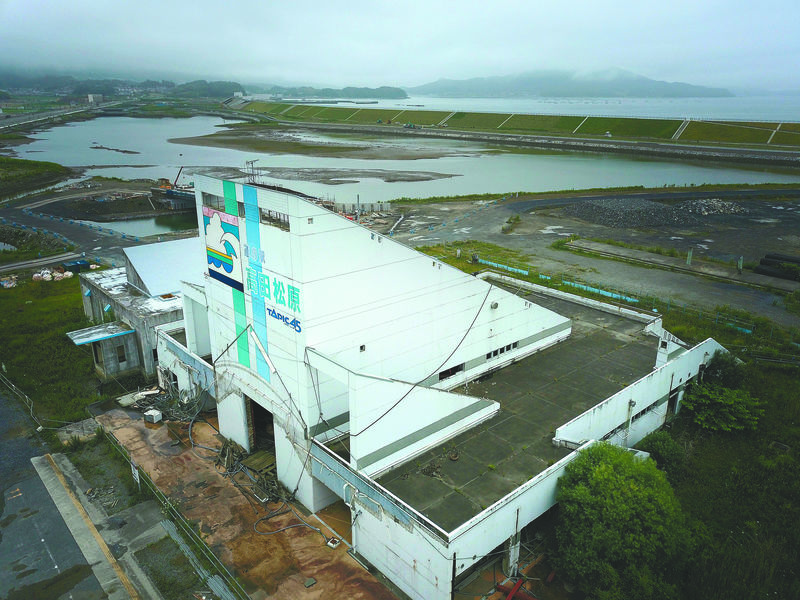
The former roadside rest area Takatamatsubara (Tapic 45), Shimojuku Teiju Sokushin residence, the "miracle lone pine tree" and Rikuzentakata Youth Hostel, have already been preserved as remains of the March 11 tragedy.
Marugoto Rikuzentakata, a general incorporated association that runs exchange programs in the city, offers tours of the buildings as a silent storyteller of sorts.
"Television images and words cannot convey the reality of the disaster here. I hope the tour will help people think about what to do when a disaster occurs," said Keiichi Furutani, 32, a board member of the association who serves as a guide.
Read more from The Japan News at https://japannews.yomiuri.co.jp/