The Australian cricket team are in the stocks having humiliation flung from all directions. The country’s rugby side were there less than a year ago as an investigation into offensive texts allegedly sent by a player to a female member of the management battled for headlines with another unsuccessful Rugby Championship campaign.
The Wallabies finished the year with a third head coach in 18 months and predicted to finish third in a World Cup pool containing the hosts England and Wales. None of the southern hemisphere’s big three has failed to make the knockout stage of the tournament – the All Blacks have yet to lose a pool match – but Australia, a country where rugby union struggles for exposure nationally, looked on course to make history.
They will arrive in England next month as the champions of the Rugby Championship having defeated New Zealand last Saturday, further proof that international sport, a contest between the best, is generally oscillatory. As the cliche goes, it comes down to small margins; from Ashes to Hashes and back again. The All Blacks seemed to pace themselves in the tournament, as they did in 2011, using it as a means to an end rather than a truncated tournament that had to be won. The Springboks finished bottom after losing at home to Argentina having blown winning positions against Australia and New Zealand, down but far from out.
This month marks the 20th anniversary of the decision to make rugby union open. The initial years of professionalism were marked by a clear superiority of five countries, New Zealand, Australia, South Africa, England and France over the rest, not least because they were vastly superior to the Celts in conditioning and fitness while Argentina and Italy were tier-two nations who could not afford to abandon amateurism.
The World Cup used to be a misnomer, a contest between five nations at most from 1995. It remains the case that only the five named above have reached a final: three times for New Zealand, Australia, England and France, twice for South Africa, but this year’s tournament promises to be more open with Ireland, the Six Nations champions who are second in the world rankings, resourceful and blessed with depth while Wales, if they do not pick up any more injuries, have a team to take on anyone.
Fitness is no longer an issue for Ireland and Wales, who have invested heavily in their national sides. England and France have an advantage over the rest in terms of playing population, but they both have club systems that do not run on a parallel line with the international game.
The elite player agreement between the Premiership clubs and the Rugby Football Union may have established some common ground between the two bodies who had been on a war footing for most of the 13 years before it was signed, and their alliance is far stronger than that between the French Rugby Federation and its Top 14 sides, but the new deal currently being negotiated to run from next summer, for another probable eight years, will not be concluded quickly.
Key for the clubs is the clause that all but ends the international careers of players who leave the Premiership for France or elsewhere; it helps them hold on to England internationals without getting into a bidding battle with Top 14 rivals who have bigger budgets and a more generous salary cap, but they want a lot more money for making those players available to the national management for what amounts to four months a year.
If the clubs, most of which still lose money, need the financial security the deal with the RFU provides, so England, the most consistent country in Europe this decade, need the current access to the squad to remain. The Premiership, buoyed by the outcome of the European Cup talks last year, are playing hardball but finding that the affable persona of the union’s chief executive, Ian Ritchie, masks an inner resolve; he will not sign a blank cheque.
The agreement has helped put England in a position where they are among the leading contenders for the World Cup. They may not have won the Six Nations under Stuart Lancaster, but no one has a better playing record in his four years in charge. For once, he is not cursed by injuries: Dylan Hartley and Manu Tuilagi are absent for disciplinary reasons while only the No8 Ben Morgan is a fitness doubt before the start of three warm-up matches.
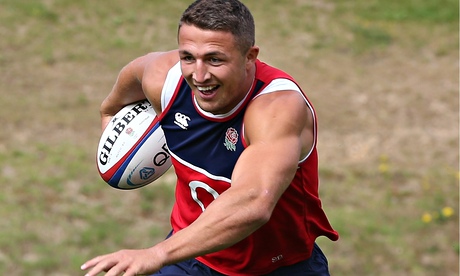
What Lancaster does not have, compared to New Zealand, South Africa, Australia, Wales and Ireland, is a hard core of experience, players who have won more than 80 caps and are veterans of more than one World Cup campaign. It may explain why Sam Burgess remains in contention for a place in the 31-strong squad for the World Cup despite his inexperience in union and the decision to consider him as a centre when he plays for his club, Bath, in the back row.
What Burgess does have is experience of high-end competition, even if it is in another sport. A World Cup campaign is not just about the seven matches the teams who make the semi-final will play; they amount to less than 10 hours of the six weeks the tournament is played over. What happens off the field usually determines the outcome on it, as England found in 2011.
Lancaster is looking for a ball-carrier in midfield to replace Tuilagi, whose absence for most of the last two years has had an impact on England who remain unsure of their midfield at the point where it should be nailed down. Burgess has the strength and the off-loading ability to merit a look, although his tendency to run upright makes him vulnerable to a maul turnover, if not the pace of Tuilagi. There will almost certainly be moments during the World Cup campaign when England will come under media pressure, whether traditional or social, and what Burgess has in abundance is strength of character and a tendency not to panic.
• This is an extract taken from the Breakdown, the Guardian’s weekly rugby union email. To subscribe, just visit this page, find ‘The Breakdown’ and follow the instructions.