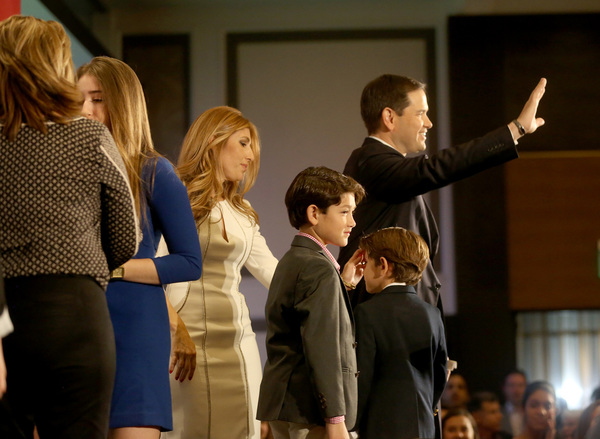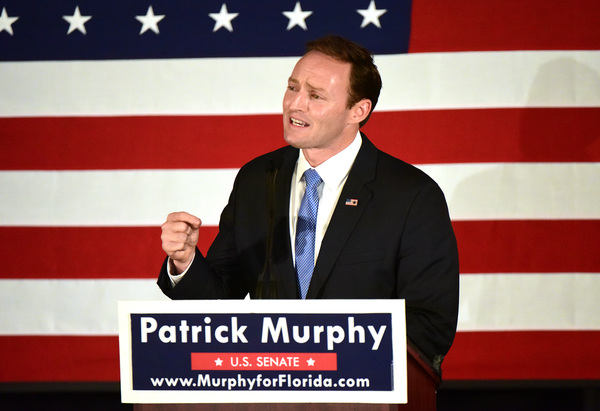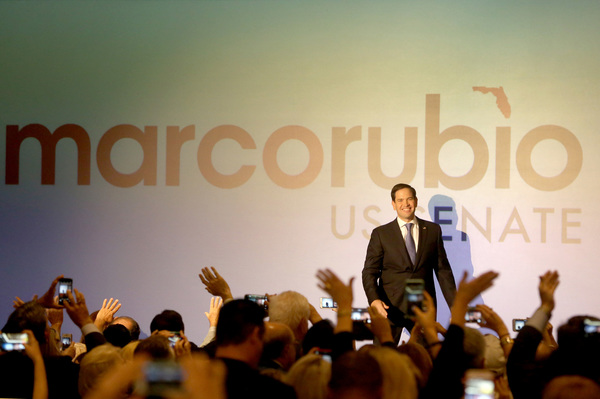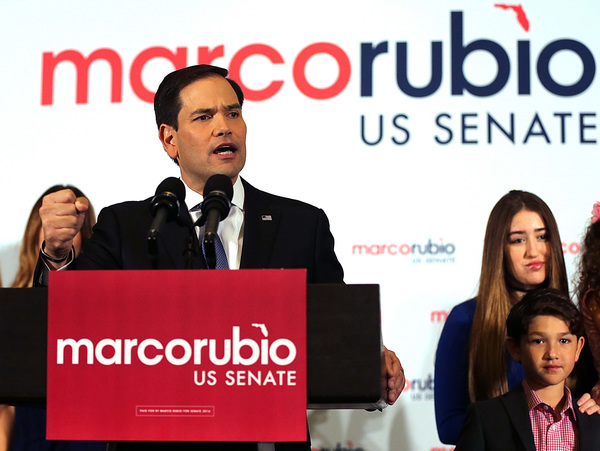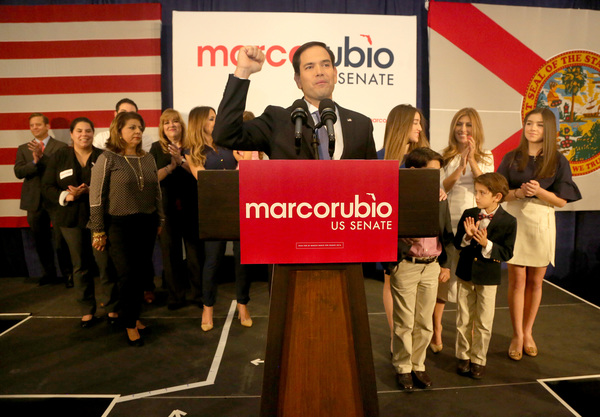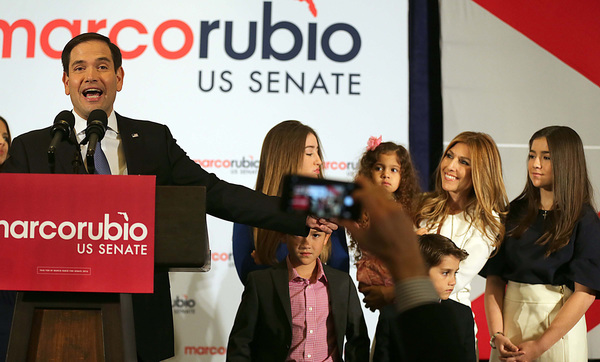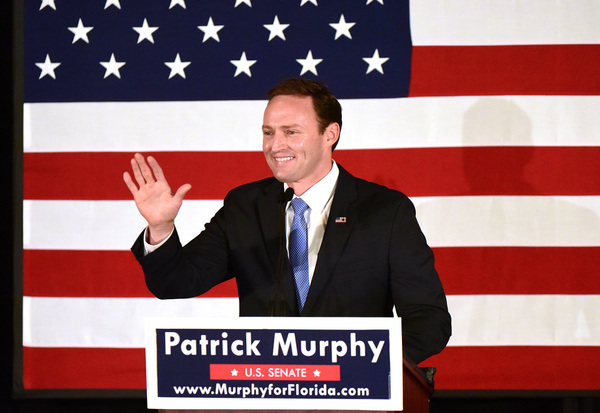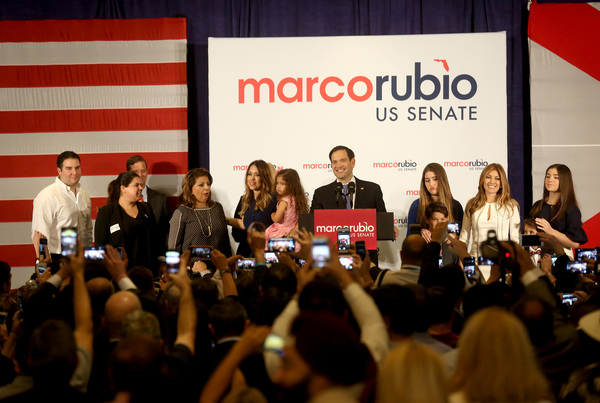
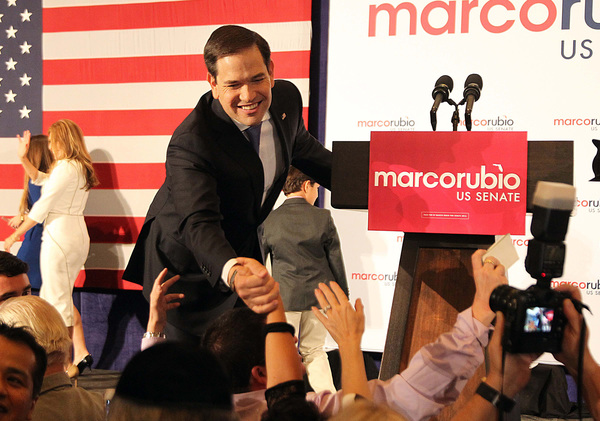
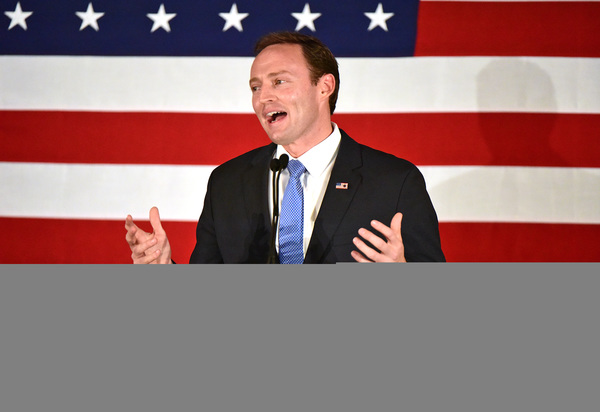
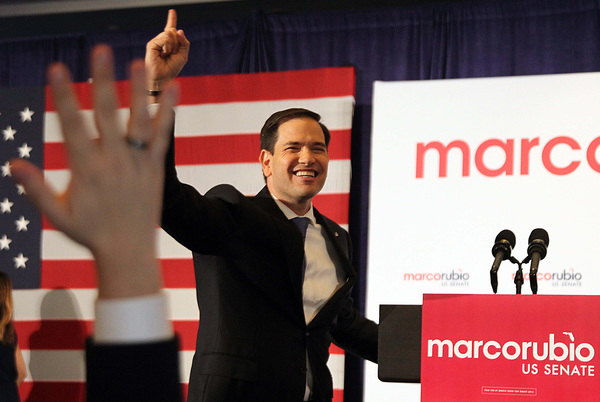
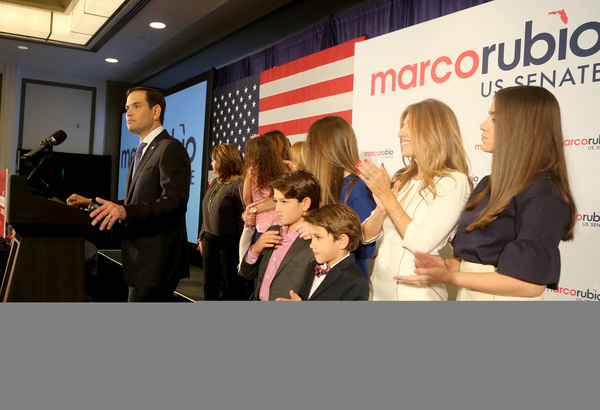
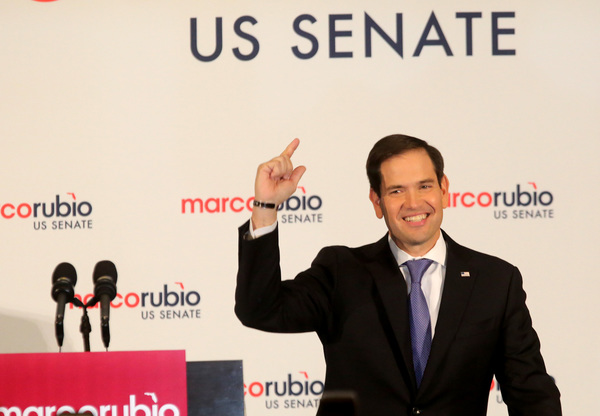
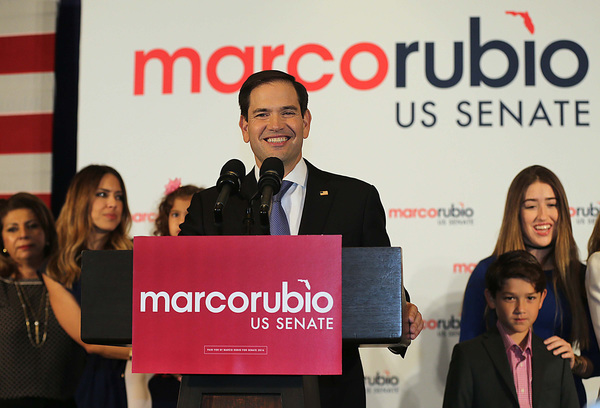
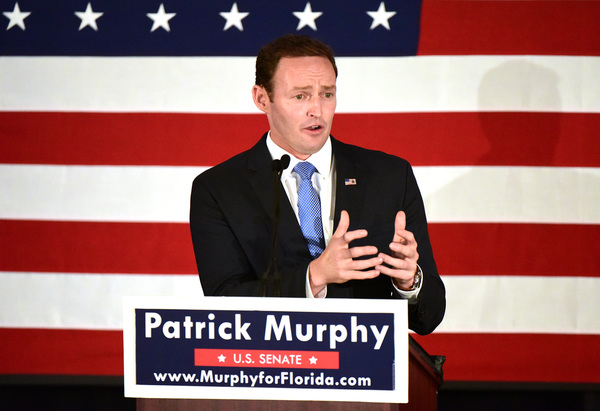
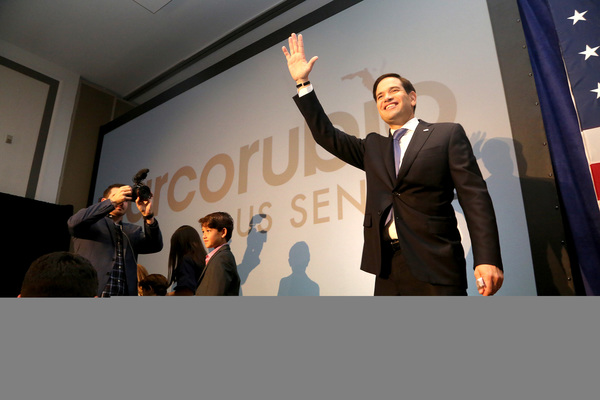
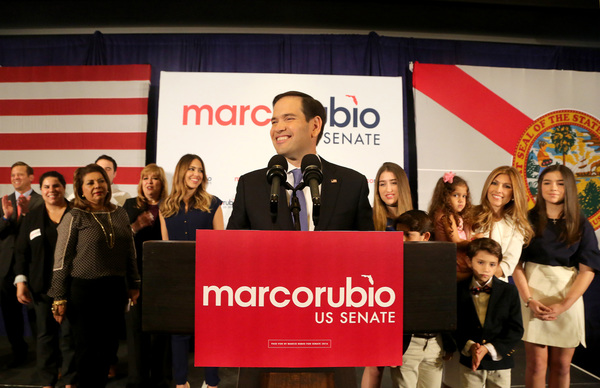
FORT LAUDERDALE, Fla. _ U.S. Sen. Marco Rubio overcame a late campaign start after a lost presidential bid to win re-election Tuesday night over U.S. Rep. Patrick Murphy.
The win revives Rubio's long-term political prospects and could help Republicans keep control of the Senate.
Murphy, a Democrat from Jupiter, didn't get enough of the spillover surge of voter support he was counting on from Hillary Clinton's presidential run.
Murphy spent much of the campaign linking Rubio to controversial Republican presidential nominee Donald Trump.
Murphy frequently criticized Rubio for continuing to endorse Trump for president, even after the release of audio tapes from 2005 where Trump is heard bragging about groping women.
Rubio kept his distance from Trump campaign events in Florida, but still stuck by his endorsement of the Republican Party's presidential nominee who once derided him as "Little Marco."
Rubio said that though he had many disagreements with Trump, he maintained that the real-estate-tycoon-turned-reality-TV-star would still make a better president than Clinton.
Rubio entered the race late, jumping in just before the qualifying deadline to run for re-election after his failed bid for the Republican presidential nomination.
Murphy repeatedly called Rubio a "missing senator" because of frequent absences from Senate votes and hearings during his run for president. He cast doubt on whether Rubio would serve a full second term if re-elected or have "one foot out of the door" for another presidential run in 2020.
Rubio, 45, convinced Florida voters they would be better served by his experience of public service, which began as a city commissioner who went on to be speaker of the Florida House and then a U.S. senator.
Murphy, 33, had argued he was the better choice to handle issues ranging from the economy to climate change and advocated a bipartisan approach to break through Senate gridlock.
Rubio charged Murphy embellished both his academic and professional background, while also saying Murphy hasn't accomplished anything significant while in Congress. Rubio called Murphy "one of the most unaccomplished individuals in the U.S. Congress."
Murphy was counting on voter support for Hillary Clinton spreading down the ballot and helping him top Rubio. In the lead up to Election Day, Murphy crisscrossed the state appearing at Clinton campaign rallies.
Murphy at one point called the presidential race the single biggest factor in his race with Rubio.
Murphy, a CPA-turned-politician, surprisingly beat tea party favorite U.S. Rep. Allen West in a 2012 race for the U.S. House seat that represents northern Palm Beach County, Martin and St. Lucie counties. He was re-elected in 2014.
Murphy then opted to run for what was originally to be an open U.S. Senate seat being vacated by Rubio, who had vowed to either be elected president or leave public office.
Instead, Rubio bowed out of the Republican presidential race following a poor showing in the Florida primary.
Back in March, Rubio's political future was in doubt after his 46 percent to 27 percent drubbing by Trump in Florida's Republican presidential nomination primary.
At the urging of Trump and other Republican leaders, Rubio in June flip-flopped and entered the Senate race seeking his second six-year term.
When pressed during the campaign about whether presidential ambitions in 2020 would keep him from serving another six years, Rubio said that he intended to serve a full second term "God willing."
Polls showed a close race heading into Election Day. On Monday, the Real Clear Politics average of Florida polls showed Rubio with a 3.7-point lead over Murphy, 49 percent to 45.3 percent.
Rubio's presidential primary clashes with Trump didn't dissuade Trump supporter Vivian Carta of Wellington from backing Rubio for Senate.
"I'm all for Marco. He's a good man, well intentioned," said Carta, 79, a Republican and a native of Cuba. "He stands for what I stand for."
Maxine Dorsette, a teacher from Davie, said she used her Senate vote as an anti-Clinton vote.
"I voted Rubio, because I hate Hillary," said Dorsette, 47, who said she has no party affiliation. "I think she tainted the whole thing (Democratic slate) for me."
The loser of Florida's U.S. Senate race could use the fundraising power and name recognition bolstered from running a statewide race to run for governor or Florida's other Senate seat in 2018.
"The closer the loss, the more viable the person is in the next round," said Susan MacManus, professor of political science at the University of South Florida.
Murphy was the Senate race "dark horse" facing a better-funded incumbent and his political future remains bright, U.S. Rep. Lois Frankel said.
"He is a young, energetic leader of the future," said Frankel, D-West Palm Beach.