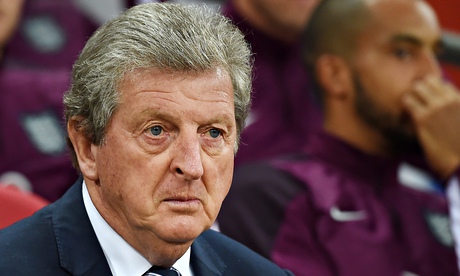
Roy Hodgson is content to go into Euro 2016 with his future as England manager uncertain, according to Martin Glenn, the Football Association chief executive.
Glenn is keen to avoid the “unsavoury” situation that occurred when Fabio Capello, Hodgson’s predecessor, signed a contract extension ahead of the South Africa World Cup of 2010. England under-performed at the tournament and the Italian became a lame duck in the job.
He eventually resigned in February 2012 ahead of Hodgson replacing the Italian two months later ahead of that summer’s European Championship. Hodgson signed a four-year contract, which expires next summer.
Asked about the manager’s position, Glenn said: “It has been made to be more of an issue than it is. Roy is very comfortable. He knows it is a results business. We want to avoid the slightly unsavoury situation we had with Fabio Capello at the World Cup. Everything we want to do with Roy and the senior team is what are the best ways to make Roy successful. If it is a change, it is a welcome one.
“Myself and Roy have a very good relationship. He is by far and away the best coach we could have for England. He has vast experience. He looks, he learns, he listens.”
Glenn said in August that Hodgson accepted that he would not expect to be given a new contract if England had a bad European Championship because he is “a proud man”.
Glenn also insisted that the stated aim of Greg Dyke, the FA chairman, to win the 2022 World Cup was realistic. “We have this big ambition to win the World Cup in 2022 but we have three tournaments before then. Why not go with ambition? Unless you have ambition, you rarely succeed,” he said. “It is realistic. Any good organisation, whether in football or business, needs an ambition. The proverbial one of JFK saying by the end of the decade there will be a man on the moon was a great rallying cry to develop Nasa.
“We absolutely need an ambition. The logic of 2022 steps back to the more scientific development of the younger teams. When our Under-17, 18, 19, teams play their counterparts we are technically matching them, so there is an in-built improvement in the technical quality of younger players.
“There is a building quality and within the clubs there is the EPPP [Elite Player Performance Plan] which has received vast investment from the clubs and is seeing a real improvement in the quality of players. It is a steady build. There is no silver bullet. We will do better in the Euros and better in Russia. Things are getting better.”
Dyke, who is 68, is due to retire in two years’ time under FA regulations. Glenn suggested the regulation could change. He said: “The FA is facing the demographic issue just like every other organisation; 50% of Brits are 54 and under. We are an ageing population. Having age-based rules is less applicable today. You should be looking at merit not age.
“There is an opportunity we plan to seize in the FA and clear up, what are the various rules. It is really important in Fifa to have term limits. It is not healthy to have Sepp Blatter in his fifth term. It can lead to lazy practice. We must not limit people who are 70, have all their faculties working and loads of energy but work on checks and balances.”
Glenn offered the FA’s first public words on the dispute between Chelsea’s José Mourinho and club doctor Eva Carneiro.
Glenn backed Carneiro, who entered the pitch at Stamford Bridge to treat Eden Hazard during Chelsea’s 2-2 draw with Swansea City on 8 August.
“We work to a Fifa mandate on medical support. The duty of the doctor is to the player, not the employer. It is the Hippocratic oath,” Glenn said.