1 SAW SWEE HOCK STUDENT CENTRE LSE
O’Donnell and Tuomey
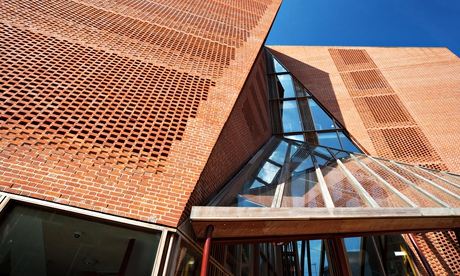
This is proper architecture: space and material shaped with invention, skill and daring to serve a social idea. In this case it’s about making a community of student activities that connects with the life of the streets outside while also allowing for the unforeseen and unprogrammed. The building also gives an identity to a rather shapeless academic zone without enforcing an alien character on it.
2 LEADENHALL BUILDING
Rogers Stirk Harbour
The tower also known as the Cheesegrater, and by far the best of the current crop of tall buildings in London. The sumptuous detailing of its steel and glass makes the nearby Gherkin look crude, and the north elevation presents an enjoyable choreography of moving lifts and machinery. Unlike most office blocks, the building communicates a sense of its inner life. The open space at its base gives some grandeur to the street. The triangular shape is simplistic but the tower still has unusual elegance.

3 EVERYMAN THEATRE, LIVERPOOL
Haworth Tompkins
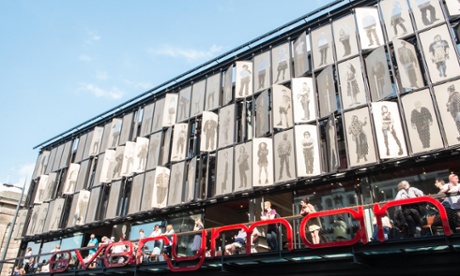
A building that takes on the essentially impossible task of building a new theatre without losing the creative anarchy and spontaneity of its ramshackle predecessor. Something different is inevitably made, which is also better in obvious functional and practical ways, but the new building also manages to create its own sort of liveliness and openness. It won the 2014 RIBA Stirling prize: I’d have given it to the LSE student centre myself, but the Everyman is a deserving winner.
4 SERPENTINE PAVILION
Smiljan Radić
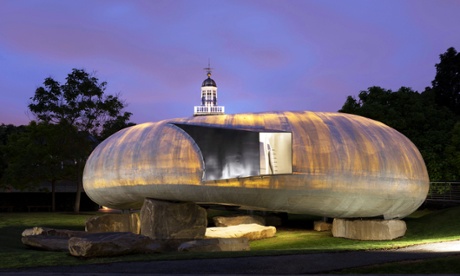
A temporary folly, to be sure, but the most profoundly original to date of the Serpentine’s series of annual pavilions. A combination of stone age and space age, and very heavy and ultra-light, made with a combination of rocks and fibreglass eggshell-thick, which achieves a surprising affinity between its disparate elements. Which also brings a smile to the face.
5 MAGGIE’S CENTRE, LANARKSHIRE
Reiach and Hall
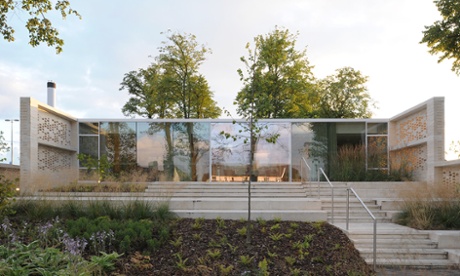
One of the less ostentatious in the celebrated series of Maggie’s cancer centres. This is by the respectable Scottish practice of Reiach and Hall, rather than the international stars who often design the centres, and it offers simple pleasures thoughtfully achieved – a sheltered garden that can be experienced from an intimate interior with the help of a wide glass wall; perforated brickwork that allows sunlight to penetrate; a central light court. Not revolutionary, but good.