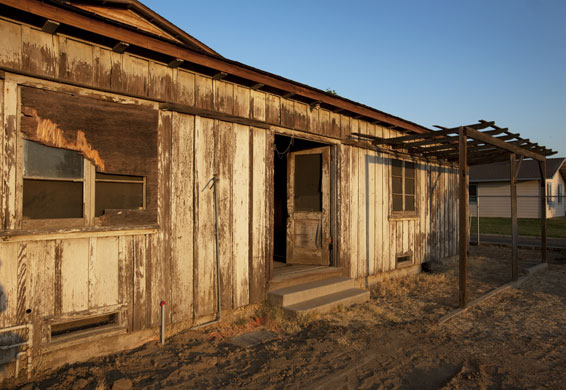
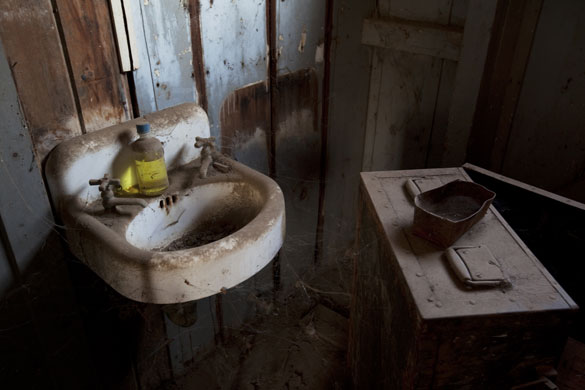
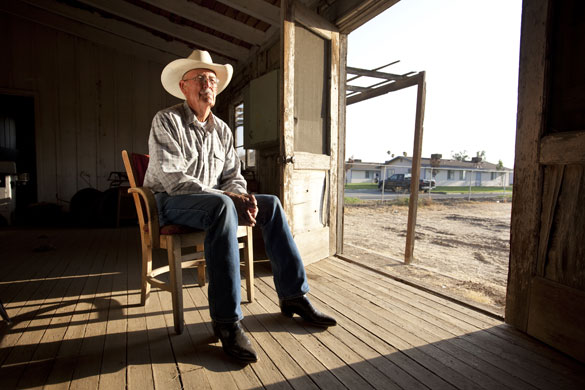
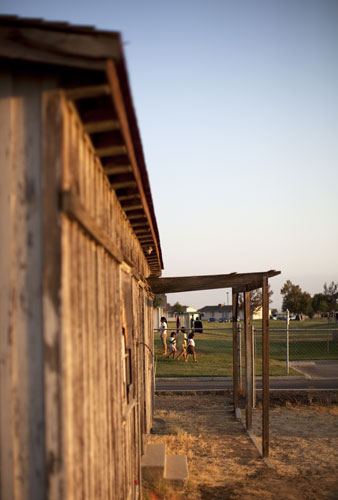
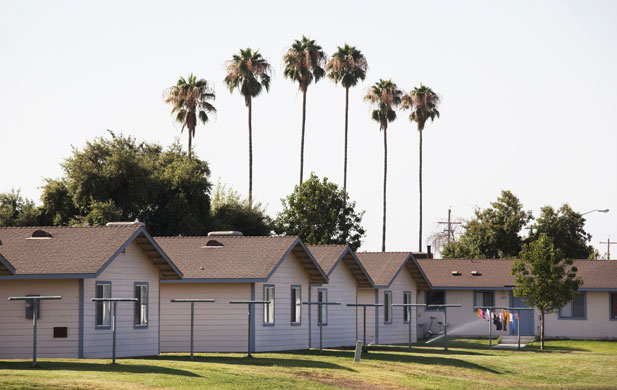
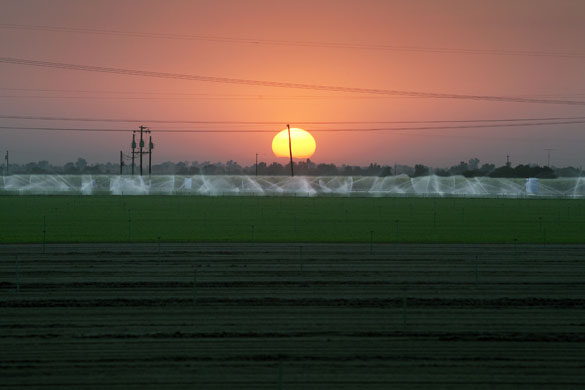
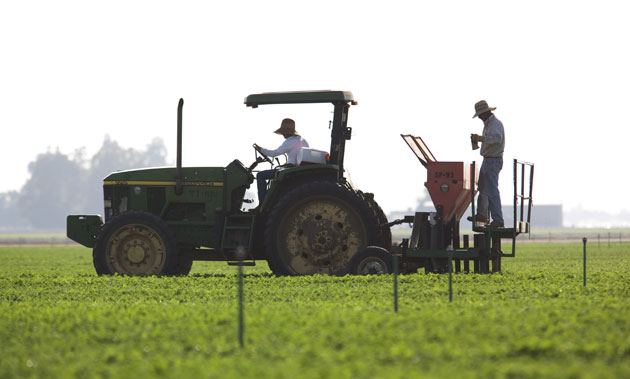
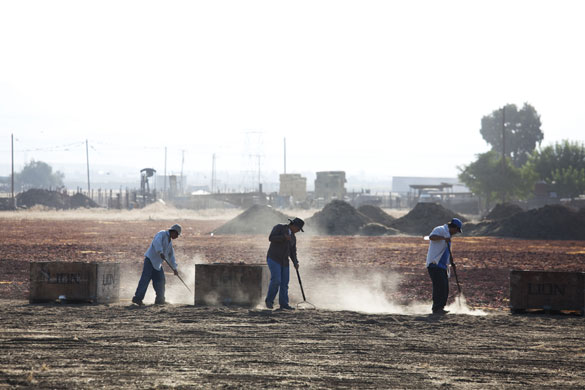
Steinbeck based his story of the Joads’ experiences on the real accounts of those at the Weedpatch camp, built by the federal government as a place of shelter and protection for the desperate migrants who were often unwelcome in California and frequently exploited and abused. Photograph: David LeveneLife in the camp was a haven from a hostile world ... Farmers forced migrants to work for near to slave wages and often used the police as a private force to deal with troublemakers who tried to organise for better conditions and pay.Photograph: /David LeveneEarl Shelton is every bit an Oklahoman. From the distinctive drawl that marked him out for abuse when he landed in the 'promised land' during one of the largest migrations in US history, to the horseshoe belt buckle and ever present cowboy hat, Shelton never escaped his roots. Photograph: David Levene
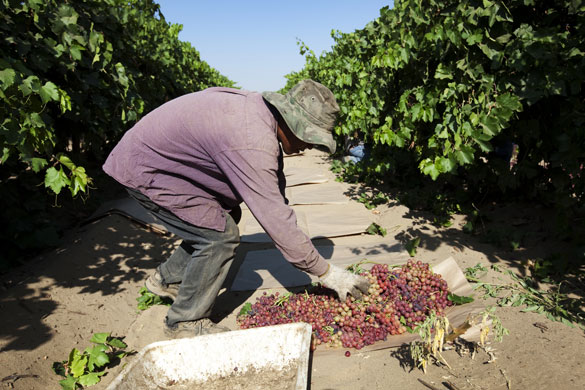
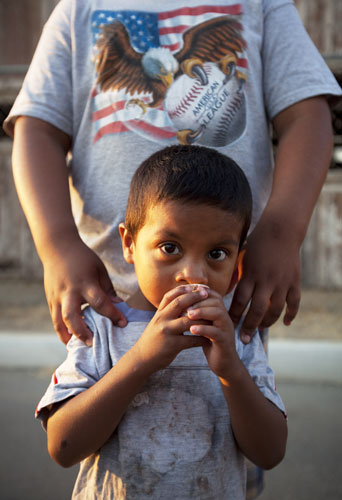
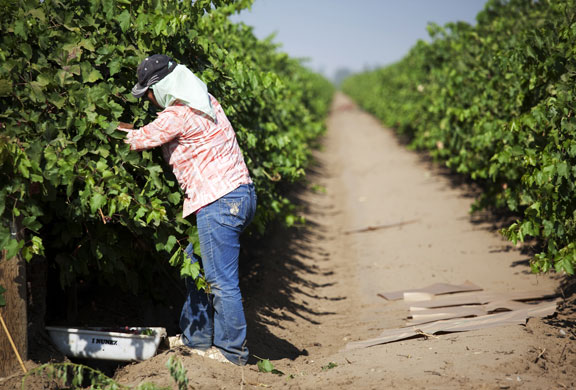
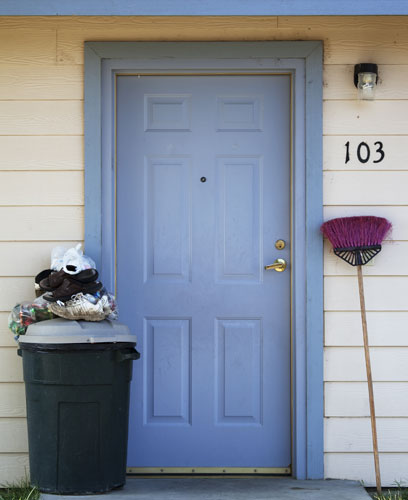
'There wasn’t much here,' said Shelton. 'We lived in a tent for the first seven years. People had no money to speak of. I was seven years old when I arrived and I had to work in the fields. I picked cotton before school, I picked cotton after school.' Photograph: David LeveneShelton may have left the camp half a century ago, albeit to live just a few miles up the road, but Weedpatch lives on today as a temporary shelter for Mexicans and Hispanic Americans who arrive each April for the six-month grape picking season.Photograph: David LeveneThe housing has improved, and working conditions and pay are better if still only acceptable to the desperate. But the modern day economic migrants drawn to California, many of them working illegally, are often met with the same hostility and suspicion that greeted Earl Shelton.Photograph: David LeveneLife is harder still for 21st century migrants. The modern day 'illegals' smuggled in from Mexico not only live in constant fear of arrest and deportation but face a resurgence of hostility from Americans who accuse them of taking jobs and fuelling a surge in drug violence. Photograph: David Levene/David LeveneEmployers are obliged to verify a worker’s right to be in the country and only those with residency papers are allowed to stay at the Weedpatch camp.Photograph: David LeveneThat leaves many of the 'illegals' seeking jobs by the day where few questions are asked, and forced to live in difficult conditions paying hundreds of dollars a month to sleep in a garage or shed. Photograph: David Levene'We’ll stay here until the grape picking season ends around September. Then we’ll move on to another place, picking chilies, limes.' Photograph: David LeveneThere are estimated to be 2.7m undocumented workers, mostly Mexican, in California. One in ten of the pupils in the state’s schools are the children of people working illegally in the US. Yet without them, California’s stumbling economy would surely have collapsed.Photograph: David Levene 'We’re doing the jobs they don’t want. They want us as pickers and gardeners and maids but then they complain we are here. Perhaps it’s because there’s too many of us. They say Mexicans sell all the drugs and do all the murders. It’s not true but they say it.' Photograph: David LeveneEarl Shelton is sympathetic to the modern migrants' plight and he can’t resist a comparison with his days as a child in the cotton fields. 'They’re just trying to make a living like we were ... The grapes still take a lot of work. Americans don’t want to do that kind of labour anymore.'Photograph: David Levene
Sign up to read this article
Read news from 100’s of titles, curated specifically for you.