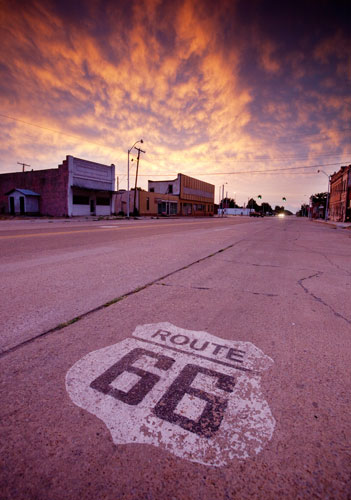
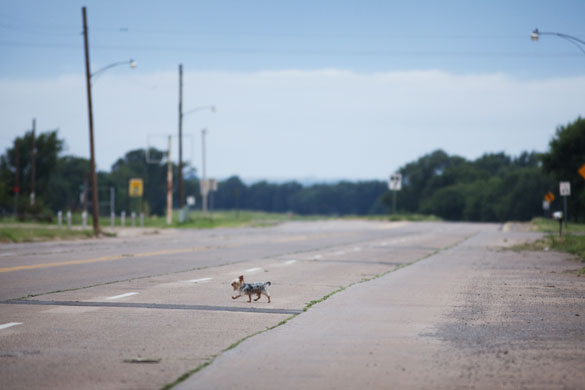
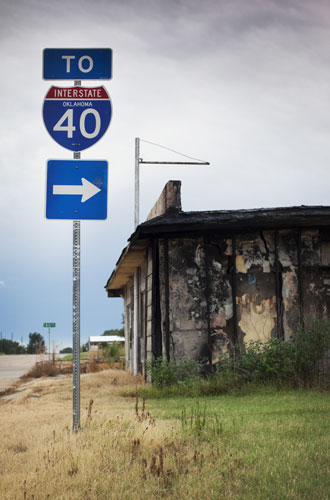
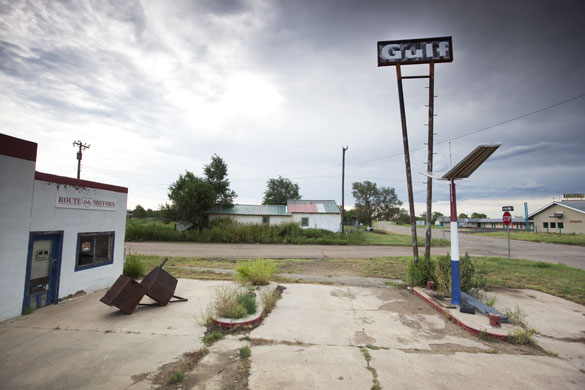
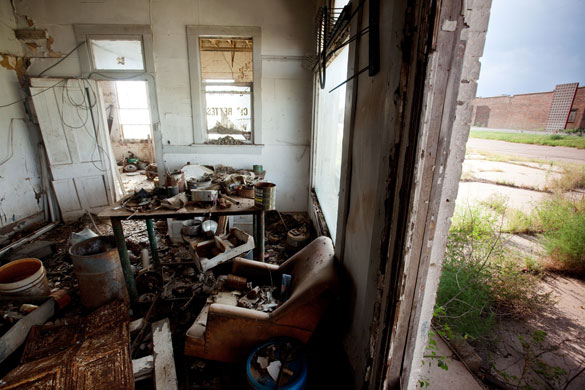
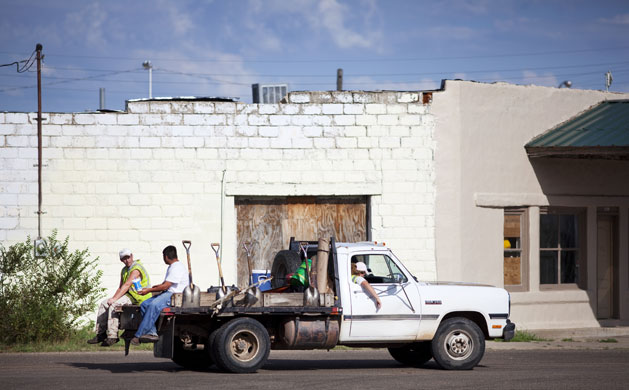
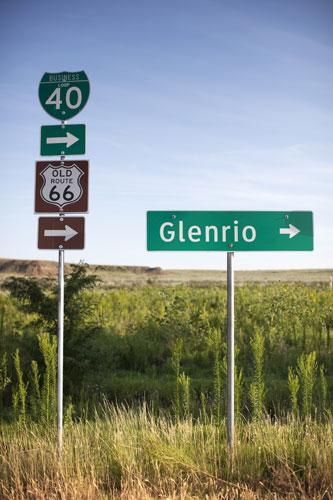
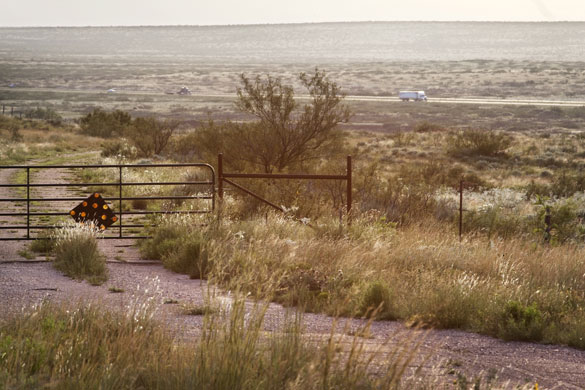
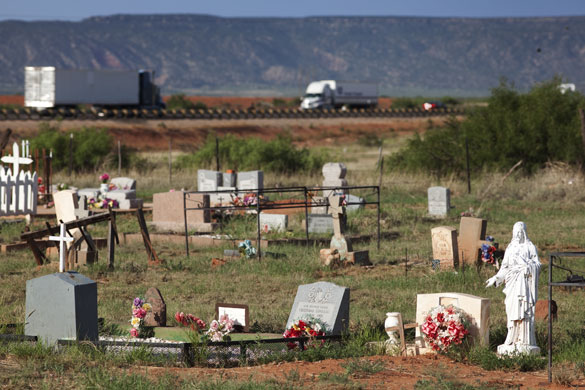
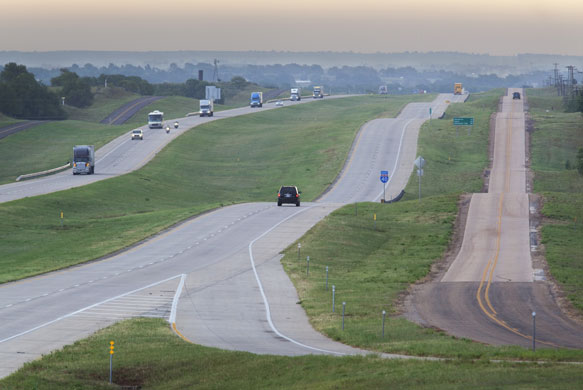
“Highway 66 is the main migrant road,” wrote Steinbeck. “66 - the long concrete path across the country, waving gently up and down on the map, from Mississippi to Bakersfield - over the red lands and the gray lands, twisting up into the mountains, crossing the Divide and down into the bright and terrible desert, and across the desert to the mountains again, and into the rich California valleys."Photograph: David LeveneThrough the 50s and 60s tourists flowed along Route 66 to California and from the coast in search of the American heartland. The great heavy sprawling vehicles were thirsty for fuel, wore through their tyres and broke down in the heatPhotograph: David LeveneTexola, Oklahoma: Today all that’s left is a string of dead or dying towns over hundreds of miles of the old road through Oklahoma, Texas and New MexicoPhotograph: David Levene
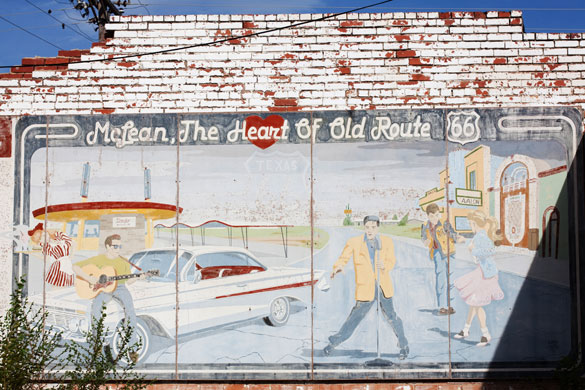
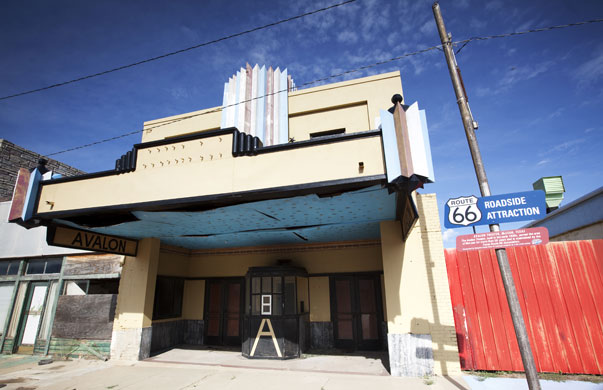
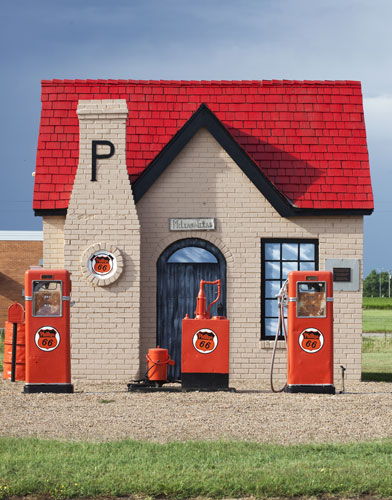
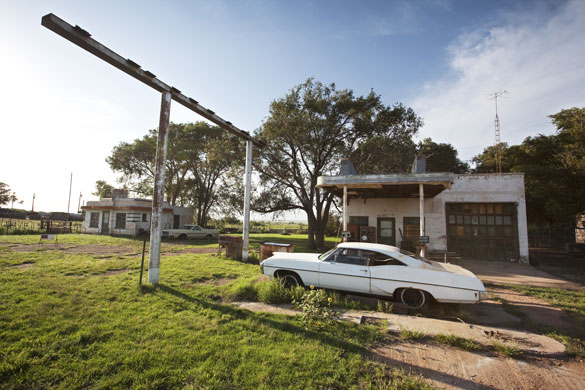
The Last Stop bar, Texola, Oklahoma: Some towns are little more than ageing retirement communities alongside rotting main streets dotted with the corpses of crumbling art deco gas stations and abandoned motelsPhotograph: David LeveneA fading mural, proclaiming McLean “the Heart of Old Route 66” over a depiction of Elvis, a Chevy and roller skating waitresses at the height of the rock'n'roll era, covers much of one wall on a tumbledown shop on the main streetPhotograph: David LeveneMcLean’s main street is littered with the wreckage of abandoned filling stations from the 1940s forecourts where gaggles of attendants once swarmed around the latest carsPhotograph: David LeveneA long-abandoned car mechanic workshop sits in a concrete landscape being slowly reclaimed by weedsPhotograph: David LeveneJust off the main street, the once-charming Avalon theatre built in the 30s stands in a block of derelict buildingsPhotograph: David LeveneElsewhere, the colours may be brighter, but the story is the samePhotograph: David LeveneA couple of blocks back from the rotting heart of McLean, life goes on. There’s a school and a part-time mayor. But the hospital, opened only in 1964, is gutted. The numbers of residents is dwindling and those who remain are mostly elderlyPhotograph: David Levene“66,” wrote Steinbeck, “is the path of a people in flight, refugees from dust and shrinking land, from the thunder of tractors and shrinking ownership, from the desert’s slow northward invasion, from the twisting winds that howl up out of Texas ...”Photograph: David LeveneThe pumps are long gone but still standing on the forecourt is a rusting white 1968 Pontiac Catalina, a popular “muscle car” of its dayPhotograph: David LeveneAt its height, the town had a newspaper, a post office, a Methodist church and “the first and last motel in Texas” as well as several cafes and grocery storesPhotograph: David LeveneSteinbeck’s fictional Joads passed along this way when the likes of local oil baron Stanley Marsh were youngPhotograph: David Levene“As people get older and there’s nobody to move out here and take over the housing, then when you don’t have enough people to keep the water system going, the sewer system,” says Tommy Loveless. “Eventually they just die out ...” Photograph: David LeveneMostly people only come off the Interstate as darkness falls for a night at one of the soulless strip malls that have replaced the old towns with generic motels, fast-food joints and vast self-service gas stationsPhotograph: David Levene
Sign up to read this article
Read news from 100’s of titles, curated specifically for you.