Oct. 05--Art and destruction in the age of Islamic State. Architect Zaha Hadid receives an apology. Examining the winding path and tricky management of the Los Angeles River. Plus: A Cuban artist is declared a prisoner of conscience, a series of posters takes on the disappearances of 43 students in Mexico, and a long and hearty talk about USC and the state of arts education.
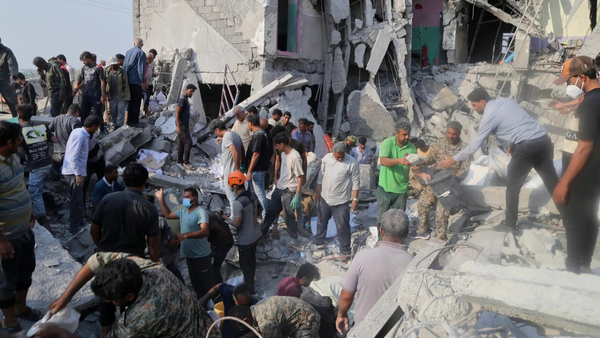
-- The graceful Arch of Triumph, which for centuries has greeted visitors arriving at the ancient Syrian oasis of Palmyra, has been reportedly "pulverized" by Islamic State militants. A good time to go back and look at the vintage Palmyra images recently acquired by the Getty Research Institute.
-- Related: The Detroit Institute of Arts unveils a new gallery devoted to ancient Middle Eastern art, featuring objects by many of the civilizations that Islamic State militants have been destroying. A bittersweet unveiling.
-- Chinese dissident artist Ai Weiwei says he has found listening devices in his studio. He says he found the bugs while renovating his workspace. (ARTnews)
-- Cuban graffiti artist Danilo Maldonado was declared a prisoner of conscience by Amnesty International. The artist has been held since December for painting the names "Fidel" and "Raul" on a pair of pigs -- a reference to the Castro brothers.
-- Marking the anniversary of the disappearances of 43 teacher trainees from Ayotzinapa, powerful posters on the streets of Mexico City ask Mexican President Enrique Peieto what he would do if his children disappeared. Related: Francisco Goldman's detailed overview of where the Ayotzinapa case stands within the Mexican criminal justice system. Essential reading.
-- The BBC has apologized to architect Zaha Hadid over poorly researched questions in a radio interview. The Guardian's Oliver Wainwright says Hadid is held to a different standard than her fellow male "starchitects."
-- What is the L.A. River and who is it for? A good piece in the L.A. Weekly by Sophia Kercher about the often bone-dry water channel no one entity controls. Plus: Lewis MacAdams on what the Olympics might mean for river revitalization -- and no, it's not good.
-- The curious ways in which the revamped Clifton's Cafeteria rejects and reflects digital culture. Christopher Hawthorne reviews.
-- Artforum has a pretty terrific round table, headed up by MOCA chief curator Helen Molesworth, about the recent implosion of arts programs at USC in L.A. and Cooper Union in New York. The L.A. side of the equation features some straight talk from Lee Relvas, Amanda Ross-Ho, Frances Stark, Charlie White and A.L. Steiner. (Subscription required.)
-- M.H. Miller on the problem with reality TV about art.
-- George Lucas has acquired the original drawings from Robert Crumb's "The Book of Genesis," which illustrates the first 50 chapters of the Bible, for his new museum. A daring choice for Mr. Star Wars.
-- "For a country with such a deep and abiding love for professional sports and lighting money on fire, the U.S. really isn't in the business of building iconic sports arenas." Part of a spectacular rant by Kriston Capps of Citylab on the general ugly tediousness of stadium architecture in the U.S.
-- A bridge. A garden. And a murky planning process. London's Garden Bridge, a crazy expensive proposed park/bridge over the Thames, designed by architect Thomas Heatherwick, is caught in a mire of audits. A good reason to link back to this terrific essay by design critic Alexandra Lange on why cities should be funding parks across their various communities, not just intricate playthings with questionable public benefit in well-to-do neighborhoods.
-- Norman Foster's 3-D printed Mars base.
-- Ben Davis has an interesting essay on the intersection of art, culture and architecture in Chicago -- all framed against some of the city's more urgent needs.
-- The surreal and the weird: Randy Kennedy profiles L.A. painter Jim Shaw -- founder of the noise band Destroy All Monsters and collector of bizarre religious ephemera -- upon the opening of his new solo exhibition at the New Museum in New York.
-- An explanation for why the covers of Elena Ferrante's novels are so spectacularly bad: "vulgarity is an important aspect of the books."
-- When is cultural appropriation appropriate? A compelling essay on the subject by Parul Sehgal.
-- "There is I suppose, historically, this seminal moment in the lives of African Americans where one becomes black." -- Kara Walker interviewed by the Guardian upon the opening of her new London show.
-- Why do so many Americans think they have Cherokee blood? Historian Gregory Smithers digs around for answers.
-- And last but not least, Alice B. Toklas' recipe for hash fudge. Don't forget the stoned dates.
Find me on Twitter @cmonstah.