Some authorities believe that Rossini always intended Guillaume Tell to be his final opera – that the attractions of early retirement at the age of 37 were too much to resist. Others maintain that it was the sheer effort and hassle of getting Tell on to the stage of the Paris Opéra in 1829, combined with his failure to get any sort of commitment out of the Opéra authorities for future works, that persuaded him that it was the right moment to start spending more time with his family.
Whatever the truth, there is no doubt that the rehearsals for what was Rossini’s most ambitious opera – an attempt to synthesise Italian opera with its grand French counterpart – were fraught and frustrating; several numbers were omitted from the score before the first night, and further cuts were made during the run. The critical edition of the score, the basis of most performances of Guillaume Tell these days, includes all those omissions as an appendix. But this recording, taken from a staging at the Wildbad festival in 2013, reinstates them, and includes as an appendix two dances and a new version of the finale that Rossini composed for a truncated three-act version staged in Paris in 1831.
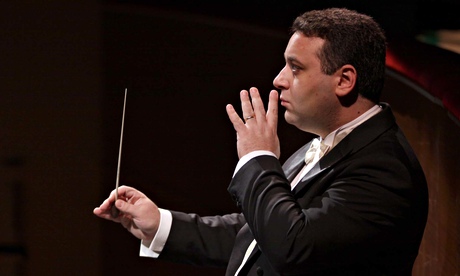
For Rossini completists, then, this set – all 4h 12mins of it – is a must, and there’s some stylish, lively conducting from Antonino Fogliani, who certainly galvanises the orchestra and chorus. But it’s very rough around the edges, there is lots of stage noise, and individually the performances don’t come near the best of the existing recordings, even if those versions are more or less incomplete, or sung in Italian rather than the original French. Crucially, this one suffers from having a rather unconvincing Tell from baritone Andrew Foster-Williams; he just doesn’t provide the heroic dimension the role needs, though he is much more convincing than the basses who sing Melcthal and Gesler. The best contributions come from Judith Howarth as Mathilde and Michael Spyres as Arnold. Unless you need to hear every note that Rossini wrote, then, one of the classic Tells, conducted by Lamberto Gardelli (EMI, in French) or Riccardo Chailly (Decca, in Italian), is a much better option.