
Ross Stores’ (NASDAQ: ROST) stock price is in an uptrend, and its Q4 2025 earnings release proves that it isn’t over. Including top- and bottom-line outperformance, compounded by robust guidance, critical details include cash flow and its implications for investors - the company can maintain financial health, improve its balance sheet, invest in growth, and return ample capital.
Catalysts for the stock price in 2026 include a juicy 10% distribution increase and an even juicier 25% increase to the buyback authorization. The $2.55 billion is worth approximately 4.5% of the pre-release market cap and provides a substantial tailwind for this market. Based on the 2025 results, investors might expect another approximately 1.9% share count reduction in 2026 and a similar decline in 2027, assuming the share price remains stable, which it won’t.
Analysts Buy Into Ross Stores' Strengths
Analysts are responding favorably, affirming the bullish trend. The half dozen or so revisions tracked within the first few hours of the release are all bullish, including an upgrade to Outperform and numerous price target increases. Although the consensus in early March assumes the stock is fairly valued following the post-release pop, the trend remains positive, with high-end targets forecasting an additional 15% upside.
Other signs of strength in the analyst trends include moderately strong analyst coverage of 22, increasing coverage as tracked by MarketBeat, and a bullish sentiment bias. Pegged at Moderate Buy, more than 75% of ratings are Buy or better, and there are no Sells on record.
Institutional data aligns with the uptrend in stock prices, but there are risks. MarketBeat data reveal nearly 90% ownership, and they are buying on a balance basis in Q1 2026 and on a trailing-twelve-month (TTM) basis, but selling ramped alongside buying, suggesting that volatility, at least, is a risk. The greater risk, however, is that institutional activity shifts from accumulation to distribution, becoming a headwind for the action.
Ross Stores' Cautious Guidance Provides Catalyst for Share Prices
Ros Stores had a hot quarter with $6.64 billion in net revenue, up nearly 12.5% year-over-year (YOY), well ahead of retail industry averages and its off-price competitors, and more than 300 basis points (bps) better than expected. Strength was driven by comps, store count, and mix, and carried through to the bottom line.
Although margin pressures were logged, the impacts were minimal, leaving operating and net margins relatively flat on a YOY basis and the earnings above forecasts. The critical detail is that $2.00 per share in adjusted earnings is up nearly 22% YOY, compared to the 12.4% top-line gain, and the strengths are carrying into Q1 2026.
Guidance is robust, optimistic, and potentially cautious concerning the back half of the year. CEO Jim Conroy says business trends and momentum trends improved as the Q4 period progressed, and Q1 is off to a strong start. The guidance is for a 7.5% Q1 comp at the midpoint—approximately double the consensus—but full-year forecasts imply slowing.
In this scenario, Q1 strengths may persist and strengthen as the year progresses, prompting management to revise its guidance. Reasons to believe the strength will persist include larger tax return checks than in the previous year and resilient labor market data. Labor markets aren’t growing robustly, but reflect stable conditions, full employment, and upward wage pressure, aligning with a healthy consumer.
No Red Flags on Ross Stores Balance Sheet
Ross Stores' balance sheet provides no red flags for investors, only additional reasons to buy. Year-end 2025 highlights include steady cash, a net cash position, low debt leverage, and increasing equity. Equity rose by 4.3% YOY, improving shareholder value while share buybacks improved leverage.
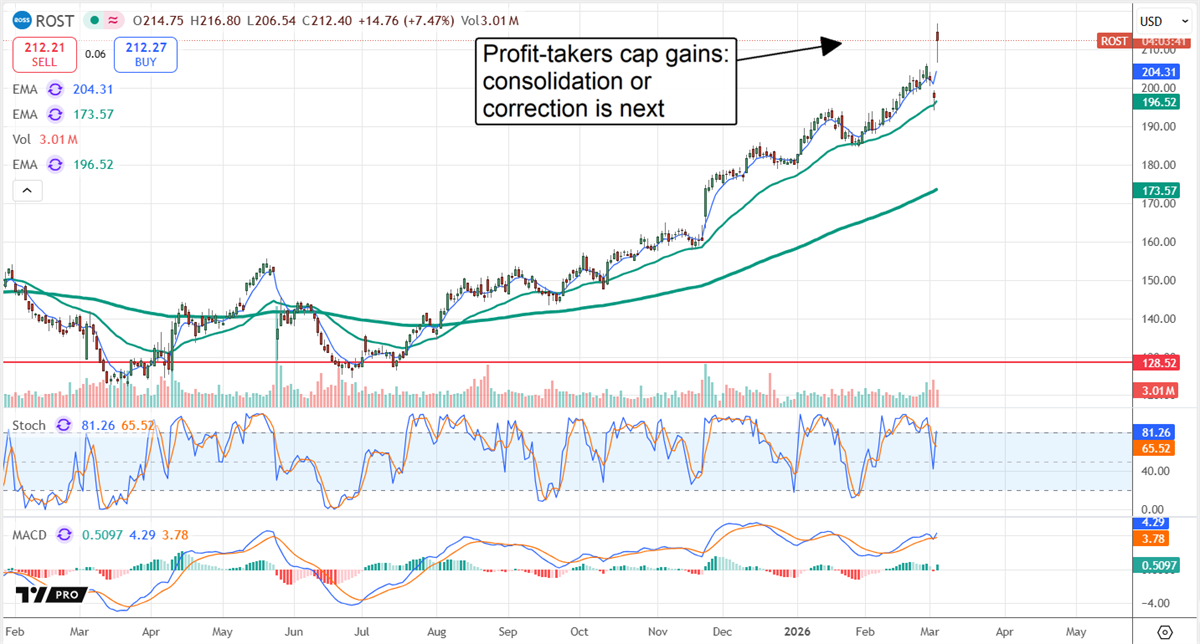
The price action is mixed: ROST shares rose more than 10% at their peak in the session following the release but have since given back those gains. The resultant candle signal is bullish, with a bearish overtone suggesting a price peak has been reached. ROST shares may enter consolidation at this level and move sideways until later in the year, but there is risk of a bigger pullback. Shares might fall to the $200 level or lower before the market regains traction and resumes upward movement.
Where Should You Invest $1,000 Right Now?
Before you make your next trade, you'll want to hear this.
MarketBeat keeps track of Wall Street's top-rated and best performing research analysts and the stocks they recommend to their clients on a daily basis.
Our team has identified the five stocks that top analysts are quietly whispering to their clients to buy now before the broader market catches on... and none of the big name stocks were on the list.
They believe these five stocks are the five best companies for investors to buy now...
The article "Ross Stores Proves the Off-Price Uptrend Is Far From Over" first appeared on MarketBeat.