Rosetta the comet chaser awakes, a cosmic Catherine wheel and the Hand of God – in pictures
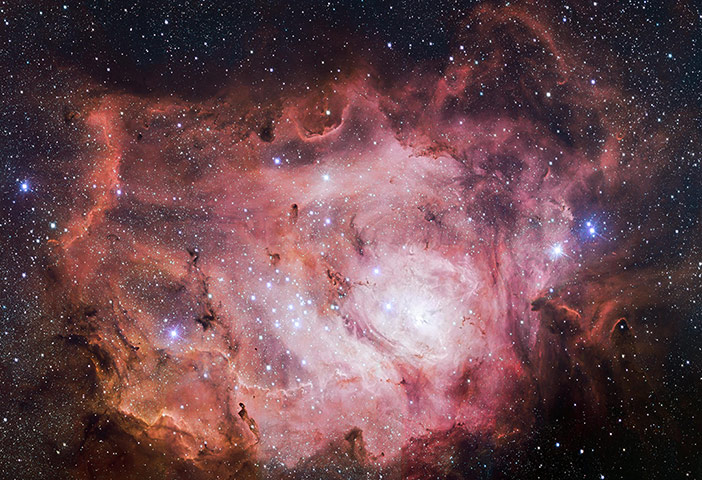
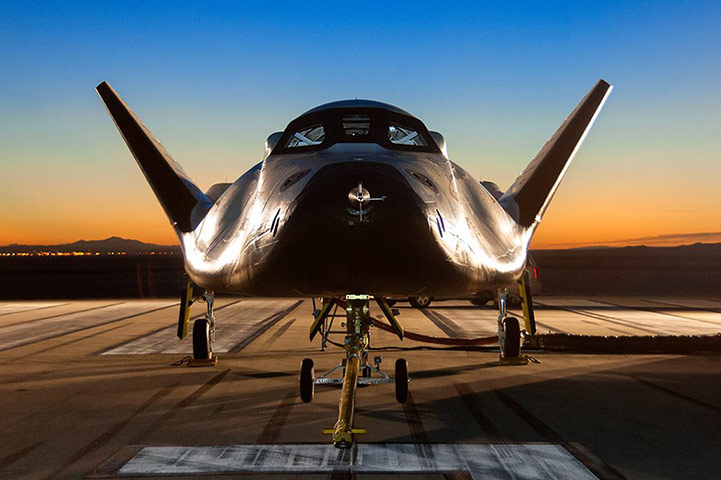
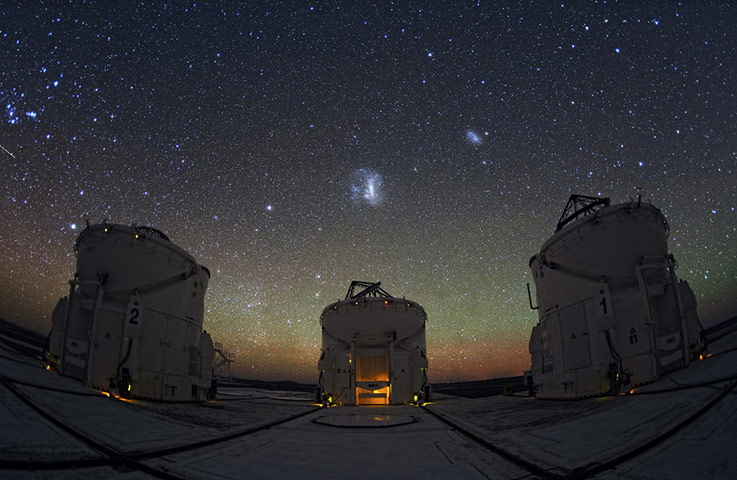
This humongous cloud of gas and dust 100 light-years across, known as the Lagoon Nebula, is creating intensely bright young stars. The VLT Survey Telescope at the European Southern Observatory's Paranal Observatory in Chile captured this image of the nebula, which is 5,000 light years away in the constellation of SagittariusPhotograph: European Southern ObservatoryIt was confirmed last month that the commercial successor to the space shuttle, the Dream Chaser, will be based at the Kennedy Space Center, preparing for its debut launch in late 2016. The craft is expected to start transporting crew and cargo to the International Space Station by 2017 Photograph: NASAA dazzling night sky over the European Southern Observatory's Paranal Observatory in Chile. These telescopes feed light into the Very Large Telescope Interferometer, the world's most advanced optical instrument. Combining data from several telescopes reveals details that would only otherwise be visible with a telescope as large as the distance between themPhotograph: Y. Beletsky/ESO
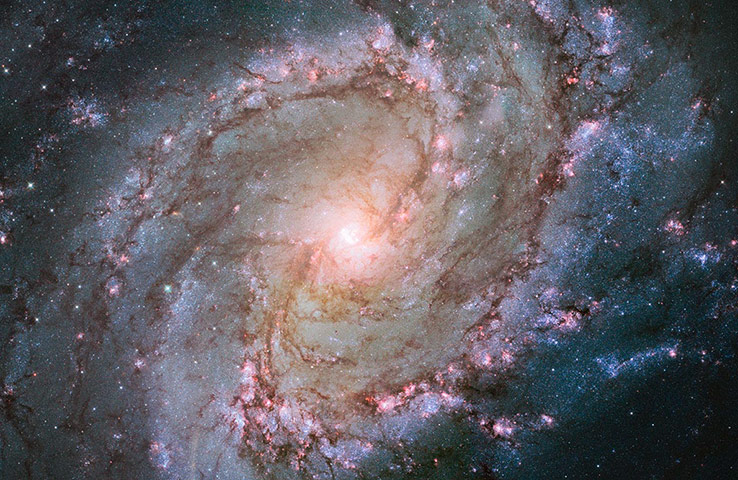
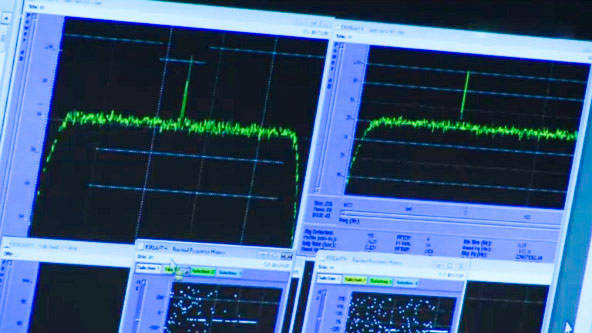
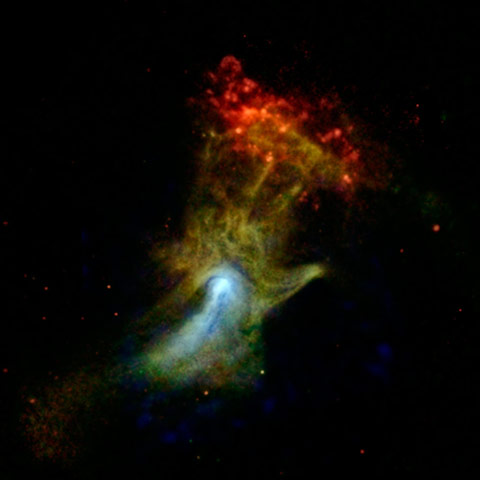
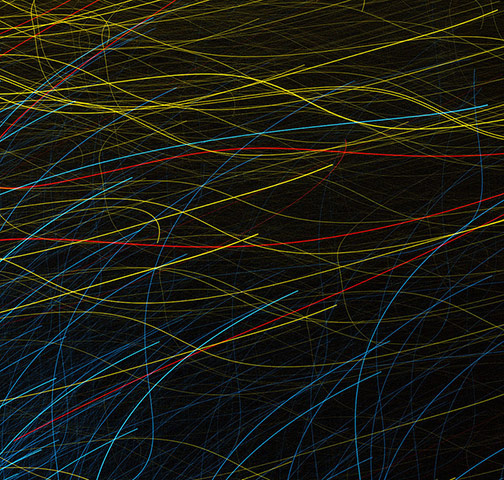
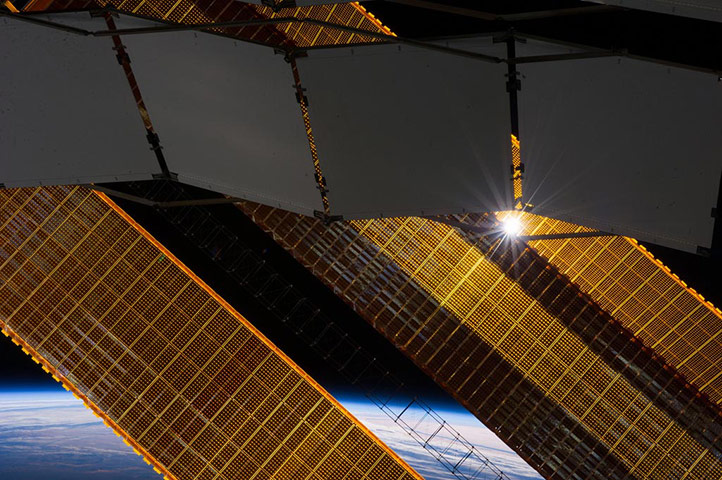
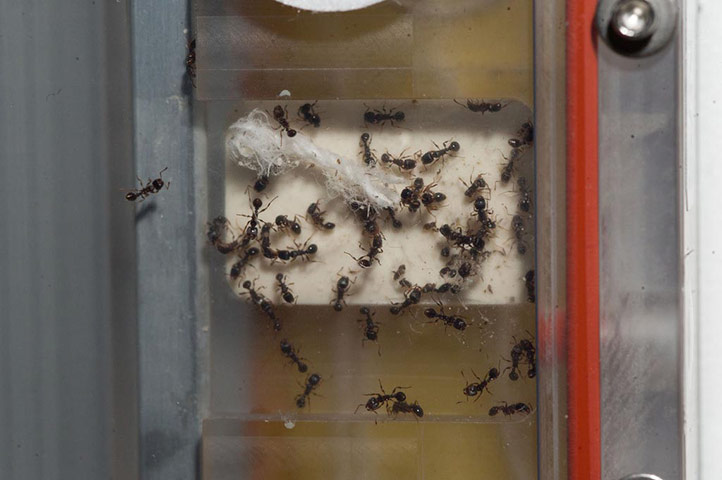
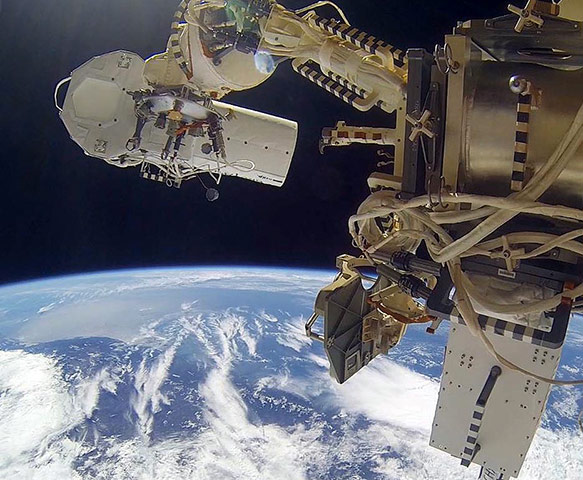
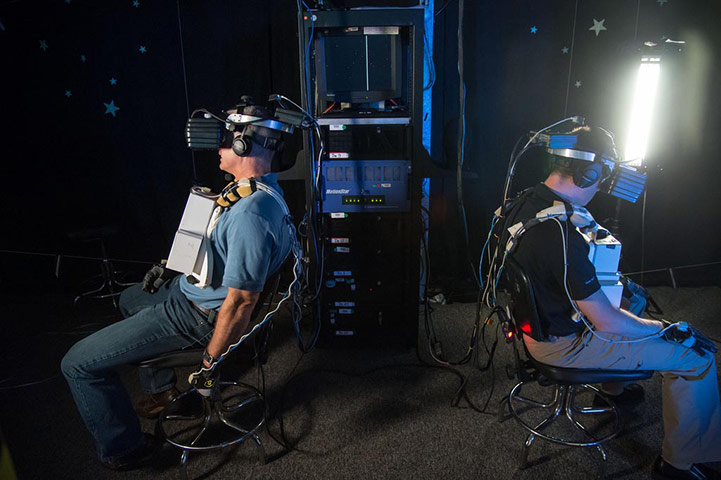
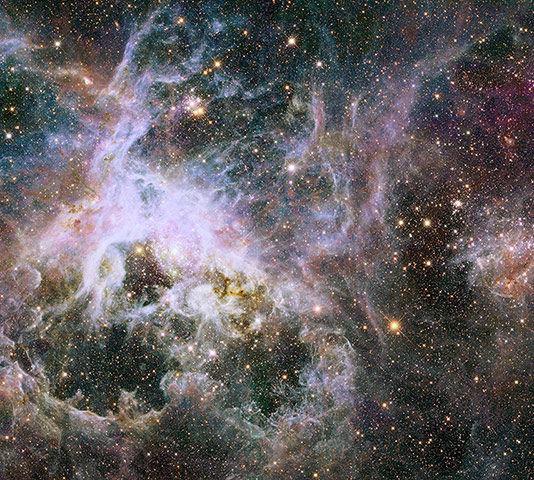
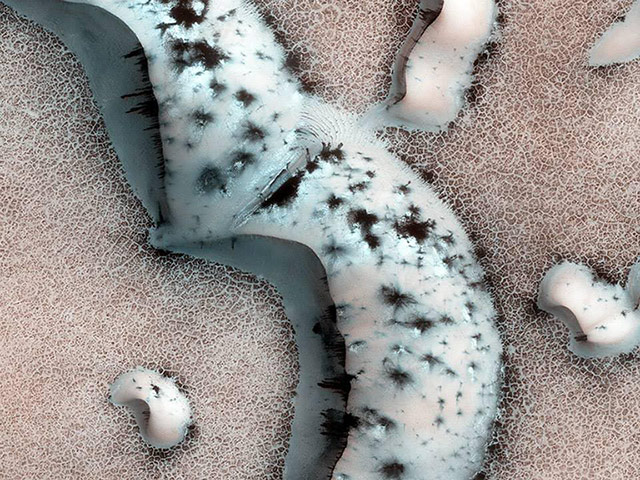
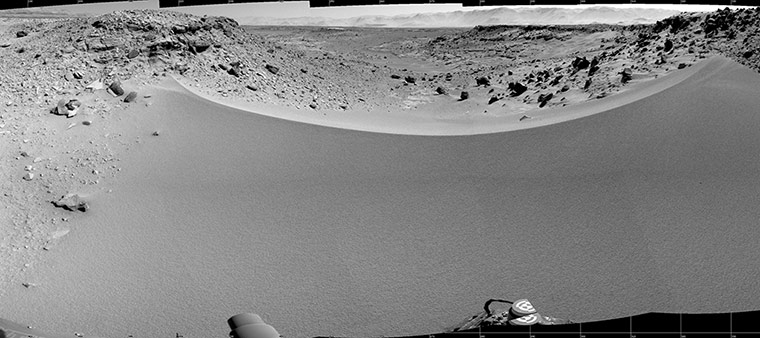
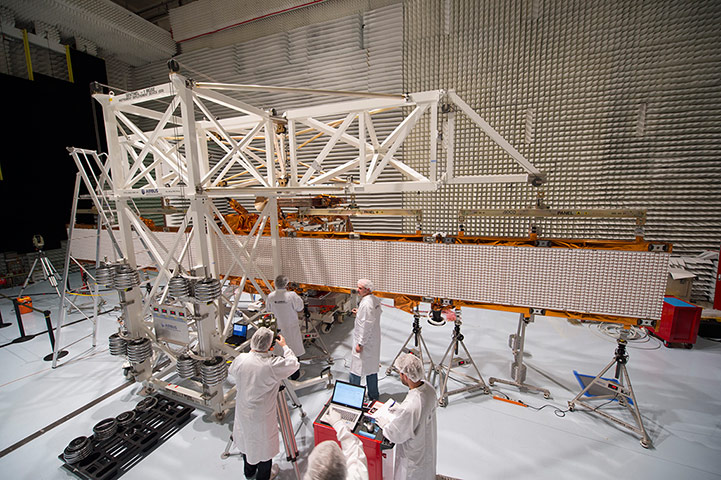
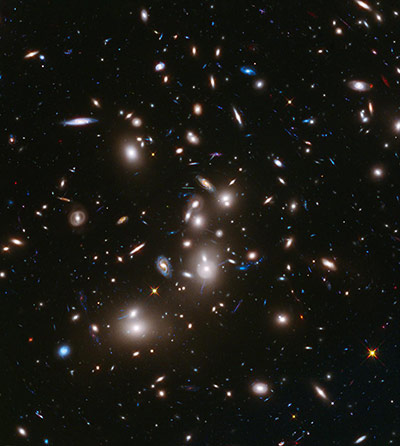
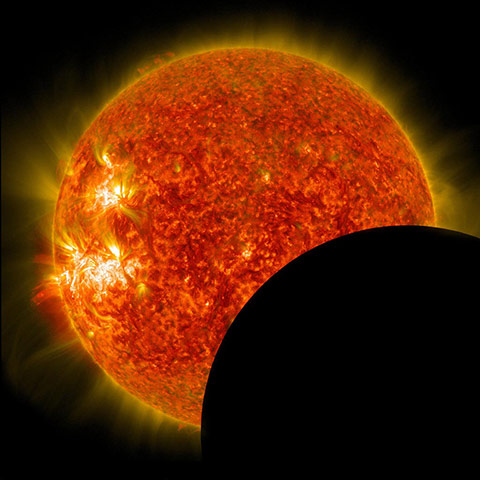
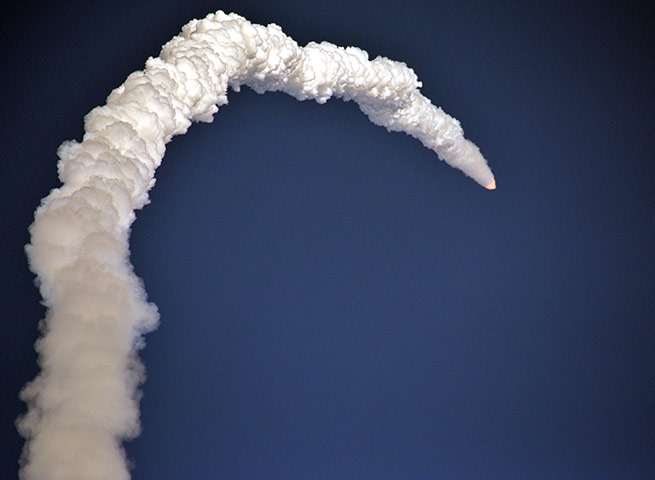
This spectacular new Hubble image showcases the cosmic Catherine wheel that is the spiral galaxy Messier 83 – or Southern Pinwheel Galaxy – 15m light-years away in the constellation of Hydra (The Sea Serpent)Photograph: Hubble Telescope/NASA/ESAThe Rosetta spacecraft hit the snooze button and kept anxious scientists waiting for its wake-up signal on 20 January. The craft had been in hibernation for two years and was scheduled to wake up, warm up and start chasing down a comet. The signal (a spike amid the noise) finally arrived at European Space Agency HQ in Darmstadt, Germany, at around 6.20pm GMTPhotograph: ESANicknamed 'the Hand of God', this nebula is powered by a dead, spinning star or pulsar. It's the leftover core of a star that exploded in a supernova. The pulsar is spinning at nearly seven revolutions every second, spewing particles into the remnants of the explosion, causing them to glow with x-rays (shown in blue) Photograph: JPL-Caltech/NASAThis isn't the work of a human artist but an image transmitted back to Earth by the Hubble Space Telescope. To stabilise itself while taking pictures, Hubble uses measurements from a set of gyroscopes, which in turn are calibrated by locking onto a 'guide star'. Astronomers think Hubble locked onto a bad guide, possibly a binary star, which confused its tracking system and rendered each star as a streak of light http://www.flickr.com/photos/europeanspaceagency/12238336386/#Photograph: Hubble Telescope/NASA/ESAA miniature sun shines between a radiator panel and a solar array on the International Space Station in this photograph taken by one of the crew of Expedition 38Photograph: ISS/NASAZero-gravity antics: these ants are going about their work on the International Space Station. The Ant Forage Habitat Facility studies the behaviour of ants by comparing groups living on Earth to those in spacePhotograph: ISS/NASARussian cosmonauts installed two cameras from a private company called UrtheCast (pronounced EarthCast) outside the ISS shortly after Christmas, but they had to reinstall them on 27 January when they failed to transmit any data back to Earth. The high-resolution (upper left) video camera is now working, but the medium-resolution (lower right) camera is sending dud data. UrtheCast plans to post near-real-time video on its website and sell the images Photograph: UrtheCast/RoscosmosMeanwhile back on Earth, Nasa astronauts Steve Swanson (left) and Reid Wiseman train for future missions on the ISS using a virtual reality system. The VR helmets and gloves simulate tasks they will need to perform on the space stationPhotograph: JSC/NASAThis is the most detailed view yet of the Tarantula Nebula, captured here in infrared light by the Hubble Space Telescope. The Hubble Tarantula Treasury Project (HTTP) is scanning and imaging many of the many millions of stars within the Tarantula, which is just one relatively small part of our galactic neighbour, the Large Magellanic CloudPhotograph: Hubble Telescope/STScI/NASA/ESAThis strange feature in the northern polar regions of Mars is a sand dune. The white areas are carbon dioxide frost formed during the planet's winter months, while the black spots are areas where the frost has sublimated (changed directly from a solid to a gas) with the onset of spring, sending up jets of carbon dioxide mixed with dust. The photograph was taken by HiRISE (the High Resolution Imaging Science Experiment) on board the Mars Reconnaissance OrbiterPhotograph: University of Arizona/JPL/NASAAt the end of January, the Mars Curiosity rover reached the foot of a dune on its long westward journey to the slopes of Mount Sharp. The dune is about a metre high, but didn't prove to be a serious obstacle to the rover's progress, which climbed over it on 6 February. You can view a video of the climb, taken with the vehicle's rear hazard-avoidance camera, here. The rover has trundled 3.09 miles since it landed on the red planet in August 2012Photograph: JPL-Caltech/NASATechnicians test the deployment of the Sentinel-1A's radar antenna in the cleanroom at Thales Alenia Space in Cannes, France. The first of two satellites built for the Copernicus environmental monitoring programme is scheduled to launch in the spring of 2014 from Europe’s spaceport in Kourou, French Guiana. Between them they will provide images for monitoring the extent of Arctic sea ice, routine sea-ice mapping, surveillance of the marine environment, and mapping to support humanitarian aid and during natural disastersPhotograph: Stephane CORVAJA/ESASome of the galaxies in this image – the result of a collaboration between the Hubble and Spitzer telescopes – are more than 13bn years old, having formed shortly after the big bang. We can only see them because a galaxy cluster in the foreground, called Abell 2744, is acting as a 'gravitational lens', warping the space around it to magnify much more distant galaxies in the background. They are some of the faintest, most distant galaxies ever seenPhotograph: Hubble Telescope/STScI /NASA/ESANasa's Solar Dynamics Observatory captured this image of the moon as it obscured the spacecraft's view of the sun on 30 January. Watch a video of the transit herePhotograph: SDO/NASAIndia successfully launched its first homegrown cryogenic rocket after several previous attempts had failed, taking another step forward in its ambitious space programme. The Indian-made rocket blasted off from the Satish Dhawan Space Centre at Sriharikota on 5 January carrying a communications satellitePhotograph: STRDEL/AFP
Sign up to read this article
Read news from 100's of titles, curated specifically for you.