
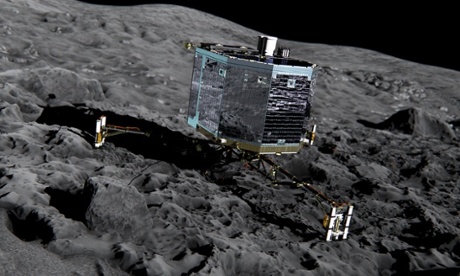
As Philae temporarily loses touch with Rosetta, we leave you with this artist’s impression of the lander on the surface. Thanks for joining us on this truly amazing day for space exploration.
Updated
Philae may have landed not once but twice – that’s the final message from Esa this evening.
According to Stephan Ulamec, Philae Lander Manager, DLR, the lander team believe that Philae may have bounced from the surface and settled again in a slightly different place.
Engineers know that the anchoring harpoons did not fire. It is also known that the communications link to Rosetta failed intermittently in an irregular pattern shortly after the landing but always immediately re-established itself.
However, science data has been received and is currently being processed, but the promised first panorama from the surface has not been released.
Rosetta is now out of touch with Philae as the orbiter has dipped below the horizon of the comet. The link to Philae was lost a little earlier than expected but this is probably because a hill or boulder was in the way of the line of sight.
Right now, Philae should be working through its first automatic sequence of science experiments. Contact will be re-established through Rosetta later tonight, and the data downlinked.
There will also be more telemetry to assist the engineers in understanding the exact sequence of events during the landing.
We will know more tomorrow.
Updated
Francois Hollande enjoying a 3D presentation about the mission at the Cite des Sciences in Paris earlier today.

Our #GoogleDoodle celebrates the #CometLanding, congrats to the @esa! http://t.co/kHP4o77seU
— Google UK (@GoogleUK) November 12, 2014
Apologies – those last two images were taken by Rosetta not Philae.
Comets are the original source of Earth's water. That wee lander is now in position, poised to re-write what we know about ourselves.
— Chris Hadfield (@Cmdr_Hadfield) November 12, 2014
The press briefing has been delayed until 19:00 GMT.
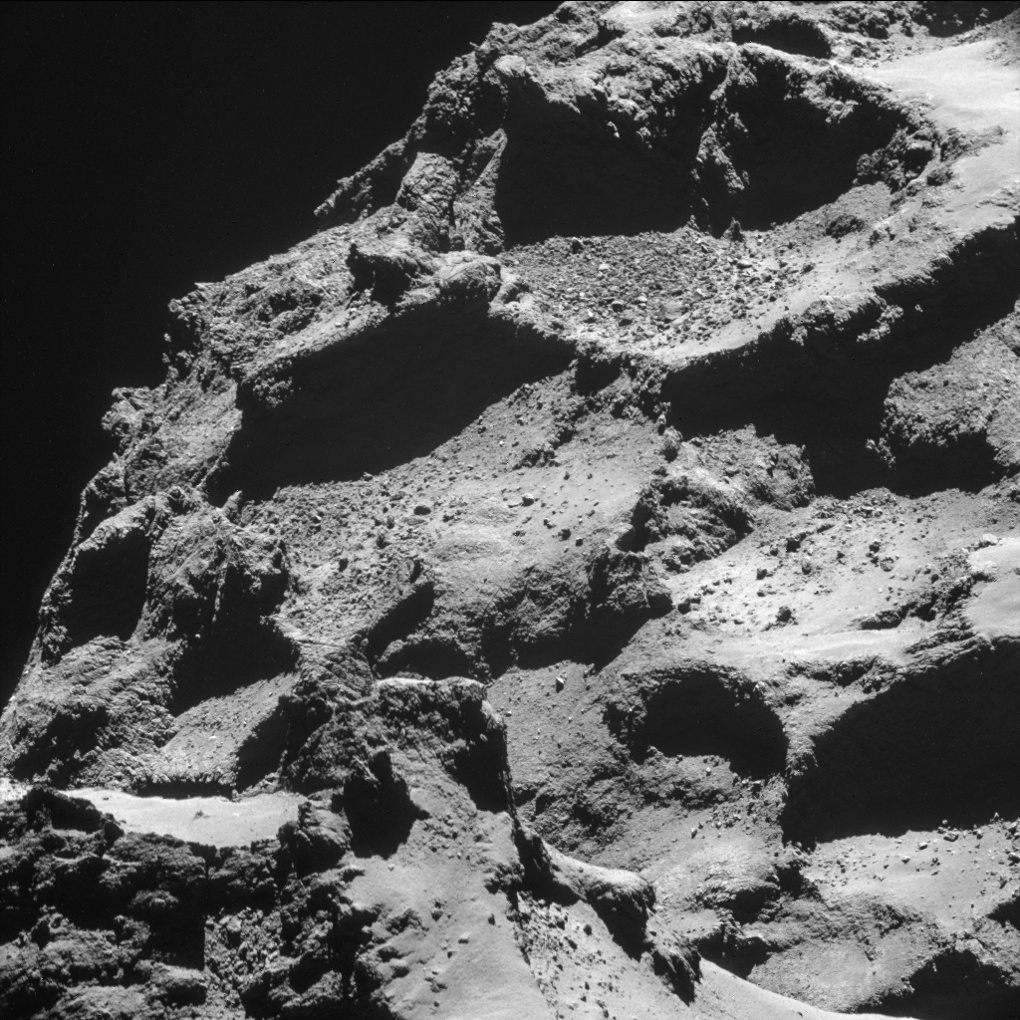
Rubble-filled depressions appear in sharp relief in this image from Rosetta the Philae lander, taken as it descended . One, just to the right of centre in the lower part of the image, is almost circular. Pits like this may be the source of the comet’s gas vents, which become progressively more active as it approaches the sun.
Updated
Where is the comet? Between the orbits of Mars and Jupiter, as this graphic shows.
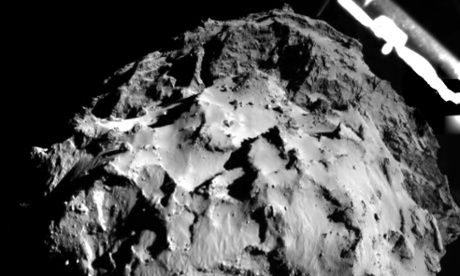
The Philae lander Rosetta took this picture 10 km above the ‘body’ of the comet as it descended towards its landing site.
Updated
Details of the lander’s status has just been promised for 18:30GMT press briefing. Watch the livestream above.
Updated
For a summary of today’s historic events, read this Guardian news piece by our astronomy blogger Stuart Clark and science editor Ian Sample.
The Rosetta Lander Imaging System (ROLIS) on Philae took this picture three kilometres above the surface as the craft descended.
Great shot! MT @Philae2014: .@ESA_Rosetta See for yourself! ROLIS imaged #67P just 3km away! #CometLanding pic.twitter.com/1FwWs1tioF
— ESA Rosetta Mission (@ESA_Rosetta) November 12, 2014
Updated
I have just sat down with Alvaro Giménez Cañete, Esa director of science and robotic exploration, to talk about the landing and the glitches that have appeared.
He started by summing up the day:
It has been a lot of excitement, a lot of doubt, a lot of work but now it is good. I was more hesitant about the wake-up (which took place back in January). Then if we didn’t get a signal, we didn’t have anything. Here we got a signal. Of course, we could always lose the signal but we are in contact with Philae, and so you have a different feeling.
Philae was expected to touchdown at walking pace but the telemetry received so far shows that the landing was softer than expected. This was probably a good thing, as it seems that the anchoring harpoons did not fire.
Another problem is that the communications link between the lander and Rosetta keep dropping for unknown reasons.
Giménez is philosophical about these turns of events.
We have some glitches but we are now landed. The glitches in telemetry are just like normal work for us. It is natural and we have to work with it.
When I press him a little on this unexpected turn of events, he remains completely calm.
I’m confident it will work. As far as I am concerned this is business as normal. People just need to keep calm. As I always tell them, if it is a real problem then you need to be calm, if it’s no problem then you don’t have to worry.
The analysis into the harpoons and the telemetry glitches continues.
Updated
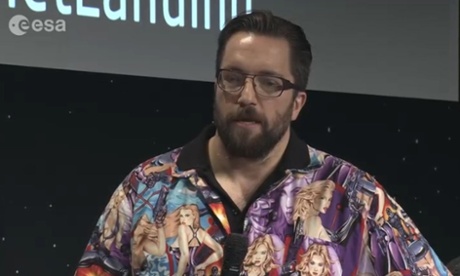
The verdict from Morwenna Ferrier on the Guardian’s fashion desk on Matt Taylor’s outfit is not entirely complimentary:
COLOURFUL. That’s one word for it. It was the day that the Rosetta spacecraft and its lander Philae made history by landing successfully on the surface of a comet, but project scientist Matt Taylor has been causing his own little furore with his unique choice of workwear for the occasion.
Appearing on BBC Breakfast yesterday morning, all eyes were on the scientist’s open-collar dark Hawaiian shirt. Why? What appeared to be a jaunty print on closer inspection was revealed to be a series of semi-naked women. Twitter exploded.
Some called it ‘crazy’, others ‘interesting’. But set off as it was in dramatic man-boy fashion by boardies, purple socks and Vans, the overarching question remained: was this really appropriate media-friendly attire?
Updated
Writing for the Guardian earlier today, Usama Husan reckons the money invested in Rosetta was well spent:
Why should we spend so much money studying a large rock in space?
First, and most importantly, we know that comets – and there are billions of them in the outer regions of our solar system – are debris left over from the formation of that solar system, between 4bn and 5bn years ago: they are frozen relics from a bygone age.
Furthermore, there is evidence that millions of impacts by comets, composed of rock and ice, delivered enormous quantities of additional water to the inner planets. Only the Earth retained large amounts of water, of course. So studying the composition of comets significantly increases our understanding of the origins of our planet and our solar system.
Second, comets are known to include organic molecules, and meteorites have been known to contain amino acids, the building blocks of life. More detailed analysis of comets will help answer questions about the origins of life on Earth: could the first living entities on Earth, or their building blocks, have been delivered by extraterrestrial arrivals such as meteorites or comets?
There are other spin-off benefits, such as the development of space and low-energy technology, some of which will eventually find its way into domestic gadgets and be used to benefit humanity, as well as the usual unpredictable benefits of good science.
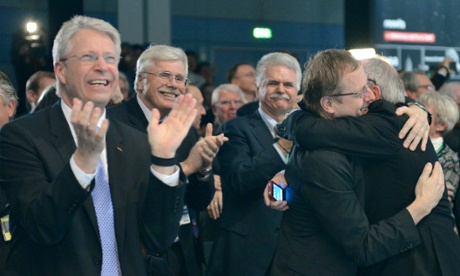
I’m on the surface but my harpoons did not fire. My team is hard at work now trying to determine why. #CometLanding
— Philae Lander (@Philae2014) November 12, 2014
More analysis of @Philae2014 telemetry indicates harpoons did not fire as 1st thought. Lander in gr8 shape. Team looking at refire options
— ESA Operations (@esaoperations) November 12, 2014
Details of the landing are coming in and there are two issues to be resolved. Paolo Ferri, head of mission operations, has just confirmed that the Philae harpoons did fire but it is not known whether they are secure or not. If they have penetrated the surface, it is not yet clear how deeply they have embedded themselves.
Additionally, shortly after landing, the communications link to Rosetta began dropping and coming back online. This continues at the present time. It should have been a steady signal.
At present there is no danger perceived to the lander’s mission.
“We have no reason to think it won’t work,” says Ferri, “but we have no understanding of why it is doing this.”
Esa and DLR technicians are working now to try to resolve these issues. In a few hours there will be an expected break in communications with the mission.
UPDATE: Subsequent analysis has shown that the harpoons did not fire, as was first thought.
Updated
ESA DG J-J. Dordain: "We are the first to have done that, and that will stay forever!" #cometlanding https://t.co/CfRlOqi1n8
— ESA (@esa) November 12, 2014
Updated
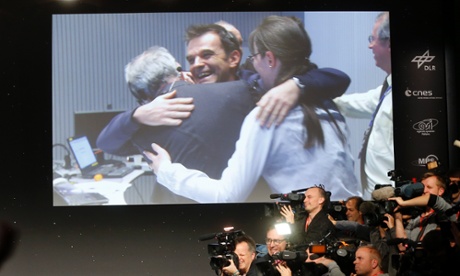
Even with Labour's dire poll ratings how can you not be happy today? Humans have just landed a space ship on a comet. http://t.co/d0HSRLRzIK
— tom_watson (@tom_watson) November 12, 2014
Mark McCaughrean, ESA’s Senior Science Advisor, has just walked past me and pantomimed open mouthed, wide-eyed wonder. There are a lot of people with that look on their face here this afternoon.
A few hours ago, this is what we hoped would happen. Now we know that something very similar to this did happen. Rosetta and Philae’s landing animation:
Apparently the anchors didn’t deploy, so there’s a concern about the stability of the lander.
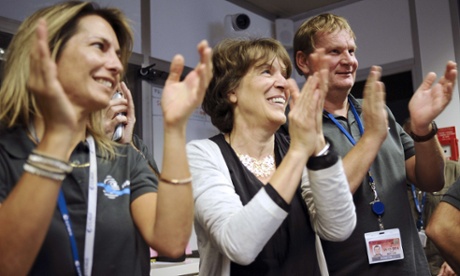
We see post touchdown data! Can't tweet more, need hands for high five and champagne
— MUPUS on Philae (@Philae_MUPUS) November 12, 2014
“We are sitting on the surface, Philae is talking to us …” says Stephan Ulamec, Philae lander manager.
"We're are on the comet!" #cometlanding https://t.co/c6xIWJp0TR
— ESA (@esa) November 12, 2014
Updated
“We are the first to do this - and that [achievement] will stay forever.” Jean Jacques Dordain, Director General of ESA.
Touchdown! My new address: 67P! #CometLanding
— Philae Lander (@Philae2014) November 12, 2014
RECEIPT OF SIGNAL FROM SURFACE European Space Agency receiving signals from @Philae2014 on surface of comet #67P/CG #cometlanding
— ESA Operations (@esaoperations) November 12, 2014
Harpoons fired, ice screws in, data being received. “We are on the comet!” says Stephan Ulamec, Philae Lander Manager, DLR.
Confirmed: Landing has taken place!
“We see the lander sitting on the rock.” - Andrea Accomazzo, ESA.
Landing!
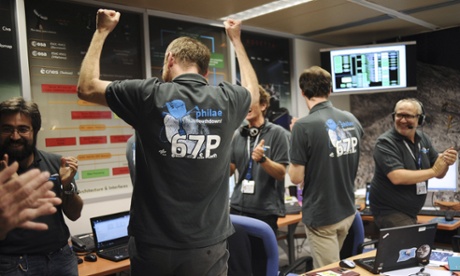
Judging by the scenes in mission control we have success! The Philae lander is down. The European Space Agency have tonight made history by landing on comet 67P/Churyumov-Gerasimenko.
Just waiting for official confirmation. Someone must call it before I will totally believe it.
Rosetta tweets a snapshot showing the successful deployment of Philae’s legs.
I see you too @philae2014! Here you are in my OSIRIS camera - legs out! #CometLanding pic.twitter.com/hmnfe2AkN2
— ESA Rosetta Mission (@ESA_Rosetta) November 12, 2014
Stephan Ulamec, Philae lander manager, says that in principle the landing could happen any time from now.
Whether or not Philae lands successfully tonight, there is a huge amount of science to come from the Rosetta mission. The main orbiter could stay with the comet until the end of 2016, according to Fred Jansen, Rosetta mission manager. This is when the spacecraft would be too far away from the sun to generate enough power to keep going. Jansen says that Esa is thinking about “parking” Rosetta on the comet at the end of the mission, perhaps reuniting it with Philae.
But that’s in the future, tonight it is all about the landing.
Updated
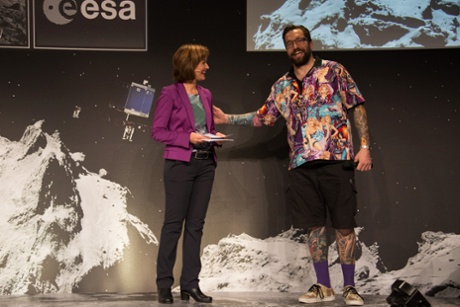
Asked how he is feeling right now, an emotional Rosetta project scientist Matt Taylor says: “I’m knackered but I’m also very very excited. We’re close now.”
Read all about Matt here.
Updated
That must have hurt a little.
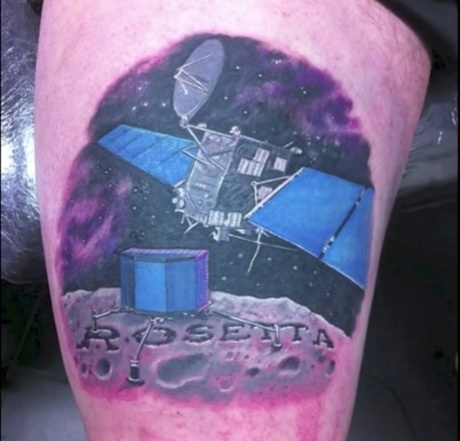
I bet you didn’t expect to see a video of a man having a tattoo on this liveblog. Remember Nasa Mohawk Guy? This is surely Esa Tattoo Guy.
Updated
Just an hour to go before the landing window opens. We are warned that the signal could arrive up to 40 minutes after the window opens.
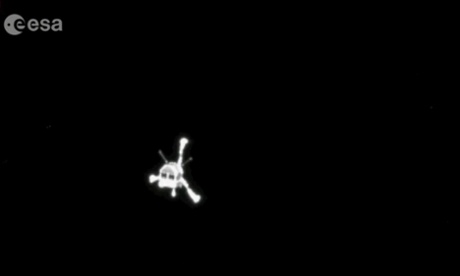
A quick screen grab showing Philae on its way. This image was taken by the Osiris camera on the Rosetta orbiter shortly after separation.
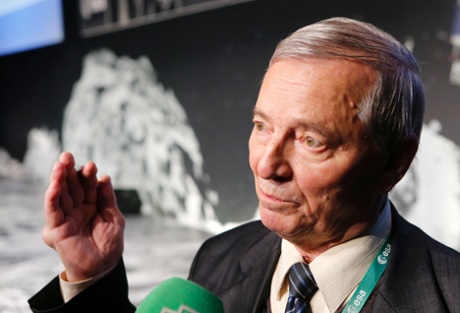
Ukraine’s Klim Churyumov, astronomer and co-discoverer of the comet, talks to the media.
That’s a brave shirt for project scientist Matt Taylor to wear with the whole world watching …
The first image from the Philae lander has arrived!
.@philae2014’s first postcard just after separation – it’s of me! #CometLanding Credit: ESA/Rosetta/Philae/CIVA pic.twitter.com/OXJwGunL3V
— ESA Rosetta Mission (@ESA_Rosetta) November 12, 2014
Andrea Accomazzo, Rosetta flight operations director, says the spacecraft’s Osiris camera can see Philae. Telemetry data is also streaming back and Philae is on course.
Stephan Ulamec, Philae lander manager, says that everything looks “fantastic”. The lander is rotating but this is not a problem.
Touchdown is expected in about 1 hour 20 minutes.
Updated
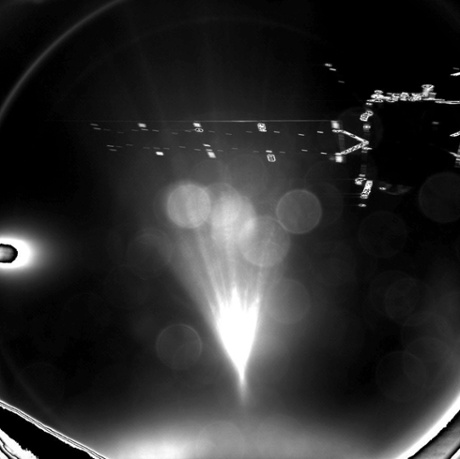
This is the Rosetta spacecraft, seen from the Philae lander just 50 seconds after separation. The bright flare is caused by the sun. The spacecraft’s solar panels are clearly visible.
Updated
Prof John Zarnecki of the Open University’s Planetary and Space Sciences Research Institute is at the European Space Operations Centre in Darmstadt. He’s clearly a veteran of these occasions:
I have a strong sense of déjà vu as I was here in 1986 as project manager for one of the instruments on Giotto which spectacularly flew past Halley’s Comet. Then I was here again in January 2014 as lead scientist for the Surface Science Package where I monitored the dramatic descent and landing of the Huygens Probe onto the surface of Saturn’s largest moon Titan.
Today I’m hoping to make it third time lucky! Fingers Crossed!
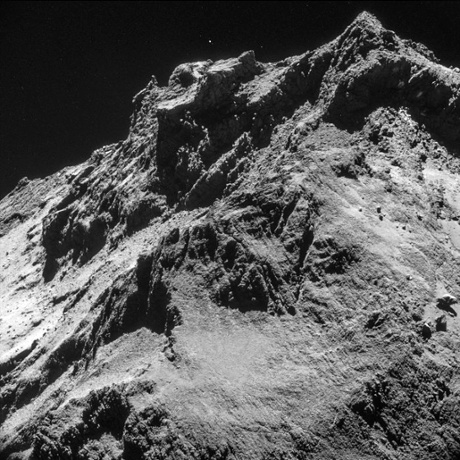
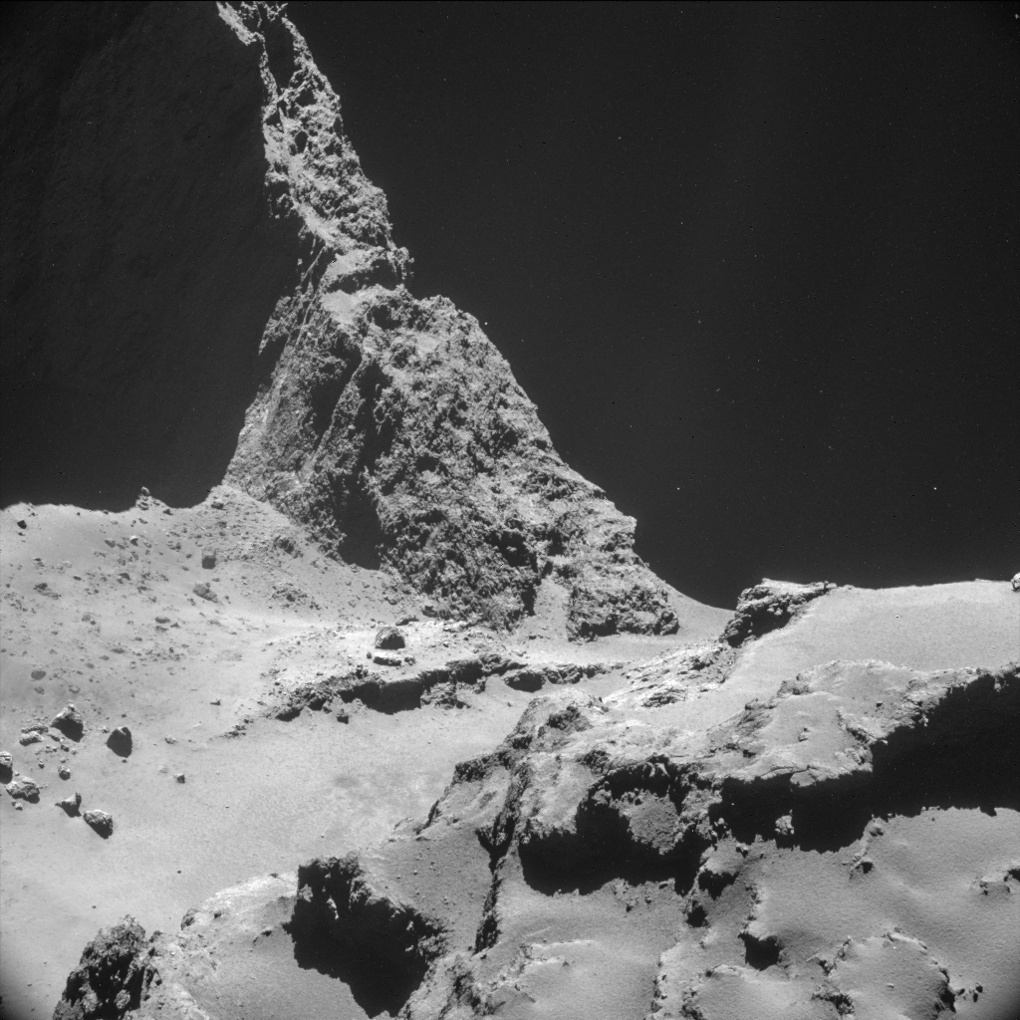
This picture – taken by Rosetta’s navigation camera on Tuesday – reveals the comet’s precipitous terrain.
The word is that the first images from the descent will be presented at 14:15GMT. Before then, the schedule says that ESA plan to screen their short science fiction film Ambition, which explains the Rosetta mission. You can watch that already here.
SafariNjema asks:
What’s the distance from Earth of the rendezvous point? (and which planet’s orbit would this distance most closely correspond to?)
This is all taking place some 510m kilometres from Earth, out somewhere beyond the orbit of Mars. The comet is travelling through space at 18.34 kilometres per second. Philae will touch down at a walking pace, or around 1.5 metres per second.
Updated
Esa has created a frankly awesome animation showing Rosetta’s 10-year journey through the solar system. It brings home the extraordinary achievement of chasing down a speeding comet 0.5bn kilometres from Earth and then sticking with it as it orbits the sun. Unfortunately we can’t show you the animation here, but click this.
Updated
jpfyssas asks:
Isn’t there any manual manoeuvres for the landing? Is it all pre-calculated mathematics??!!!
Stuart Clark replies: All pre-calculated, uploaded and then left to run automatically. It has to be that way because the one-way signal travel time from the comet to Earth is 28 minutes and 20 seconds. Even if the flight team made an almost instantaneous decision and sent a new command back, that would be an hour for the round-trip travel time. And that’s far too long for any form of realtime control.
Updated
New Horizons – Nasa’s mission to Pluto – is cheerleading for Rosetta on Twitter, and posts a handy guide to the Philae lander’s scientific instruments.
GO @Philae2014 ! GO @ESA_Rosetta ! GO @esa ! GO Humans! #CometLanding pic.twitter.com/OcV22rj9qw
— NewHorizons2015 (@NewHorizons2015) November 12, 2014
Esa has put together highlights from today’s events up to the separation of the lander from Rosetta.
Dr Daniel Brown, an astronomer at Nottingham Trent University in theUK, thinks that Esa has already made history.
What a mission and what a challenge. Rosetta has already made history by orbiting its target and gathering the most detailed information so far on the composition of the comet’s nucleus, the chemical composition of the gaseous coma surrounding the nucleus, and a detailed surface map of the nucleus.
Now it is vital to analyse the comet’s interior, since it contains the initial composition of the solar system from when it was formed 4.5bn years ago. It might also contain amino acids such as glycine and other complex molecules. These results will allow us to improve models for the solar system and to better understand how a planet becomes habitable.
Viewers are extremely privileged to be granted this insight into space history being written. The first mission to land on a comet, you can’t get more ambitious that that – or can you?
He says there are more amazing missions to come:
Next steps for European space exploration will be visiting the icy moons of Jupiter and deploying a telescope looking for gravitational waves detectable as tiny ripples in space-time.
Updated
Joshua Thomas asks:
How long will Philae be attached to the comet?
Stuart Clark replies: If Philae attaches itself to the comet successfully today, it could be there a long time. Once the initial battery power runs out, about 40 hours after landing, it will switch to rechargeable ones. These will be charged by sunlight. Hence the illumination at the Agilkia landing site was a key factor in its choice.
Assuming all goes well, there is nothing to stop Philae working until March next year. By this time the comet will be closer to the sun and the temperature inside the lander is likely to creep higher than its electronics can cope with.
But Philae will still grip on, perhaps carried on the comet’s 6.45-year orbit for many circuits of the sun. Eventually the gradual erosion of the comet’s surface by the sun’s heat will dislodge the lander and it will drift around the sun itself in an orbit similar to that of the comet.
Updated
Below is the first of a trio of music videos released today by Esa to celebrate the first ever attempted soft landing on a comet. Vangelis composed the piece specifically to mark the Rosetta mission.
He is best known for his Academy Award–winning score for the film Chariots of Fire, and the score for Blade Runner. His music was used in Carl Sagan’s epic documentary series Cosmos.
The composer says:
Mythology, science and space exploration are subjects that have fascinated me since my early childhood. And they were always connected somehow with the music I write.
Updated
Zorbasch asks:
How many harpoons? What are they made of? What do they look like? How long are the cables?Will they all have to make contact for landing to work? Do they get a second chance, as far as retracting the cables and firing them again?
Stuart Clark replies: There are two harpoons but no second chances. They are barbed metal darts that will fire as Philae touches the comet. They are a one-shot deal. Once they’ve fired they’ve fired. They cannot be retracted and re-fired.
One or both could hold, all that is needed is for Philae to be secure. There are ice drills in the three landing legs too. In principle, these could hold Philae down even if both harpoons fail.
IBTimes UK have uploaded a YouTube video of the harpoons being tested:
Updated
Dr David Clements, an astrophysicist at Imperial College London, reckons that whatever happens today, Esa’s achievement is already immense:
Rosetta is a hugely ambitious European mission that already is a great success. The Philae lander is even more ambitious – a truly mould-breaking endeavour. Whether the landing is a success or not, to have merely been in a position to attempt it is an astounding achievement.
I may be an extragalactic astronomer, working on things millions of times further away than Rosetta and comet 67P, but everyone I know, whatever area of astrophysics they work on, has been inspired by what Rosetta is doing.
Dr Matthew Genge, senior lecturer in Earth and planetary science at Imperial College London, comments:
If today’s landing goes well, Rosetta will tell us if comets made our planet blue by providing the oceans … Did comets deliver the building blocks of living things and start life on Earth? We may soon know with the help of Rosetta.
But he’s downbeat about the prospects of a successful landing:
This is the most difficult landing in space history, like landing a balloon in a city centre on a windy day with your eyes closed.
Quollism asks:
How fast will Philae be travelling when it hits the surface of the comet?
Stuart Clark replies: Philae will be travelling at a walking pace relative to the comet at touchdown. So the impact it will feel will be the equivalent of a person walking straight into a wall.
Dazzlebert asks:
How does the orbiter get into an orbit around something with so little gravity?
Stuart Clark replies: Holding orbit around the comet is difficult because of the small gravitational field and the strange shape of the comet. Nevertheless, below 30km altitude the gravity of Churyumov-Gerasimenko can hold Rosetta in orbit. Above this altitude and Rosetta must “drive” around the comet. These are termed pyramid orbits because the spacecraft flies triangular paths instead of circular ones.
Updated
David Zanthor asks:
How long will Rosetta stay with the comet? Will it be incinerated by the sun? If not, how far will the comet take it? Will it end up further away from Earth than Voyager?
Ian Sample replies: The Rosetta mission should last until December 2015, about four months after the comet has made its closest approach to the sun and started to head back out to the more distant reaches of the solar system. The Philae lander could survive for up to three months but its lifetime depends very much on whether it can recharge its batteries once it’s down. And whether it can cling on.
Updated
Philae (or its terrestrial PR agent) has tweeted.
Nice to talk to you again, @ESA_Rosetta! #CometLanding
— Philae Lander (@Philae2014) November 12, 2014
Contact has been re-established with mission control.
Acquisition of signal #AOS with @ESA_Rosetta. Mission control have regained contact as expected after separation #CometLanding
— ESA Operations (@esaoperations) November 12, 2014
Updated
Signal acquired from Rosetta
After a tense few minutes longer than expected, the signal has been re-aquired from Rosetta. It is relaying telemetry from the lander. So, now we can follow Philae all the way to the surface of the comet. Data and images will begin downlinking now. Touchdown in about five hours from now.
Updated
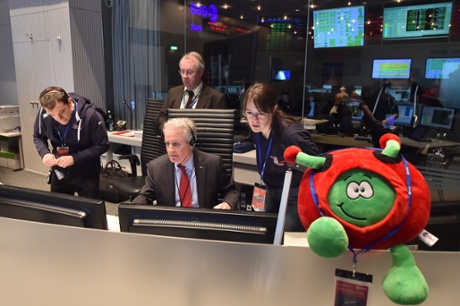
The Rosetta mascot is putting on a brave face for the cameras.
I’ve just caught up with scientist Jean Pierre LeBreton of Laboratoire de Physique et Chimie de l’Environnement et de l’Espace, Orléans, France.
He was project scientist for the 2005 landing of the Esa Huygens space probe on Saturn’s moon Titan. So, he knows what it feels like to wait for a landing to take place.
“For Huygens, most of it happened during entry and descent. Here, the landing is really crucial. The main science is after landing. I may even be feeling a bit more excited and anxious to see that Philae has landed safely than I was for Huygens,” he told me.
LeBreton oversees a suite of magnetic instruments on Rosetta and Philae. Together they have a role to play beyond science as the lander descends.
Once contact is re-established (due in a few minutes), the instruments will beam back data all the way to the comet’s surface. The magnetic readings from Rosetta will be compared to those from Philae, and this will tell the scientists how Philae is performing.
For example, is the lander stable or rotating? Have the landing legs deployed? Both of these will disturb the magnetic field surrounding the comet and be detectable. It will prove to be a valuable contribution to understanding how the descent is going.
“The teams are prepared to analyse this in real time. This is going to be a very busy day,” says Lebreton, “Yesterday I got data from my instrument on the orbiter so it was a bit like work as usual. Today it is very different. Today is action day. The lander is on its way to the comet. The story is being written at the moment.”
Contact is expected to be re-established with Rosetta and Philae just before 11:00 GMT
Updated
As ever, New Scientist has the lowdown on the science.
Here's our lucky #spaceveg ginger that looks a bit like comet 67P #cometlanding http://t.co/MmesIITnQz pic.twitter.com/ujkZaseb92
— New Scientist (@newscientist) November 12, 2014
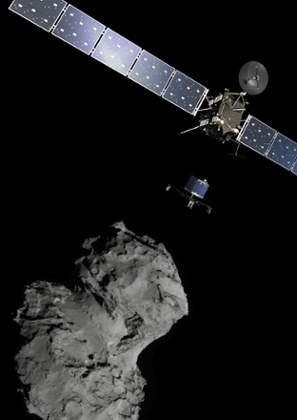
The comet, the lander and its mothership.
Any questions?
Stuart Clark, our astronomy blogger at Esa mission control in Darmstadt, and Guardian science editor Ian Sample are on hand to field your questions about the Rosetta mission. Just post them in the comments below and they’ll do their best to enlighten you.
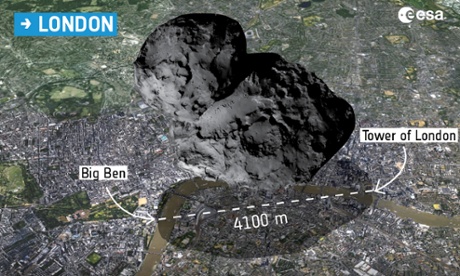
The comet is about the size of central London …
Updated
The Open University in the UK has created an instrument onboard Philae named Ptolemy. It is designed to help analyse the composition of comet Churyumov-Gerasimenko. In particular it concentrates on the elements carbon, oxygen and nitrogen – each one vital for life on Earth.
In this video, scientists from the university answer five questions about the Philae landing. You can find more videos about Ptolemy, Philae and Rosetta on the Open University’s webpage.
Updated
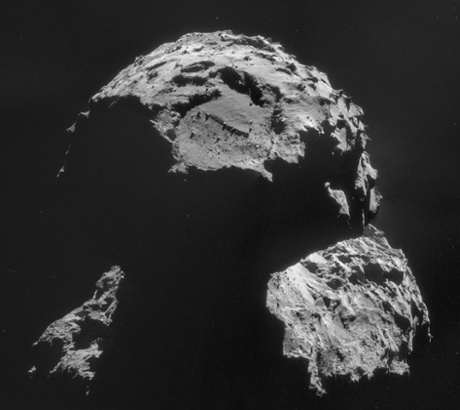
This image, released by Esa on Tuesday, gives an idea of the hostile landscape Philae is now descending towards.
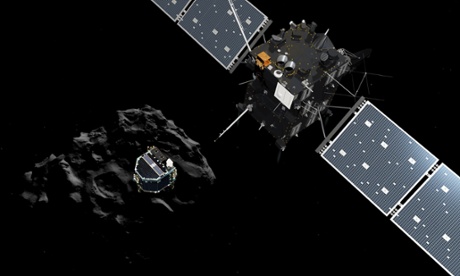
Philae is on its way.
Updated
Dr Alan Duffy, a research fellow and astronomer at Swinburne University of Technology in Australia, is downbeat about Philae’s chances of a successful landing:
Unfortunately the surface couldn’t be less inviting, with sharp, lander-destroying rock and ice shards all over the surface making the landing fraught with danger …
It will be a slow fall, lasting seven hours and without thrusters it means that there’s no chance to change course if a lander-destroying shard of ice and rock is underneath. As a result of the enormous distance from Earth the signal will take too long from Esa’s space operations centre in Darmstadt, meaning the entire historic journey will be automated …
The craft will try to harpoon itself onto the surface as the comet’s gravity is so weak it could bounce off into space.
Updated
“Philae is gone. It is on its path down to the comet,” says Andrea Accomazzo, Rosetta flight operations director, European Space Agency, ESOC.
“Philae is on its own now,” says Stephan Ulamec, Philae lander manager.
As expected, contact has now been lost with Philae. Contact will be re-established once Rosetta has manoeuvred into position, in about two hours’ time.
At this point the first data will be sent to Earth. This will include science readings taken during Philae’s descent, and “housekeeping” telemetry that will tell engineers about the status of the lander.
Updated
Professor Geraint F Lewis from the Sydney Institute for Astronomy in the School of Physics, University of Sydney, summarises Rosetta’s scientific mission:
Comets hold the secrets to the birth of the solar system, being leftover debris of the material that built the planets, including the Earth.
For the first time, Earth will land a space probe on the surface of a comet, with Rosetta due to touch down on Comet 67P in the next few hours.
When safely anchored in the extremely weak gravity, Rosetta will start to scratch the surface to reveal the complex chemistry of the cometary surface. We expect to find a lot of water, frozen as ice, but also a soup of chemicals that must have rained down on the early Earth. These chemicals, especially the water, could have proved vital for the eventual formation of life on this planet.
Updated
Separation is confirmed
This is as real as it gets. The Philae lander is on its way to the surface of comet 67P Churyumov-Gerasimenko.
The Osiris camera on Rosetta will take images of Philae during its descent. These are expected to arrive on Earth between 13:00 and 14:00 GMT.
Updated
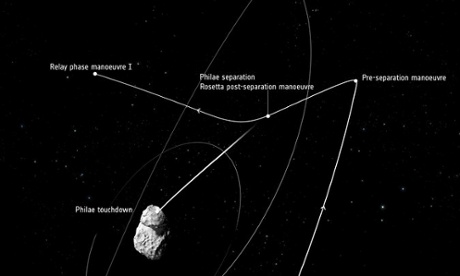
This is Rosetta’s trajectory.
Updated
Rosetta mission overview
Paddy Allen from the Guardian’s graphics team has produced an excellent guide to the mission and its scientific aims.
Updated
Various science instruments are being powered up on the lander. Science will begin almost as soon as separation occurs and continue during the seven-hour descent.
Separation is scheduled to occur at 08:35 GMT. It will take the radio signals from Rosetta 28 minutes and 20 seconds to reach Earth and be transferred to the Rosetta Mission Control Centre, here at Esa’s Space Operations Centre in Darmstadt, Germany.
This means that confirmation of separation should be received about 09:03 GMT.
Updated
About three decades ago, Rosetta began as an idea for a mission that would bring a sample back from a comet. That proved too expensive. So, according to Gerhard Schwehm, former Rosetta project scientist, they decided that if they couldn’t bring comet samples back to a laboratory, they would build a laboratory to send to a comet. The result is Rosetta. The laboratory is Philae. It lands today.
Updated
The landing attempt happens today for sure
The fourth go/no-go has just been called. It is a “go”. The landing attempt is happening today for certain.
Updated
Faulty thruster
The landing has just become riskier. The cold gas thruster appears not to be working on Philae. This thruster is on top of the lander and is designed to push the spacecraft on to the comet as the harpoons and drills anchor Philae to the surface. Without the thruster, the risk of Philae bouncing off the surface is increased.
The thruster problem is the reason for the delay in last night’s third go/no-go. At one point, Paolo Ferri, head of mission operations at the European Space Agency, said that it looked as if the third go would not be given. When the confirmation came, it was an hour later than originally planned.
All other systems on the lander are working as expected. Philae must now depend upon three screws to drill the legs into the surface, and two harpoons that it will fire into the comet as well.
Updated
Sometime in the next hour, Rosetta will perform the “pre-separation manoeuvre”. This is a thruster burn to place it on course for the separation point, when it will release Philae.
The burn is expected to last about six minutes. It will alter Rosetta’s velocity by about 0.46 metres per second and send it heading in towards the comet.
The fourth and final go/no-go will determine whether the burn has taken place successfully and Rosetta is on the right track. It will also make a final assessment of the two spacecraft, the ground stations, the ground systems and the teams. All must be ready for landing.
Following separation, Rosetta will manoeuvre again to move away from the comet, but keeping Philae and the landing site in view.
Updated
Overnight there have been two more go/no-go decisions. Both were “go” but the Philae lander team needed an additional hour before they confirmed that they were indeed “good to go”.
The reason for the delay has not yet been confirmed but there was a computer glitch in Philae when it was switched on 24 hours earlier. Read more about that here.
Rosetta was pronounced ready at 00:00 GMT. Philae’s confirmation came at 02:35 GMT.
A fourth and final go/no-go takes place sometime between 06:35 and 07:35 GMT this morning. If Rosetta and Philae are pronounced good to go at this point, the landing attempt will take place today.
Updated
Good morning from the European Space Operations Centre, the European Space Agency’s mission control in Darmstadt, Germany. Today, Esa attempts to land on comet 69P/Churyumov-Gerasimenko.
This is the first time a landing on a comet has been attempted. It is a risky mission. This blog will run live all day following the action. You can also follow me on Twitter for additional updates.
Updated













