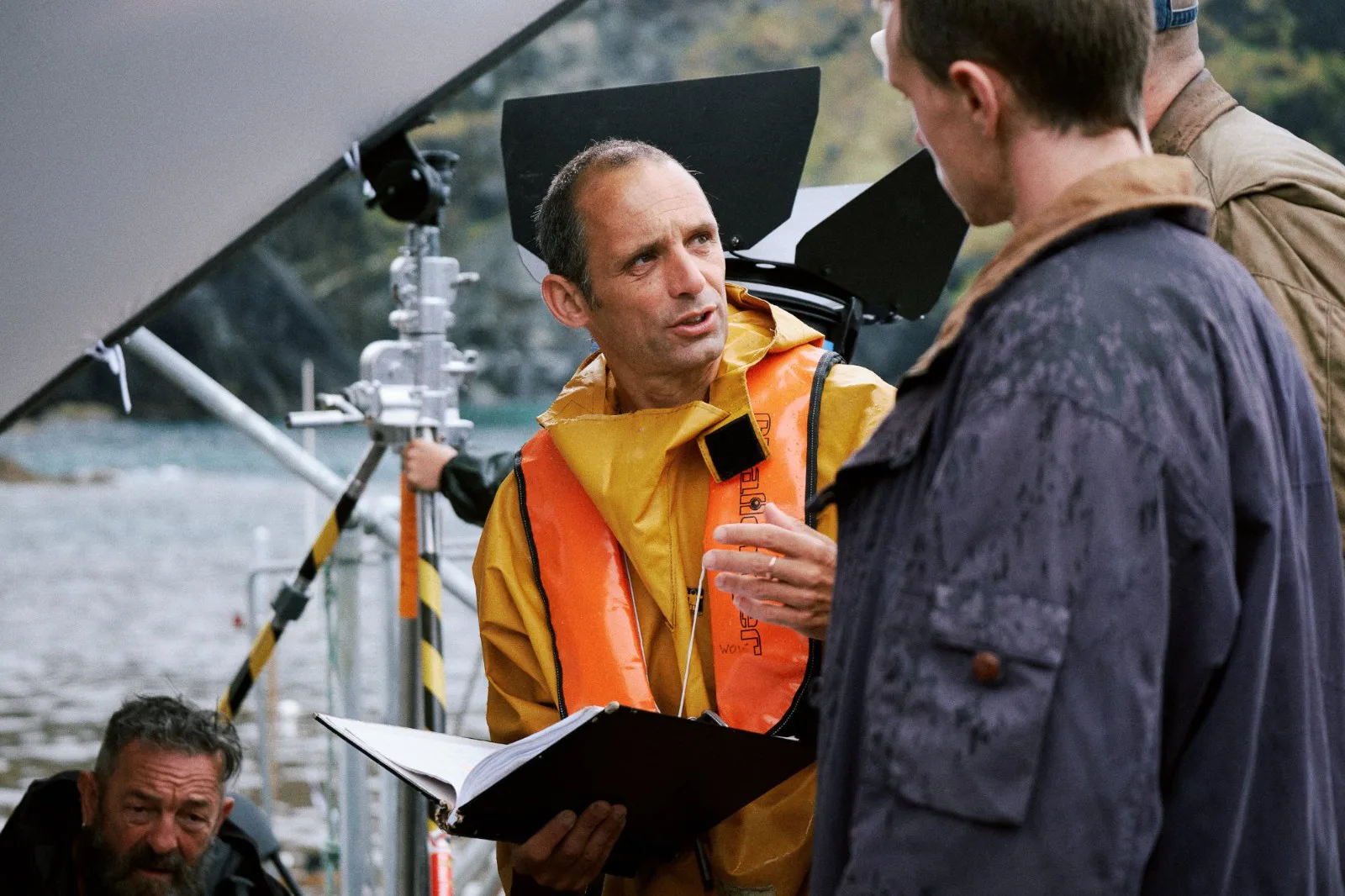
It’s not exactly second nature to associate the work of Mark Jenkin with heady science fiction, particularly of the time-slipping variety. Jenkin notably shoots using a Bolex, a wind-up camera that records on 16-millimeter film but records no audio whatsoever. Not only does the filmmaker have to record every possible sound effect (including his actors’ dialogue) in postproduction, but he can only capture scenes 27 seconds at a time. That turns the prospect of even making a movie feel nearly impossible — much less that of a higher concept.
In truth, though, all of Jenkin’s works twist the concept of time with a lo-fi scope. His debut, Bait, played with temporal displacement. Ditto for his psychologically searing Enys Men — but his third feature, Rose of Nevada, might be his most straightforward take on the subgenre.
“With Rose of Nevada, my obsession with the way the cinema can portray time came right to the fore,” Jenkin tells Inverse. If Enys Men follows its protagonist (played by Jenkin’s partner, Mary Woodvine) as they come to terms with a temporal anomaly, Jenkin’s latest focuses on “a time slip, which the characters are aware of and point at and becomes the main focus of the narrative.”
Not every member of the ensemble is totally tuned into the slippery nature of their timeline, of course, but that tension is precisely the thing that gives Rose its propulsion. It also allowed Jenkin and his cast to make a comparatively simple story about time travel into a much more soulful exploration of sacrifice and serenity.
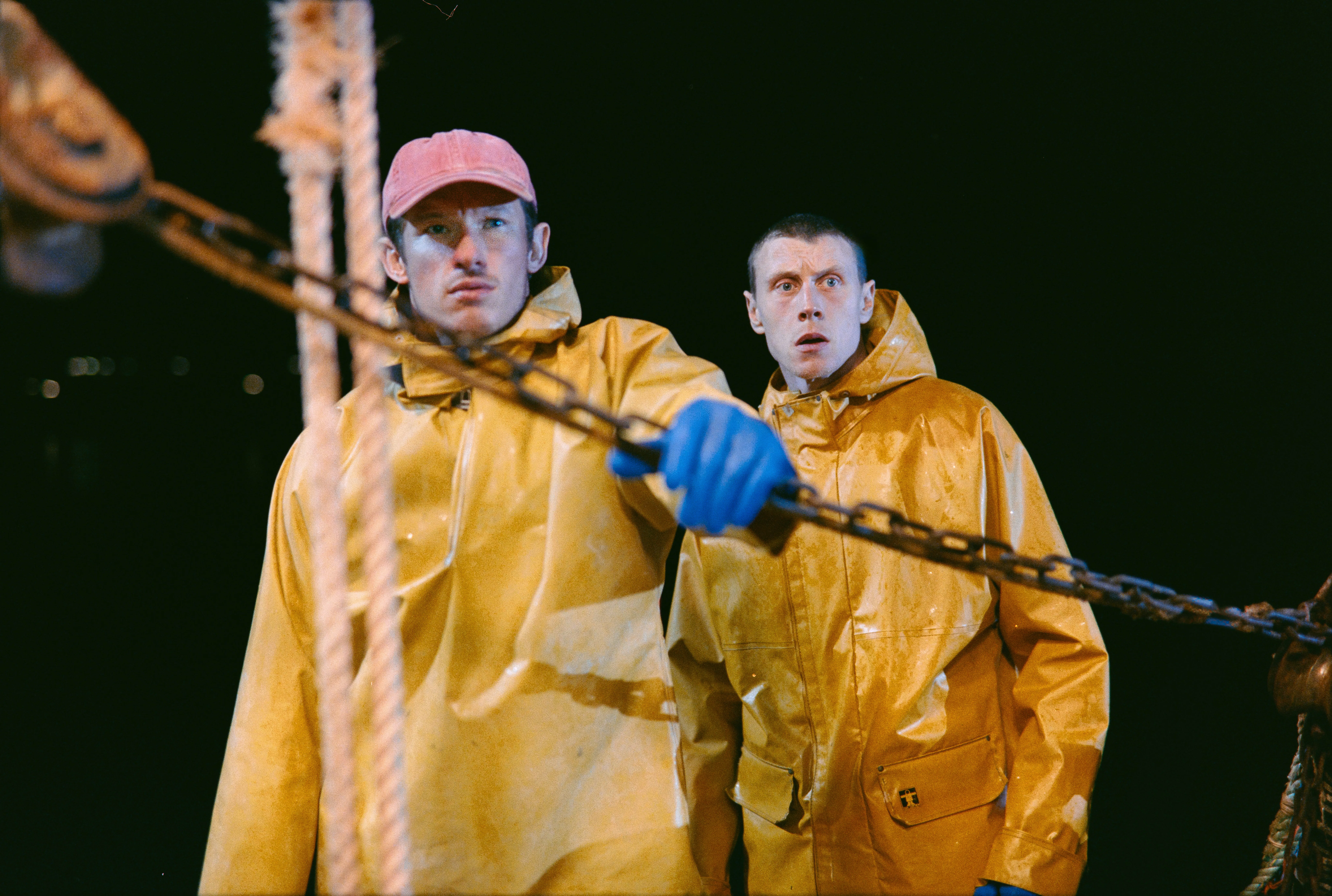
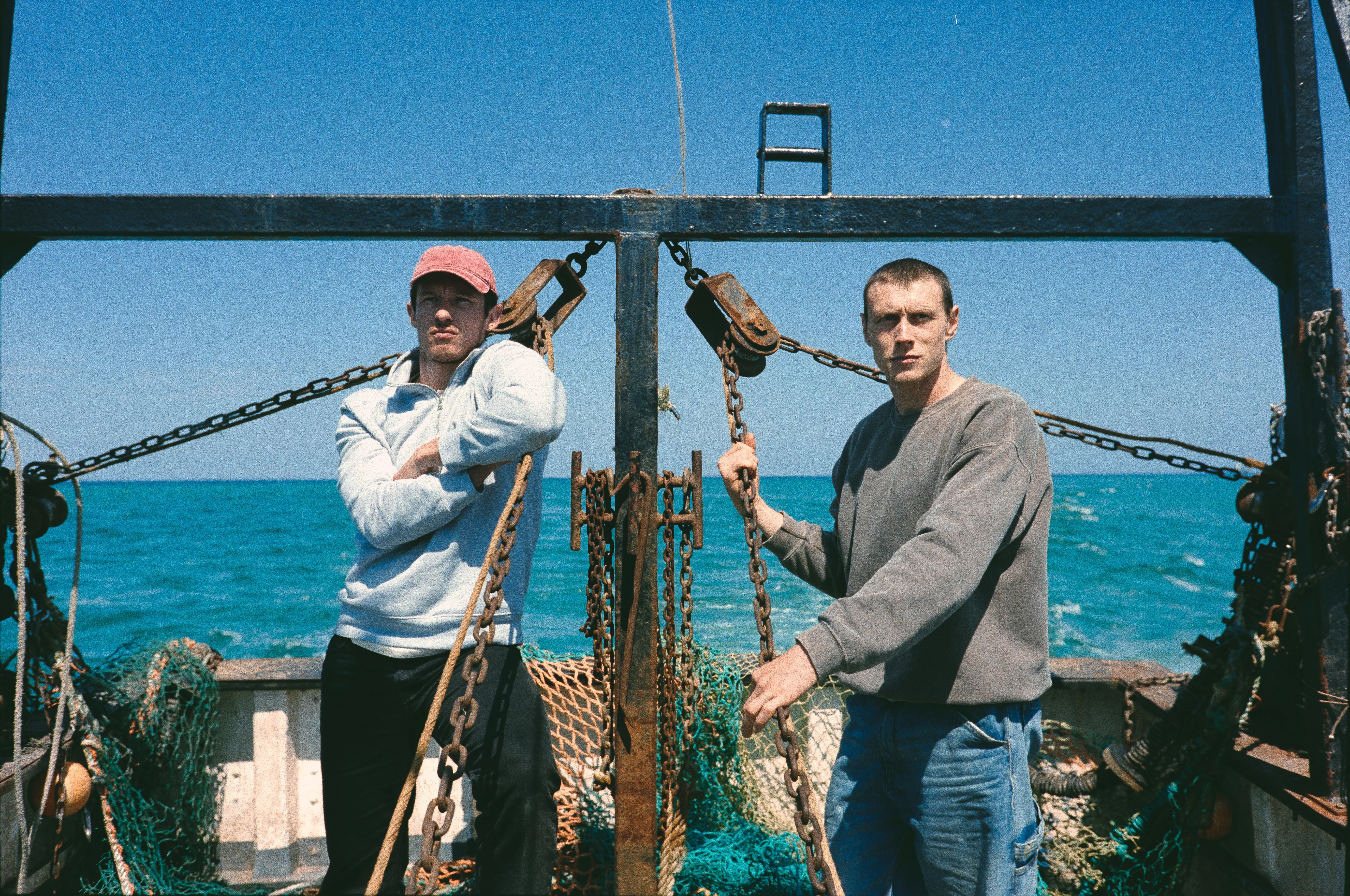
In a forgotten fishing village on the coast of Jenkin’s native Cornwall, time itself seems to be at a standstill. Its once-flourishing economy, driven by dozens of fishing vessels, has long since dried up — and the disappearance of the titular boat, the Rose of Nevada, was the first domino to fall. But then, as if by some miracle, the Rose turns up in the port 30 years later. The fishermen who took it out to sea in 1993 are nowhere to be found, much to the dismay of Tina (Rosalind Eleazar), who lost her husband on its last ill-fated trip. The enigmatic Mrs. Richards (Woodvine) also lost her son, and her mind has been shattered by the event. Suffice it to say that the Rose is a bad omen — but with the town desperate for a lifeline, they’ve no choice but to take it back out to sea.
The unmoored Liam (Callum Turner), a drifter on the hunt for a steady income, and Nick (George MacKay), a working father fretting over the cost of his leaky roof, volunteer to ship out with the community’s most seasoned skipper, Murgey (Francis Magee). What should feel like a moment charged with hope is instead filled with unmistakable dread, especially once Mrs. Richards — who frequently confuses Nick with her lost son — shares some ominous insight about the Rose and their intertwined destinies. Her omen doesn’t make sense until much later, when our trio sets off, catches a heap of fish, and returns home... only to find that they’ve somehow slipped back to the year 1993. A younger Tina embraces Liam as if he were her husband, while Nick is once again confused for the Richards’ son, Luke.

While Liam has no qualms about this weird twist in fate, Nick spends most of his time raging against their circumstances. We watch as he struggles to outsmart the very system that brought him 30 years into the past — whatever system that really is — and eventually learns to accept his role in this strange conspiracy. That involves playing the part of the Richards’ missing son, offering them a roundabout sense of comfort before it’s time to ship out to sea again.
“What I just love is the theme of what it is to do something for someone else,” MacKay tells Inverse. “That’s not always easy [or] particularly shiny, but it’s much more real.”
As Nick comes to terms with that lesson, he essentially becomes the audience’s surrogate, and MacKay takes that responsibility seriously. Though he was initially considered for the laissez-faire Liam, MacKay came to understand Nick better than anyone, Jenkin now says. It’s why, when he asked to change a line in Nick’s final scene with the Richards, Jenkin was willing to overlook one of his golden rules.
“The actors can’t improvise because if I then get into the edit, I’ve got no idea what anybody’s saying,” Jenkin explains. “When George said, ‘Can we change this line?’ It’s a big deal because every single person’s script has to be changed.”
Still, MacKay’s suggestion actually fed into the film’s hazy relationship with time a bit better than the dialogue Jenkin had planned. Before Nick gets ready to head back out to sea after months in the past, he’s hoping that the Rose will take him and Liam back to his proper time. That means that the Richards are about to lose their son for good; Mrs. Richards seems to understand that something is changing, as she expresses a fear of anything happening to Nick.
“Originally in the script, he says, ‘I won’t put you two through it again,’” Jenkin reveals, referencing the disappearance of the Richards’ son. By acknowledging that loss, Nick would have made a pretty explicit decision to remain in the past and assume his role as Luke. Instead, Nick says, “I’m here,” which leaves his fate a bit more open to interpretation. “It makes total sense because [George’s] line means everything, and my line means something very specific,” continues Jenkin. “And at that point in the film, you want it to be opened out, not closed down into specifics.”
“There’s a lack of tense in some way,” MacKay adds. It’s as if Luke and Nick are one, or that they’re always with the Richards, no matter the era. Paired with the final line heard in the film — “There is no time” — Rose of Nevada seems to transcend even its own straightforward time loop, becoming something even more metaphysical. We don’t know if the Rose eventually returned to the present day, and that’s just the way Jenkin wants it. But just as Nick eventually learned to go with the flow (among other things), the director’s latest is using the time-travel trope to deliver a familiar message about going with the flow.