The sprawling examination fraud case is no longer simply a criminal investigation but has evolved into a test of whether the country's institutions can withstand corruption that appears to have penetrated multiple layers of the state.
What began as complaints from disappointed candidates has expanded into a growing scandal involving local government recruitment examinations, allegations of organised criminal networks, digital manipulation, political denials, provincial brokers, tutoring businesses, and questions over the integrity of public-sector hiring itself.
At the centre of the case is the 2025 examination for recruitment into local government positions of the Department of Local Administration of the Interior Ministry. More than 400,000 people competed for 6,669 vacancies. Investigators now believe a network may have collected more than 4 billion baht from candidates seeking guaranteed appointments.
The Central Investigation Bureau (CIB), anti-corruption agencies and sources close to the investigation say the operation was far more sophisticated than a conventional cheating scheme.
The 'black box'
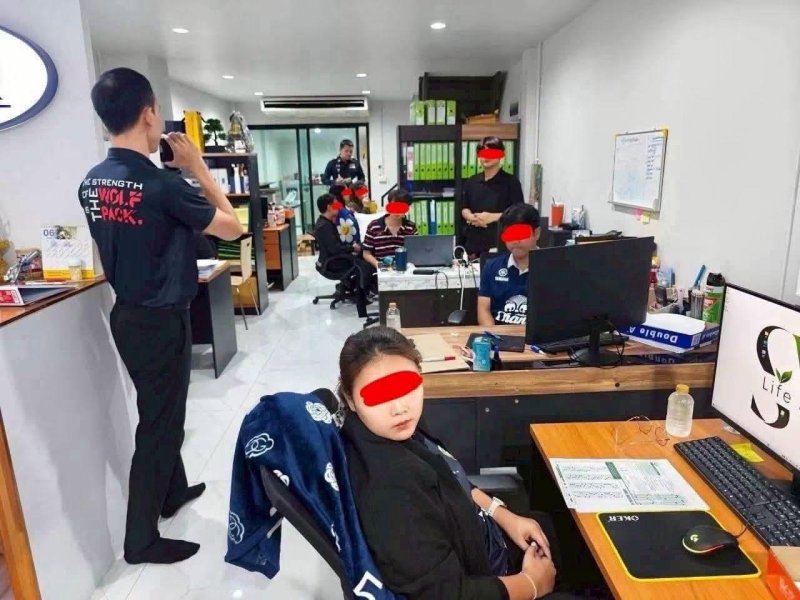
The CIB alleges that a house in Nonthaburi served as a secret operational centre where examination records were manipulated.
Rather than merely altering electronic scores, the network used a method that combined physical and digital tampering.
Copies of answer sheets were obtained from examination centres and taken to the Nonthaburi site.
There, operators compared the papers with official answer keys and marked correct responses using red ink. The altered sheets were then entered into computer systems, scores were adjusted, and the documents were rescanned into the official database.
The objective was to ensure that physical documents matched electronic records, making routine verification checks unlikely to detect discrepancies.
The sophistication of the method illustrates a critical reality. This was not an opportunistic act by individual candidates. It required access to examination materials, technical expertise, logistics support and insider cooperation.
The investigation has also exposed what analysts describe as a significant institutional vulnerability.
Original examination records are stored by the DLA for two years before being destroyed.
Investigators have acknowledged this creates a window in which retrospective audits become difficult once documents are legally discarded.
Another missing suspect acted as a courier, compiling lists of paying candidates on flash drives and physically delivering them to the Nonthaburi operation.
By relying on removable media rather than government networks, the network may have reduced the digital footprints normally left behind in cyber investigations.
A supply chain
Evidence emerging from the investigation suggests a structure resembling a corporate supply chain.
Independent scholar and former Supreme Court judge What Tingsmitr described a network operating across upstream, midstream and downstream levels.
At the upstream level were individuals with access to examination papers, answer sheets and databases.
At the midstream level, investigators have identified Pichit (no surname given), former director of the Strategic Planning Division at Wichian Buri Municipality in Phetchabun, as a key coordinator.
Police allege he paid Chatphiphut (no surname given), one of 10 officials arrested in the Nonthaburi operation, to coordinate the collection of examination materials from testing venues and funnel them to the syndicate's safehouse, where answer sheets were allegedly altered before being reintroduced into the system.
At the downstream level, brokers, intermediaries and tutoring operators recruited candidates across the country, sources say.
The structure resembles organised criminal enterprises more commonly associated with financial fraud than public-sector recruitment.
The seriousness of the allegations is reflected in the legal response. Rather than pursuing only administrative misconduct charges, the CIB has indicated suspects may face accusations under Thailand's "ang-yee" laws, traditionally used against organised criminal associations and secret societies.
The decision signals that investigators view the operation as a coordinated criminal syndicate rather than isolated corruption.
Merit versus money
Perhaps the most damaging aspect of the scandal is what it reveals about public perceptions of opportunity.
Thawisan Lonanurak, an independent academic, divided applicants into two groups.
The first are ordinary candidates, who relied entirely on examination performance and merit.
The second are the so-called "Luk Thep" or "God's Children", applicants who allegedly paid large sums to secure appointments.
Prices varied according to competition levels. In some provinces, alleged fees ranged from 150,000 baht to 300,000 baht. In highly competitive areas, investigators and local sources reported prices reaching 700,000 baht to 900,000 baht.
For many families, such sums represent years of income. The result is a devastating perception that public employment may no longer be determined solely by ability but by purchasing power.
Mr What warned the scandal strikes directly at the merit system that forms the foundation of civil service recruitment.
If citizens lose faith that examinations are fair, confidence in state institutions begins to erode far beyond a single recruitment exercise.
Corruption spreading
The scandal's impact has not been confined to investigation rooms and court files. In the southern province of Phatthalung, allegations linked to local examination brokers escalated into violence.
Two gunmen shot at the home of a deputy mayor of Ban Na Municipality in Si Nakharin district on June 17, causing property damage.
The incident was fuelled by anger over demands for refunds from candidates who allegedly paid for guaranteed success in the local government recruitment examination but failed to secure appointments after the results were announced.
Aketrawut Chaiket, a village headman, denied any involvement. He said he acted only as a mediator to recover 600,000 baht on behalf of two residents who claimed they had paid money to the broker connected to the recruitment scheme.
Another case in the province involved a teacher who is accused of acting as a broker who received 350,000 baht from a candidate who later failed the examination.
The candidate provided chat records showing repeated requests for a refund, while the teacher delayed repayment, claiming she needed to consult people "higher up" and that several teams were involved.
In Buri Ram, a tutoring operator and alleged victims described a different model.
Complaints say certain tutoring businesses charged ordinary preparation fees of 8,000 baht to 15,000 baht before persuading candidates to pay additional amounts ranging from 150,000 baht to 300,000 baht.
Some allegedly used loan agreements as a form of psychological reassurance, promising refunds if candidates lost their money without obtaining employment.
These provincial cases suggest corruption had evolved into a marketplace extending far beyond central government offices.
Institutions under pressure
The scandal has also exposed tensions within the institution responsible for overseeing recruitment.
Srinakharinwirot University (SWU), which organised the examination process, says it is cooperating with investigators.
Rector Prof Cholvit Jearajit said the university had set up a probe committee and submitted documents to the National Anti-Corruption Commission. He said no conclusions should be reached before evidence is verified.
The university also has launched legal action against individuals accused of spreading false information implicating its senior management.
The dual response reflects a difficult balance between transparency and institutional self-protection.
Political figures whose positions surfaced in leaked audio recordings discussing examination quotas have also denied involvement.
The competing explanations underscore a central question that remains unresolved: where, exactly, did the breach occur?
Former local administrator Tawatchai Jaroonchat said digital forensic evidence would ultimately determine whether the manipulation originated within the examination system, after official handover of the data, or through collusion across multiple organisations.
The answer could reshape the allocation of responsibility across the institutions involved.
A crisis of confidence
Independent academic Thawisan warned prolonged delays could deepen public distrust.
He said evidence already includes financial records, documents and digital files. The longer investigations take, the greater the risk that public confidence in both local government and the wider civil service will deteriorate.
Ultimately, the local government examination scandal is not simply about who passed and who failed. It is about whether Thailand's institutions can prove that merit still matters.
The greatest casualty may not be a recruitment process, a university or a government department. It may be public belief that honest effort remains the surest path into public service.
And once that belief is lost, rebuilding it becomes far more difficult than exposing the corruption that destroyed it.